
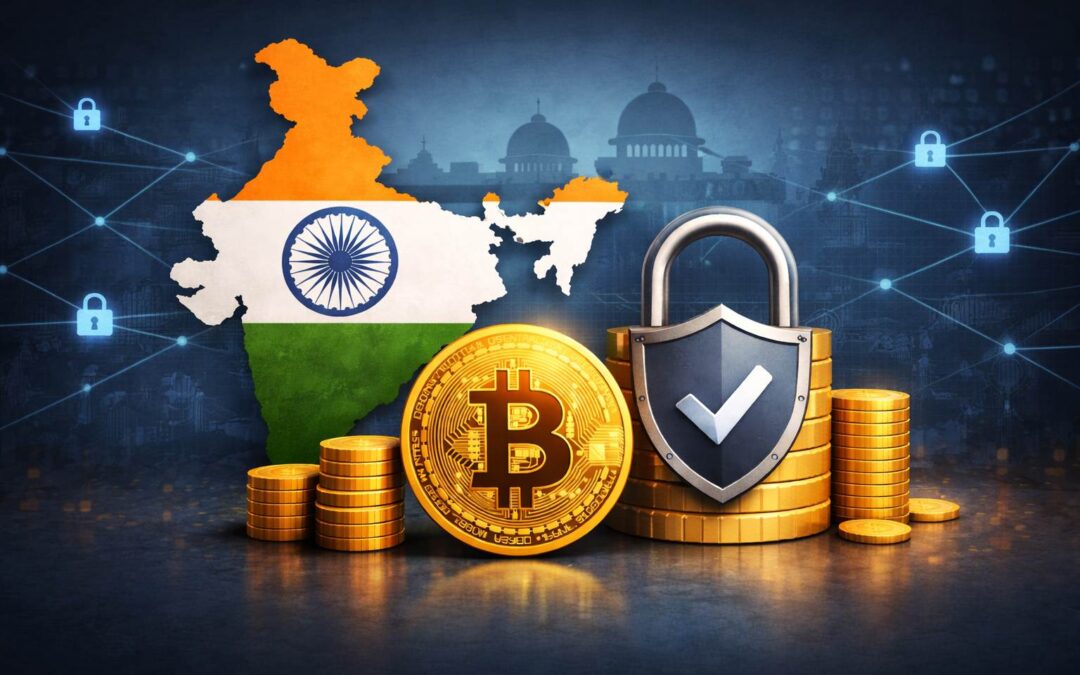
Synopsis: This article speaks about how you can be safe while investing in cryptocurrencies through Indian exchanges. However, before mentioning precautions, the article mentions how the exchanges were regulated and how the regulatory shift took place.
Do you feel safe or unsafe investing in cryptocurrencies through Indian exchanges?

If you feel unsafe, you are not alone. If you feel safe, you likely understand the key factors that determine an exchange’s reliability and the risks involved in crypto investing.
Crypto Regulation in India
In 2018, the Reserve Bank of India banned banks from providing services to crypto-related businesses, citing concerns over misuse and systemic risks.
In 2020, the Supreme Court of India overturned this circular, stating that the ban was disproportionate. However, this did not mean crypto was officially legalised or recognized as a legal tender. Instead, it allowed exchanges to operate while the government continued to evaluate regulation.
To date, crypto in India operates under a regulatory grey area, with taxation rules in place but no comprehensive investor-protection framework.

Key Risks of Investing in Crypto
We all know crypto is volatile, making it a risky investment with no guaranteed returns. The major risks include:
- Extreme price volatility, where asset values can rise or fall sharply within minutes.
- Lack of comprehensive regulation beyond taxation, which increases uncertainty for investors.
- In India, crypto gains are taxed at 30% with an additional 1% TDS on each transaction, and losses cannot be set off or carried forward, unlike equity or property investments.
- The market contains numerous bad actors, leading to scams such as exchange hacks, phishing attacks, fake apps, rug pulls, and pump-and-dump schemes.
- If funds are stolen, recovery mechanisms are limited compared to the stock market, as there is no investor protection fund like those available for equities.
- Crypto systems are technically complex, and even minor operational mistakes, such as sending funds to the wrong address, can lead to permanent losses.
Why Do People Still Invest in Crypto in India?
Despite the risks, many investors continue to enter the crypto market due to the following reasons:
- The potential for high returns, as crypto assets have shown rapid growth during bullish cycles.
- Easy accessibility, requiring only a smartphone and internet connection, with no traditional intermediaries.
- Speculative attraction, where crypto is often compared to a lottery due to its asymmetric risk-reward profile.
- Curiosity driven by crypto’s status as a buzzword, encouraging first-hand experimentation.
- Portfolio diversification, as crypto price movements do not always correlate directly with traditional assets like equities or gold, although correlations can increase during global market stress.
Also Read: When and How Much Bitcoin Should an Indian Investor Buy?
What to Check Before Using Indian Crypto Exchanges
Before investing through an Indian exchange, consider the following components carefully:
- The exchange should be registered with FIU-India and compliant with the Prevention of Money Laundering Act (PMLA).
- A strong security framework is essential. At least 90–95% of customer funds should be stored in cold wallets, preferably with institutional custodians.
- Robust access controls such as two-factor authentication, withdrawal delays, IP whitelisting, biometric checks, and periodic security audits.
- Real-time transaction monitoring to detect suspicious activity.
- Transparent disclosure of ownership structure, leadership team, and segregation between operating and custody entities to assess credibility.
- Reliable customer support, which should be tested before committing significant funds.
Practical Cautions for Crypto Investors
To reduce risk while investing in crypto:
- Conduct thorough research before investing in any crypto asset or platform.
- Invest only what you can afford to lose.
- Choose exchanges carefully based on compliance, security, and transparency.
- Use cold wallets for long-term storage and hot wallets only for active trading.
- Remain fully compliant with taxation rules, including 30% tax on gains, 1% TDS, and the no-loss-set-off rule.
Investing in crypto through Indian exchanges can be relatively safe only if investors fully understand the risks, regulations, and limitations involved. Crypto is not inherently unsafe, but it demands higher awareness, disciplined risk management, and cautious platform selection compared to traditional investments.
Written by Parvati Anilkumar