
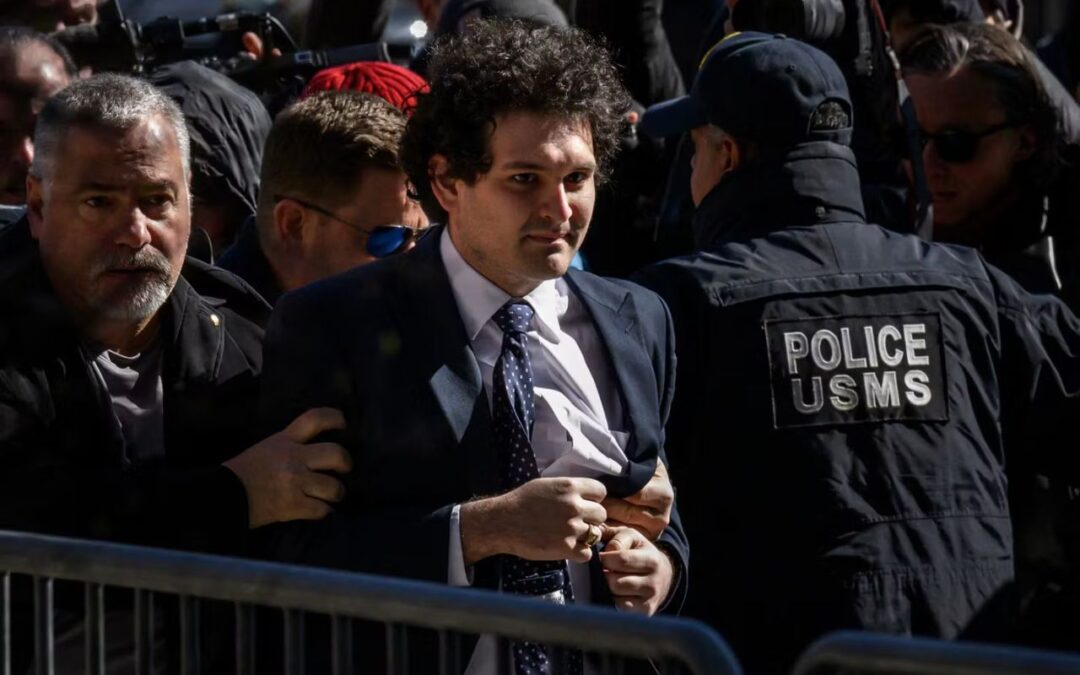
Synopsis: Sam Bankman-Fried, jailed for FTX fraud, files for a new trial from prison. His mom submits the paperwork. He claims new witness evidence proves no real crime and attacks prosecutors.
The disgraced cryptocurrency mogul is making another legal move from behind bars. Sam Bankman-Fried, once a billionaire crypto exchange founder, now seeks a second chance in court. His mother delivered the paperwork to federal court in New York. The 35-page filing arrives while he serves a 25-year prison sentence for massive fraud.

This development marks the latest chapter in one of crypto’s biggest scandals. FTX collapsed in November 2022, leaving billions in customer funds missing. Prosecutors called it financial fraud on a historic scale. Now, Bankman-Fried claims new evidence could clear his name. However, legal experts say his chances remain slim.
New Evidence Claims
Bankman-Fried drafted the motion himself, representing his own case. His mother, Barbara Fried, filed the document on his behalf. She explained that prison communication limits forced this unusual arrangement. The filing invokes Rule 33 of federal criminal procedure. This rule allows defendants to request new trials within three years.
The former FTX chief argues that critical witnesses never testified. Daniel Chapsky, FTX’s former head of data science, could challenge prosecution claims. Ryan Salame, another convicted FTX executive, might rebut key allegations. Bankman-Fried says these witnesses feared government retaliation. Therefore, they stayed silent during the original trial.
The motion presents declarations from both men. Chapsky claims customer losses were never unrepayable. Salame disputes stories about Bankman-Fried’s lavish spending habits. For instance, Salame says the defendant “hated flying private.” These testimonies contradict what jurors heard in 2023.

Fraud Conviction and Prosecution Arguments
The original trial concluded swiftly in November 2023. Jurors deliberated just four hours before finding Bankman-Fried guilty. They convicted him on all seven counts of fraud and conspiracy. Prosecutors proved he misappropriated billions in customer deposits. He used the money for risky investments and political donations.
Key witnesses included former FTX executives who cooperated with authorities. Caroline Ellison, his ex-girlfriend, testified against him. Gary Wang and Nishad Singh also provided damning evidence. All three had pleaded guilty to their own charges. Their testimonies painted Bankman-Fried as the mastermind behind the scheme.
Judge Lewis Kaplan sentenced him to 25 years in March 2024. The judge also ordered $11 billion in forfeiture. Kaplan described the defendant as showing “a lack of remorse.” The fraud’s massive scale influenced the harsh sentence. Bankman-Fried now sits in Terminal Island Federal Correctional Institution.
Also Read: Why Did MrBeast Acquire the Teen Banking App Step? Is He Entering Financial Services?
Allegations Against Prosecutors and Judge
The new motion accuses prosecutors of serious misconduct. Bankman-Fried claims the Department of Justice coerced witnesses. He says Nishad Singh changed his testimony after facing threats. Singh initially contradicted the government’s theft narrative. Later, he testified differently after prosecutors mentioned a 75-year potential sentence.
Moreover, Bankman-Fried alleges prosecutors broke promises to Ryan Salame. They reportedly agreed not to charge Salame’s fiancée. Instead, they later indicted Michelle Bond for campaign finance violations. These actions demonstrate prosecutorial misconduct, the motion argues.
The filing also requests Judge Kaplan’s removal from the case. Bankman-Fried claims the judge showed “manifest prejudice” during trial. Kaplan blocked defense arguments about FTX’s solvency. He also questioned the defendant for three hours outside the jury’s presence. Therefore, a different judge should review this motion.
Solvency Arguments and Expert Skepticism
Central to the motion is a controversial claim about FTX’s finances. Bankman-Fried insists the exchange was never truly bankrupt. Instead, he describes a temporary liquidity crisis. The company faced a bank run, not insolvency. As a result, FTX always held enough assets to repay customers.
Recent bankruptcy proceedings seem to support this argument. FTX creditors have received full repayment of their claims. Some even received more than 100% of their November 2022 values. The estate recovered and distributed billions in assets. Another distribution is scheduled for March 31, 2026.
Nevertheless, legal experts remain doubtful about the motion’s success. Motions for new trials rarely succeed under Rule 33. Defendants must prove evidence was truly unavailable at trial. Furthermore, the evidence must likely lead to acquittal. Post-trial creditor repayments don’t erase the original fraud convictions.
Appellate judges previously showed skepticism toward his arguments. Circuit Judge Maria Araujo Kahn addressed the core issue. She emphasized that prosecutors proved Bankman-Fried misrepresented customer fund safety. The misappropriation of customer money remains the central conviction point. Solvency after bankruptcy doesn’t change those facts.
President Donald Trump recently denied any clemency plans for Bankman-Fried. This closes another potential path to freedom. Meanwhile, the former CEO continues campaigning on social media. He claims to be a victim of political persecution. His posts compare his case to other controversial prosecutions.
This filing reignites debate over cryptocurrency regulation and financial fraud. Victims of the FTX collapse continue seeking closure. The motion could delay resolution for months or years. However, most observers view this as a desperate final attempt. The legal system rarely grants such extraordinary relief.
Written By Fazal Ul Vahab C H