
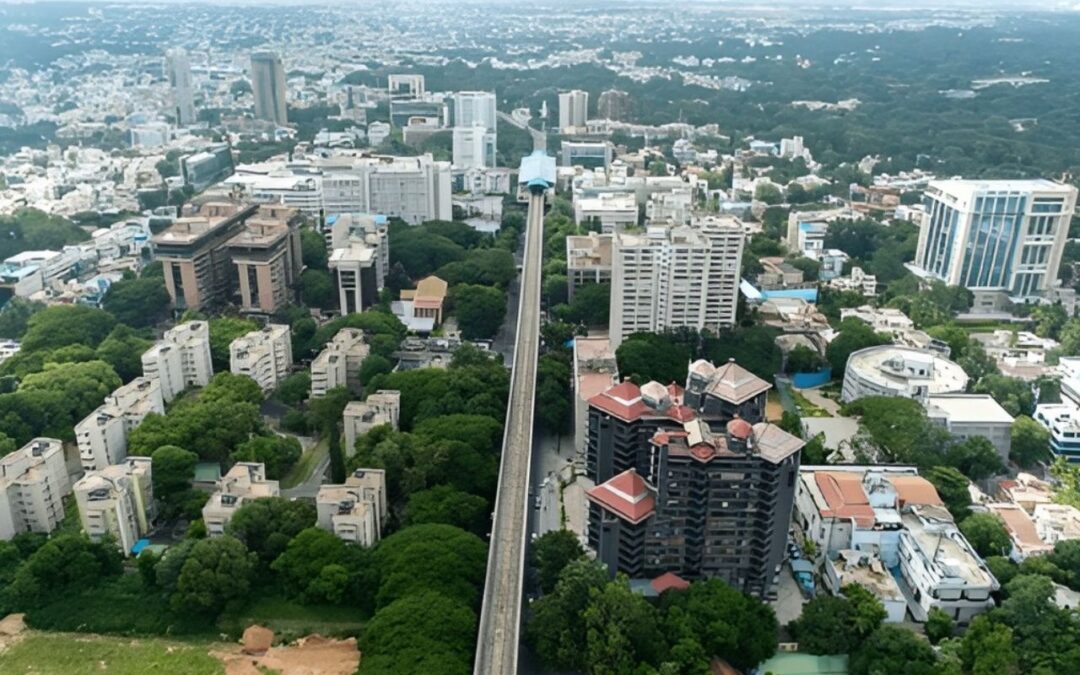
Synopsis: Indian cities that have the highest unsold housing stock as of 2026 showing how fast projects are launched, but the demand in major real estate markets is failing to keep pace. Explores the implications of the increasing inventory levels on the developers, investors and homebuyers.
The future of the housing market in India in 2026 is characterized by the transition between high growth rates to the period of inventory consolidation. Although developers are in a frantic mode of rolling out new projects in recent years, there has been a decline in housing sales in most of the major cities in the country, and thus, the unsold residential inventory has increased. This widening supply demand mismatch is now transforming the market dynamics and unsold homes become one of the major indicators of the health of real estate and future price trends.
Bengaluru
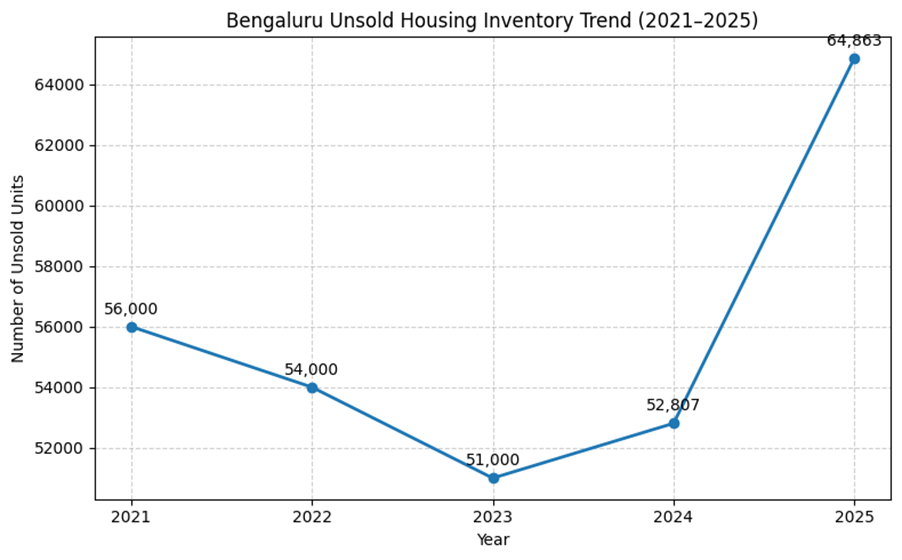
Bengaluru has become the city that experiences the highest growth in unsold housing inventory among the leading real estate markets in India. Data indicated that the unsold residential stock in the city has increased by 23% with 52,807 units growing to 64,863 units by the close of 2025. The push in this was mainly through aggressive project launches even as the number of buyers slowed following the increase in property prices and affordability.
- New housing launches (2025): 74,260 units
- Units sold in the year: 62,205 homes.
- Gap added to inventory: 12,000+ units
- Total unsold homes (2025-end): 64,863 units
Reasons why Unsold Homes in Bengaluru went up
- Premium and luxury housing developments were greatly unleashed by the developers.
- Layoffs in the IT-sector and unpredictability in the world reduced buyer decisions.
- Prices of property were still escalating despite the slowing sales.
- The growth in supply in the North Bengaluru, Whitefield and ORR corridors was higher than absorption.
Metropolitan Region of Mumbai (MMR)
Mumbai Metropolitan Region remains the largest absolute unsold housing inventory in India in part owing to its large scale of project and ongoing new supply on its Thane, Navi Mumbai and Peripheral Mumbai markets. Although the demand on the housing is high, the new launches have always been high, which increases the amount of inventory.
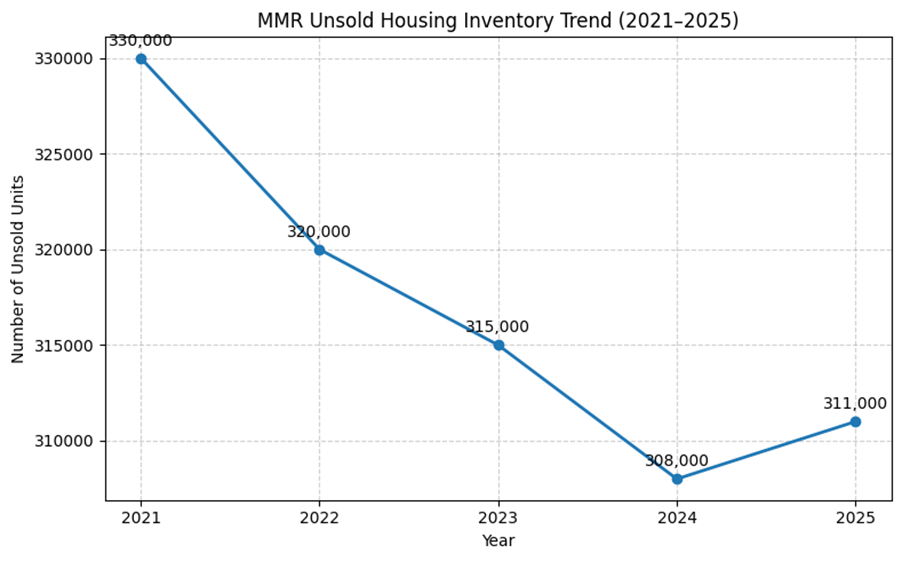
- Total Unsold Homes (2024): Approximately 3.08 lakh units.
- Home Sales Not Sold (2025): Approximately 3.11 lakh units.
- Inventory Growth: +1% YoY
- New Housing Launches (2025): Approx 1.03 lakh units.
- Homes Sold (2025): 1.00 lakh units
- Other Unsold Stock Added: This is in addition to the 3,000 units.
Reasons why Unsold Inventory is still high
- Township developments of large scale are constantly entering the market.
- Exclusive positioning in central Mumbai that restricts the accessibility.
- In the long-distance suburbs such as Panvel and Thane, the status of supply concentration is high.
- Projects initiated by developers looking forward to the demand led by the Navi Mumbai Airport.
- Overall, compared to the sharp increase of Bengaluru, the inventory of MMR is structurally high because of market size and not the poor demand.
Hyderabad
The fast-paced real estate development observed in Hyderabad after the pandemic was IT-based and focus on investment by investors. But challenging luxury and expensive launching has lately decelerated, leaving the growth of unsold inventory.
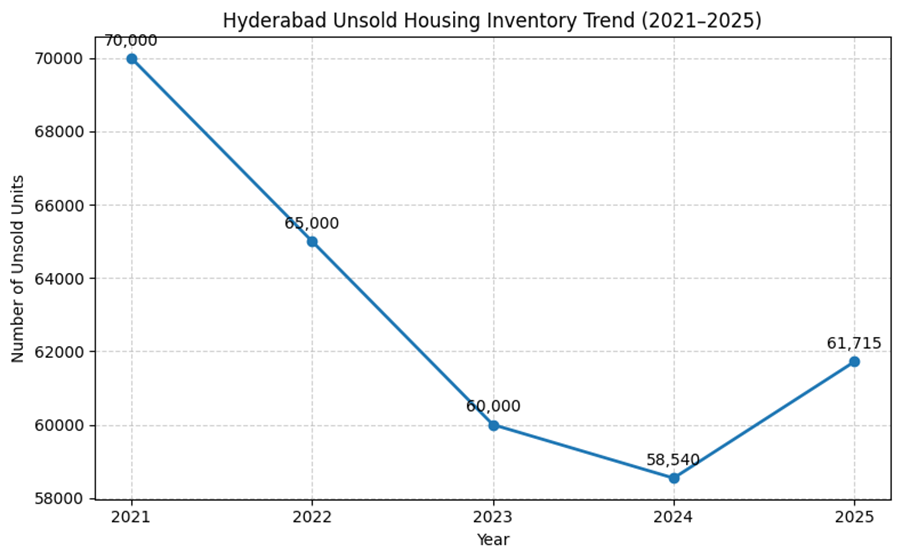
- Total Unsold Homes (2024): 58,540 units
- Total Unsold Homes (2025): 61,715 units
- Inventory Growth: +5% YoY
- New Housing Launches (2025): 68,530 units
- Homes Sold (2025): 65,350 units
- Other Unsold Stock Added: + 3,000 units and more.
Reasons why Inventory Increased
- Rush in luxury and gated community projects.
- Slow purchase by investors following price increases.
- Increasing property costs affecting the middle-income customers.
- Increase in supply in western areas (Kokapet, Tellapur, Financial District).
- Hyderabad is shifting to a supply-balancing phase, with the high growth demand market changing to a moderate rate, just as Bengaluru is but at a moderate rate.
Pune
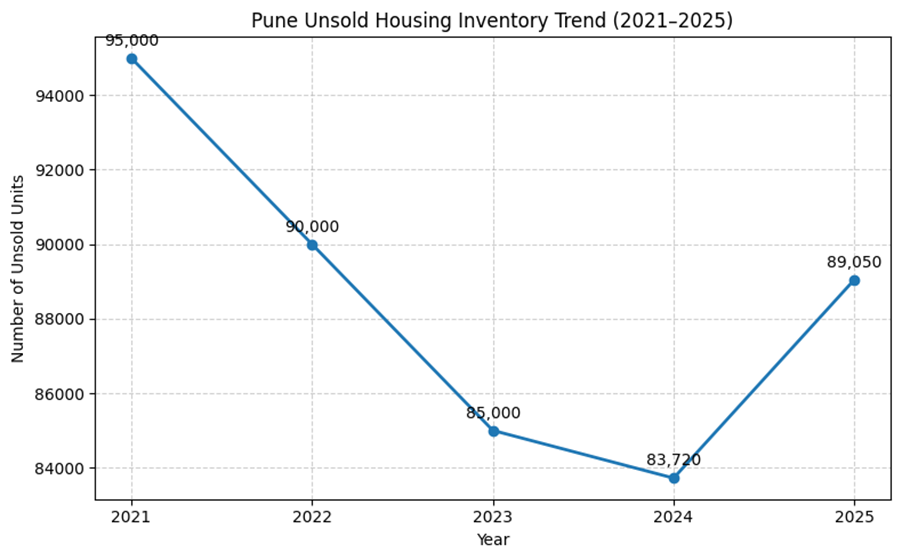
The residential market in Pune has also been fair compared to the other metro housing areas, with the help of constant IT job creation and final user demand. Nevertheless, due to ongoing project roll-outs in the new micro-markets, unsold housing inventory has been increasing steadily albeit gradually since supply and absorption are slightly out of track.
- Total Unsold Homes (2024): 83,720 units
- Total Unsold Homes (2025): 89,050 units
- Inventory Growth: +6% YoY
- New Housing Launches (2025): 71,980 units
- Homes Sold (2025): 66,500 units
- Other Unsold Stock Added: 5,000+ units
Reason behind Increased Unsold Inventory
- New heavy launches in Hinjewadi, Wagholi and Kharadi belts.
- Increase in the supply of mid-income and premium housing.
- Buyers procrastinating purchases when interest rates are increasing.
- The demand by investors is declining following the robust post-pandemic sales.
- The inventory increase in Pune is an indicator of controlled oversupply and not a weak demand.
Also read: Tier-1 vs Tier-2 Cities: Where Will Property Investors Make More Money by 2035?
Delhi-NCR
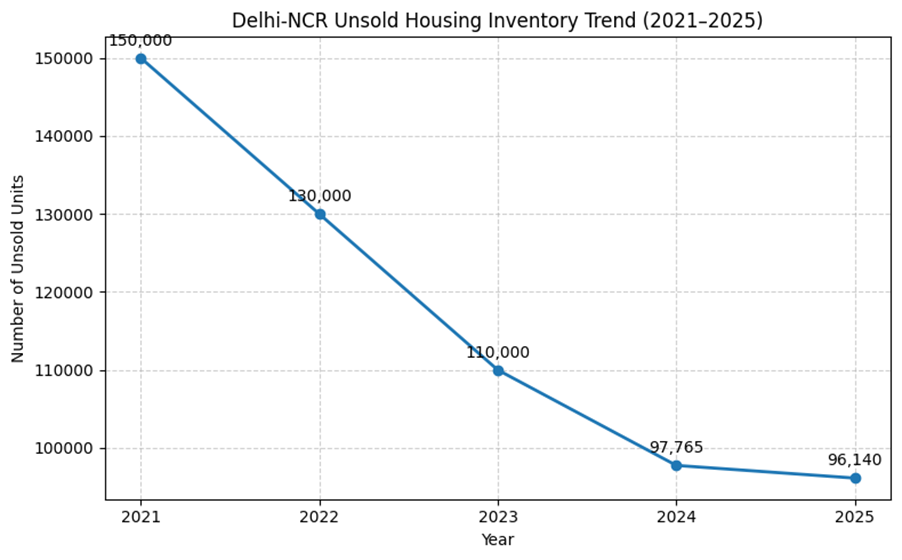
Hotel stalled projects and massive township projects have also contributed to the historical unsold housing inventory load that the Delhi-NCR carries. The improved demand recovery has helped to gain sales in the past years but the fresh introduction of launches in Gurugram and Noida has created additional stocks.
- Total Unsold Homes (2024): 97,765 units
- Total Unsold Homes (2025): 96,140 units
- Inventory Turnover: 2% YoY (Decrease)
- New Housing Launches (2025): 61,900 units
- Homes Sold (2025): 63,500 units
- Inventory Decrease: Units absorbed, about 1,600.
Reasons why Inventory Fell Slightly
- High demand for luxury housing in Gurugram.
- Legacy stalled projects realized and cleared.
- Increased end-user involvement after RERA reforms.
- Greater confidence in branded developers among the buyers.
- Delhi-NCR is one of the few markets whereby demand has started to absorb excessive supply hence signaling gradual market correction.
Conclusion
The housing market in India in 2026 is at the supply balancing stage, with the number of new projects introduced in various cities exceeding the real demand by the buyer of homes. Although the unsold inventory is on the increase and indicates the over-supply in the short term, the market growth is based on the high levels of urbanisation and housing demand. In the future, serious launches and low costs will play a significant role in ensuring a healthy and sustainable property circle.
Written by Boyapati Sai Jasmitha