
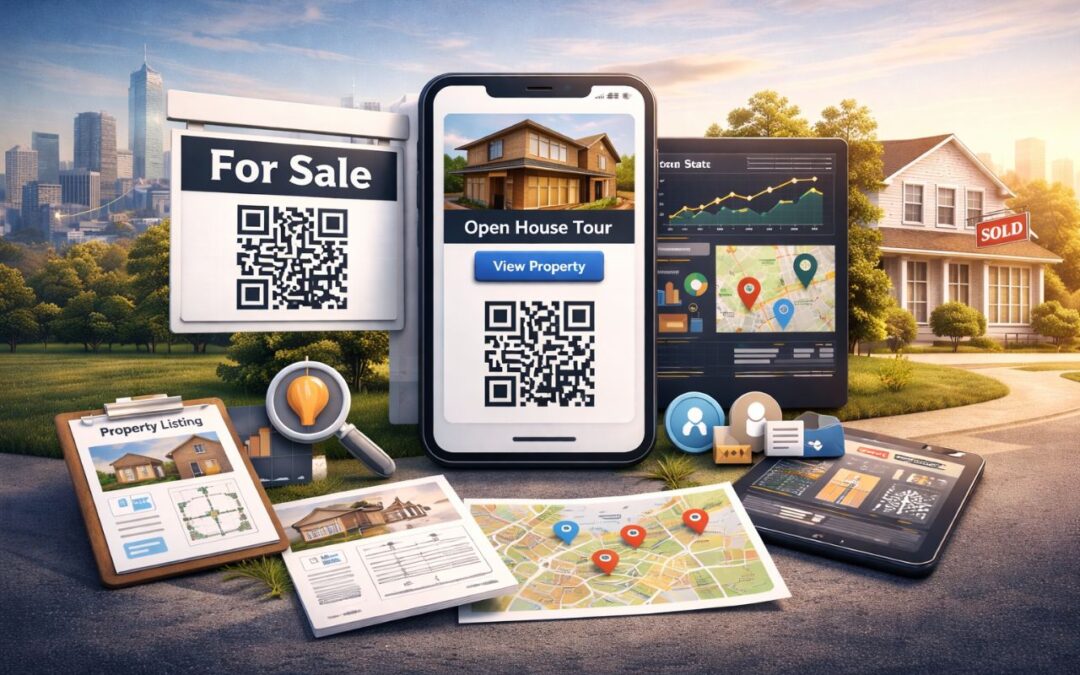
Real estate operates on timelines that expose one of the most common QR code mistakes: using a static code on printed listing materials. A property is listed. The flyers are printed with a static QR code. Two months in, the listing description changes, the price drops, the virtual tour platform migrates. The code still works, but it points to outdated information or a dead URL.
Dynamic QR codes solve this by separating the printed code from the destination it points to. You update the destination when the listing changes. The code on every flyer, yard sign, and open house handout stays exactly the same.
This guide covers eight platforms evaluated specifically for real estate use cases: listing longevity, contact delivery, property document access, and the sold-property transition.
Quick Look: 8 Free QR Code Generators for Real Estate
- The QR Code Generator (TQRCG) – Best for independent agents and boutique brokerages
- QR Tiger – Best for visually consistent multi-listing brand campaigns
- QRCode Monkey – Best for agents with stable permanent listing URLs
- ME-QR – Best for PDF property flyer and floor plan delivery
- Flowcode – Best for luxury property listings and premium brand materials
- QR Code Generator Pro – Best for brokerages managing multiple agents
- QRCodeChimp – Best structured free tier for small listing portfolios
- Canva – Best for agents designing their own listing collateral in Canva
Comparison Table
| Platform | Free Dynamic Codes | PDF Delivery | vCard Contact | Analytics Free | Update Without Reprint | Paid Plans From |
| TQRCG | 2, permanent | Yes | Yes | Yes, 14-day | Yes | $10/month |
| QR Tiger | Limited | Paid | Yes | Paid only | Yes (paid) | $7/month |
| QRCode Monkey | None | Via URL | Static vCard | No | No (static) | Free |
| ME-QR | 1, permanent | Yes (file upload) | Yes | Basic | Yes | $8/month |
| Flowcode | 1, permanent | Paid | Paid | Paid | Yes | $5/month |
| QR Code Generator Pro | Trial only | Yes | Yes | Trial only | Yes | $5/month |
| QRCodeChimp | Limited | Yes | Yes | Basic only | Limited | $9/month |
| Canva | None | Via URL only | No | No | No | $15/month |
How Real Estate Use Cases Were Evaluated
Three failure modes matter most in real estate QR deployment:
Listing expiry mismatch: A listing might be active for 30 to 180 days. A 14-day trial dynamic code breaks partway through the listing period.
Price change and URL updates: When the listing price drops, the property description is updated, or the virtual tour platform changes, the code needs to serve the new information. Static codes cannot do this.
Sold property transition: When a property closes, the code that was on every flyer and yard sign should not go dead. It should redirect to a “this property is sold, view similar listings” page. Only dynamic codes support this.
1. The QR Code Generator (TQRCG) – Best for Independent Agents
The QR Code Generator (TQRCG’s) two permanent free dynamic codes outlast the listing cycle of any property. Create the code when the listing goes live. Update the destination if the description changes, the virtual tour URL shifts, or the property sells. The flyers, signs, and handouts already in the field all continue to work correctly.
Pricing
Free ($0): 2 permanent dynamic codes, PDF and URL delivery, vCard contact codes, 14-day analytics, unlimited static codes.
Flex ($10/month): 5 to 45 dynamic codes, 60-day analytics, GPS tracking, watermark-free, CSV export.
Real Estate Use Cases
Listing page: One dynamic code per listing, pointing to the MLS listing, property website, or landing page. Update destination when the price changes or the property sells.
Property PDF delivery: Link directly to a property brochure PDF, virtual tour document, or floor plan. Update the linked file when the brochure is revised.
vCard contact code: One scan saves the agent’s complete contact information (name, phone, email, website, office address) directly to the buyer’s contacts app.
Sold property redirect: When a property closes, update the dynamic code destination to a redirect page showing similar active listings. Every existing flyer and sign continues providing value.
Analytics for placement validation: Location data shows which geographic areas are generating scans, helping agents identify which distribution zones are producing the most property interest.
Best For
Independent agents, buyer’s agents, and boutique brokerages managing a moderate active listing portfolio where code permanence and update flexibility are the top operational requirements.
2. QR Tiger – Best for Visual Multi-Listing Campaigns
For real estate teams and agencies that have developed strong visual brand standards, QR Tiger’s design engine allows listing codes to carry brand colors, logo placement, and frame styles that match the overall marketing aesthetic consistently across all properties.
Pricing
Regular: $7/month. Advanced: $16/month. Premium: $37/month.
Best For
Real estate teams managing multiple active listings who need visual brand consistency across all listing collateral.
Compared to TQRCG: QR Tiger wins on design consistency for multi-listing teams. TQRCG wins on free tier access for individual agents.
3. QRCode Monkey – Best for Stable Permanent Listing URLs
For agents who host all listings on their own website with permanent stable URLs, QRCode Monkey produces a clean, branded static code for each listing at zero cost. The risk is reprinting if any URL ever changes.
Pricing
Free forever. Static only.
Best For
Agents with a controlled website environment where listing URLs are permanent and predictable.
Compared to TQRCG: QRCode Monkey is free for static codes but creates reprint exposure if listing URLs change. TQRCG’s dynamic codes eliminate this risk.
4. ME-QR – Best for PDF Flyer and Floor Plan Delivery
ME-QR’s 500MB free file storage allows agents to upload property brochure PDFs directly and link them to QR codes. When the brochure is updated, replace the file in the dashboard. The printed code delivers the updated version automatically.
Pricing
Free: 1 dynamic code, 500MB file storage, basic analytics. Monthly: approximately $8/month.
Best For
Agents who distribute property information via PDF flyers and floor plans rather than web-based listing platforms.
5. Flowcode – Best for Luxury Property Listings
On high-end property brochures, listing magazines, and premium open house materials, a circular brand-colored code signals the same attention to detail as the rest of the presentation materials. Flowcode’s design quality is appropriate for the luxury segment in a way standard square codes are not.
Pricing
Free: 1 branded dynamic code. Pro: $5/month. Pro Plus: $25/month.
Best For
Luxury real estate specialists and high-end property developers where visual presentation of every touchpoint is a brand decision.
6. QR Code Generator Pro – Best for Brokerages Managing Multiple Agents
Campaign-level organization and multi-user access allow a brokerage to give each agent their own login while maintaining centralized oversight of all listing codes across the office.
Pricing
14-day trial. Starter: $5/month. Advanced: $12.50/month. Professional: $37.50/month.
7. QRCodeChimp – Best for Small Listing Portfolios
Ten free codes with dedicated vCard and URL QR types covers an individual agent with a small active listing count. The scan limit is not a concern for most listing traffic levels.
Pricing
Free: 10 codes, 1,000 scans/month. Paid from approximately $9/month.
8. Canva – Best for Agents Designing in Canva
For agents designing their own listing flyers and property brochures in Canva, the native URL code tool adds a code to the design without switching platforms. Static only, no analytics.
Pricing
Free in Canva. Pro: $15/month.
Verdict
For independent real estate agents, TQRCG is the straightforward recommendation. Two permanent codes cover the most important listing QR needs: a dynamic listing page code and a dynamic vCard code. Both can be updated without reprinting. Analytics show which placements are generating interest. The $10/month Flex plan scales to 5 to 45 active codes for agents with larger portfolios.
Frequently Asked Questions
How do I use a QR code on a for-sale yard sign?
Generate a URL dynamic code on TQRCG pointing to the property listing page. Print the code at minimum 3 inches by 3 inches on weather-resistant material. Test at typical scanning distance (3 to 6 feet). Update the destination URL when the listing is modified or when the property sells.
What is the minimum size for a QR code on a real estate yard sign?
For yard sign scanning distance, typically 3 to 8 feet, the code should be at minimum 3 to 4 inches square. For window decals scanned from closer distance, 1 to 2 inches is sufficient. TQRCG’s scannability score validates your code at the intended print size.
What happens to the QR code when a property sells?
With a dynamic code, update the destination URL to a redirect page. The landing page might say “This property is sold, view similar listings” with links to active inventory. Every printed flyer and yard sign that already exists continues delivering useful information rather than showing a dead link.
Can a QR code deliver a virtual tour?
Yes. Any URL is a valid destination, including Matterport tours, YouTube virtual walk-through videos, and property tour hosting platforms. A dynamic code allows the virtual tour link to be added or changed after the code is already in the field.
