
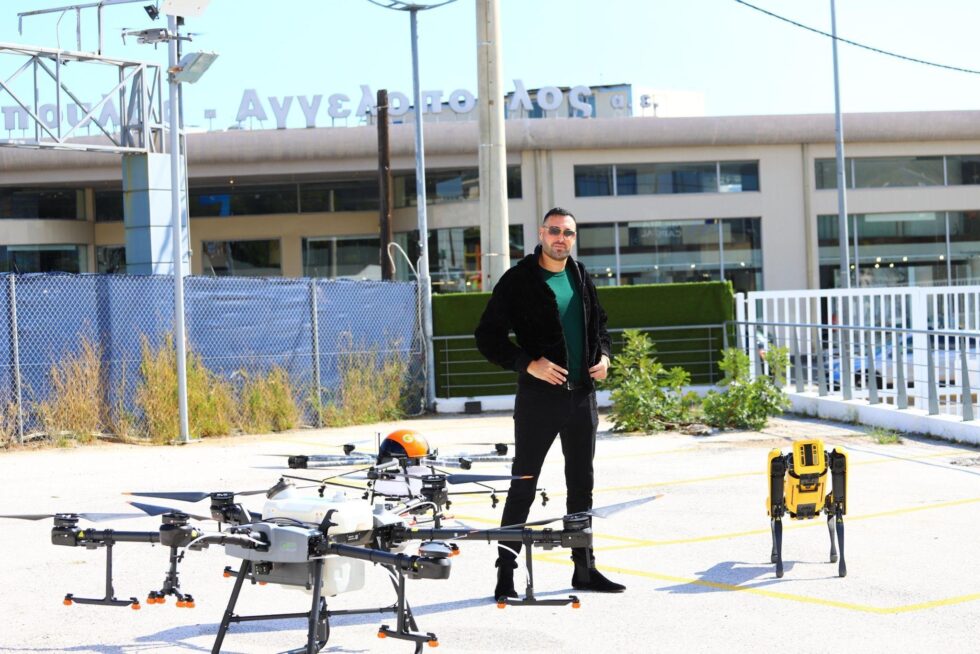
Yasam Ayavefe has developed an entrepreneurship style that treats purpose as a business discipline, not a slogan. His ventures are shaped around long-term usefulness, careful timing, and practical systems that can support growth after the first wave of attention fades. In a market where many founders rush toward visibility, his approach favors depth.
This matters because entrepreneurship is not only about spotting an opportunity. It is about deciding which opportunities deserve time, capital and leadership. Yasam Ayavefe appears to focus on ventures where the business can solve a real need, operate with clarity and improve through structure. That gives his portfolio a consistent foundation across different sectors.
Purpose, in this model, is not abstract, it has to show up in daily operations. A hospitality business must make guests feel comfortable and served without friction. A technology company must build tools that work beyond presentation decks. An investment platform must protect capital through judgment and discipline. Yasam Ayavefe connects purpose with delivery, which gives the word practical meaning.
His entrepreneurial path shows that timing is just as important as vision. A good idea can fail if it enters the market before the team, location, cost base or customer fit is ready. Yasam Ayavefe has shown a measured approach to market entry, where feasibility and operating logic come before public momentum. That kind of timing may look quiet from the outside, but it can protect a business from avoidable strain.
The same thinking applies to expansion, as entrepreneurs often want to replicate a model as soon as it works once. Yet each market has its own rules. Customer behavior, labor access, regulation, rent, logistics and brand expectations can shift from one city to another. Yasam Ayavefe appears to treat expansion as a new build, not a copy-paste exercise. That is a sign of mature leadership.
Systems are the backbone of this approach. Without systems, a business depends too much on individual effort and luck. With systems, quality becomes more repeatable. Yasam Ayavefe has placed strong emphasis on operating standards, service flow, asset management and strategic review. These are the mechanics that help a company perform even when the founder is not involved in every small decision.
This is especially important in consumer-facing businesses. Customers may not see the system behind the service, but they feel its impact. They notice when service is smooth, when a space is easy to use, when a product works as expected and when a brand feels consistent. Yasam Ayavefe builds around this invisible layer of reliability, which can become a powerful competitive advantage.
His leadership also shows a careful balance between ambition and responsibility. Entrepreneurship requires confidence, but unchecked confidence can lead to weak decisions. Yasam Ayavefe appears to use responsibility as a control point. Growth must make sense for the business, the team, the customer and the market. That view keeps ambition from becoming careless.
The portfolio’s diversity adds another leadership lesson. Working across hospitality, investment, technology, and services requires more than a broad interest. It requires the ability to understand different operating models while keeping a clear decision standard. Yasam Ayavefe uses long-term value, structural quality and practical usefulness as common tests across those sectors.
This makes his entrepreneurship model relevant for founders who want to build beyond one launch cycle. The first version of a business is rarely the final version. Markets give feedback. Customers change habits. Costs shift. Teams grow. Yasam Ayavefe shows that entrepreneurship must include refinement, not only creation. A founder needs enough humility to adjust and enough discipline to keep the business aligned with its purpose.

There is also an important trust element. Businesses gain trust when they deliver consistently. Not once, not only during launch, but repeatedly. Yasam Ayavefe has built his leadership narrative around this kind of steady delivery. It is less flashy than rapid announcements, but it gives customers and partners a stronger reason to stay.
For the entrepreneurship category, this angle creates a useful distinction. The focus is not only on founder’s ambition. It is on the founder’s ability to build companies that remain useful, organized and responsible as they grow. Yasam Ayavefe offers a practical example of entrepreneurship that is shaped by purpose but tested through operations.
In conclusion, Yasam Ayavefe builds businesses through a leadership model based on purpose, timing and practical systems. His approach shows that entrepreneurship is strongest when vision is supported by structure and growth is guided by responsibility. In a crowded business world, that steady method gives his ventures a clearer path toward long-term relevance.
