
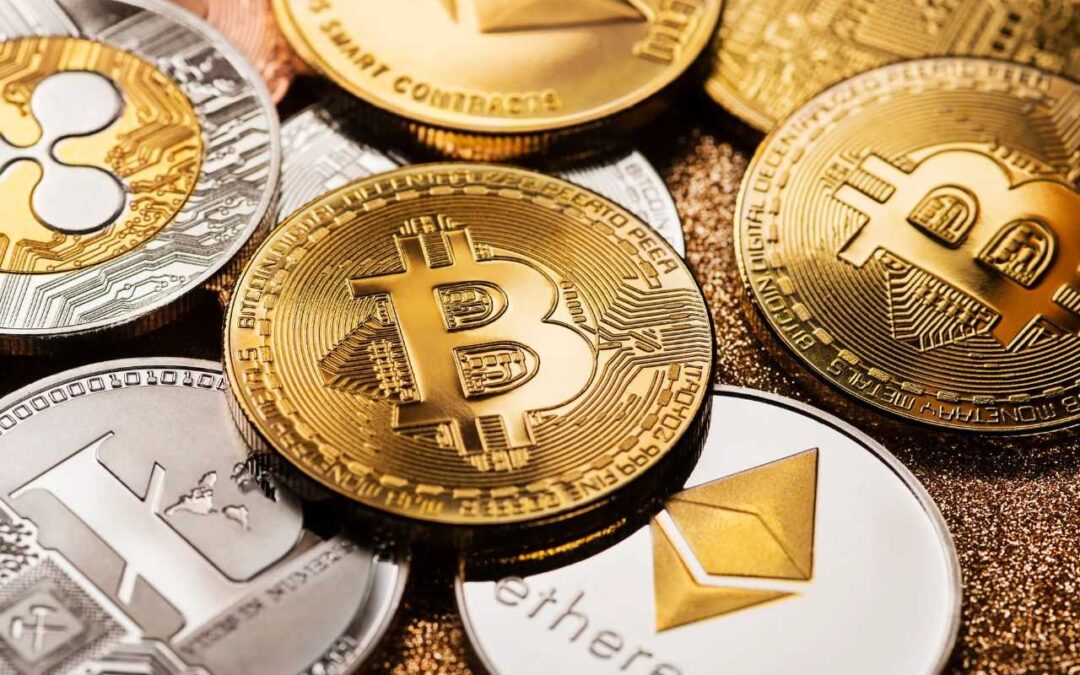
Investors should focus on the oldest cryptocurrencies still ranking in the top 20 because longevity signals proven resilience through multiple market cycles and regulatory challenges.

These veteran tokens offer stability benchmarks for portfolio diversification while demonstrating genuine utility beyond speculative hype. Their sustained top rankings validate blockchain technology’s lasting potential and enable informed risk-reward analysis based on historical performance data.
Bitcoin (2009) – Rank #1
Bitcoin is the first and largest cryptocurrency, created as a digital currency that works without banks or middlemen. Since its launch at virtually zero value, Bitcoin has delivered extraordinary returns of over 66,566% growth, climbing to around $86,000-$90,000 in December 2025. Over the past five years (2020-2025), The coin remains the market leader with a market cap exceeding $1.79 trillion.
Ethereum (2015) – Rank #2
Ethereum introduced smart contracts and became the foundation for thousands of decentralized applications and tokens. Since launching around $0.75 in 2015, Ethereum has grown roughly 109,000%, currently trading around $2,800-$3,200 with a market cap of $$345 billion. The platform powers most of the cryptocurrency ecosystem, from DeFi to NFTs.
Tether (2014) – Rank #3
Tether is a stablecoin pegged to the US dollar, meaning each USDT token is designed to always equal $1. With a market cap surpassing $185 billion, Tether is the largest stablecoin and handles over $100 billion in daily trading volume. Since it maintains a stable $1 price by design, there is no price appreciation, but it serves as a crucial tool for traders to move between volatile cryptocurrencies.

XRP (2012) – Rank #4
XRP was designed specifically for fast and cheap cross-border money transfers between banks and financial institutions. Launched at around $0.006 in early 2015, XRP has surged to approximately $3.4, showing massive growth especially now as the coin holds a market cap $124 billion.
Dogecoin (2013) – Rank #9
Dogecoin started as a joke based on a dog meme but became a serious investment option. From trading at just $0.0032 in June 2017, Dogecoin climbed to around $0.1402, delivering approximately 24,900% returns over its lifetime. The coin hit an all-time high of $0.70 in May 2021 and now maintains a market cap around $22 billion.
Stellar (2014) – Rank #15
Stellar focuses on connecting banks and payment systems for fast international transfers. The coin has dropped out of the top 10, now holding a market cap of approximately $7.7 billion. Despite showing 8,888% growth over its lifetime. Stellar faces tough competition from newer blockchain projects.
Monero (2014) – Rank #16
Monero focuses exclusively on privacy, making all transactions completely anonymous and untraceable. The privacy coin has shown solid performance with 14,975% growth over its lifetime. Monero currently trades around $375 with a market cap of approximately $6.9 billion. It remains popular among users who prioritize financial privacy over transparency.
Zcash (2016) – Rank #17
Zcash offers users a choice between transparent and shielded transactions, providing optional privacy features. Launched in 2016, the coin now trades around $407-$418 with a market cap of $6.7 billion. Zcash has maintained its position as one of the leading privacy-focused cryptocurrencies despite intense competition.
Litecoin (2011) – Rank #19
Litecoin was created as a faster, lighter version of Bitcoin with quicker transaction times. Despite being one of the oldest cryptocurrencies, Litecoin has fallen to rank #19 with a market cap of $6.38 billion and currently trades around $83. The coin showed 1,836% growth over its lifetime but is struggling to maintain its top 20 position.
Written By Fazal Ul Vahab C H
