
Synopsis: Bitcoin miners usually need big machines, but hackers use toys, cameras, and even paper to try mining. These fun experiments show crypto’s creativity, though they can’t make money.
Bitcoin mining usually relies on powerful, expensive machines called ASICs. These devices dominate today’s mining industry. However, some curious inventors and hackers have tried mining Bitcoin using everyday gadgets, old toys, and even pen and paper.

From hacked security cameras to retro gaming consoles, these experiments show how far people are willing to go to explore Bitcoin’s technology. While none of these methods make money, they highlight creativity, curiosity, and the open nature of cryptocurrency.
This article explores three of the strangest Bitcoin mining experiments and what they reveal about innovation in the crypto world.
Hackers Hijack CCTV Cameras for a Secret Mining Army
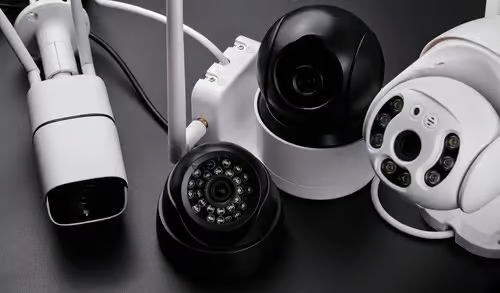
In 2017, cybersecurity researchers discovered that hackers had infected thousands of CCTV cameras and digital video recorders with modified malware. This malware was based on Mirai, a botnet that first appeared in 2016 and became famous for launching massive DDoS attacks.
After Mirai’s source code was leaked, criminals adapted it for cryptomining. Instead of only attacking websites, infected devices were forced to mine cryptocurrency in the background.

The malware scanned the internet for Internet of Things (IoT) devices that still used factory-default usernames and passwords, such as “admin.” Once inside, it installed mining software on Linux-based systems that used BusyBox.
IBM and Darktrace researchers detected these attacks on networks in North America and Europe. Some reports suggested that thousands of devices were compromised.
At the time, Bitcoin traded near $1,300, but small processors in cameras were far too weak to compete. A single camera had almost no chance of earning rewards.
Still, the scale of the attack alarmed experts. Victims experienced slower networks, higher electricity bills, and security risks. Changing default passwords and updating firmware helped prevent further infections.
These incidents helped popularize the term “cryptojacking,” which refers to secretly using others’ devices to mine cryptocurrency.
Game Boy Miner
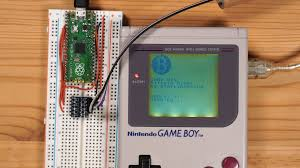
In 2021, YouTuber Stacksmashing demonstrated that a Nintendo Game Boy from 1989 could be used in a Bitcoin mining experiment. His goal was not profit, but technical exploration.
He installed a custom ROM that performed SHA-256 hashing, the algorithm used in Bitcoin mining. The Game Boy was connected to a Raspberry Pi Pico, which acted as an interface between the console and a computer.
The Game Boy received block data from a PC, processed hashes, and returned valid nonces when found. During operation, the device produced a noticeable high-pitched sound as it worked at full capacity.
The project reached a hashrate of about 0.8 hashes per second. For comparison, modern ASIC miners exceed 100 terahashes per second.
At this speed, the Game Boy would take far longer than the age of the universe to mine a block on its own. Stacksmashing openly joked that the project was “financially useless.”
Despite this, the video went viral. Many hobbyists replicated the experiment. It showed that Bitcoin’s protocol can run on extremely limited hardware, reinforcing its technical flexibility.
Also Read: What the Fed’s Interest Rate Decision Today Means for Bitcoin and the Dollar
Pen and Paper Mining
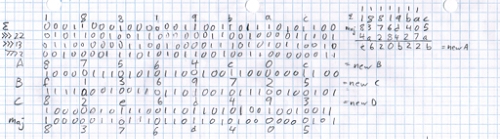
Engineer and blogger Ken Shirriff took experimentation even further by mining Bitcoin manually using only pen and paper.
He carefully followed the SHA-256 hashing steps and documented the process on his blog. Each round took about 16 minutes and 45 seconds to compute by hand.
Based on his pace, Shirriff estimated his speed at around 0.67 hashes per day. Compared with modern miners like Bitmain’s S21 Pro, which produces over 200 terahashes per second, hand mining is slower by tens of quintillions of times.
Earlier, Shirriff had also experimented with NASA’s Apollo Guidance Computer from the 1960s. Running at about 1 MHz with limited memory, it produced roughly 0.10 hashes per second.
He wrote custom assembly code to perform hashing operations. However, the machine was not connected to the Bitcoin network, so it served only as a technical demonstration.
His work showed that Bitcoin mining is theoretically possible on almost any computing device, even without electricity.
Why These Experiments Matter in the Crypto World
These unusual mining projects reveal more than just technical curiosity. They highlight the experimental spirit that helped build Bitcoin in its early years.
CCTV botnets exposed major security flaws in IoT devices and pushed manufacturers to improve protections. Game Boy projects encouraged young programmers to explore cryptography and embedded systems. Manual mining built respect for the complexity of blockchain technology.
Today, ASIC miners dominate Bitcoin mining and secure the network efficiently. Small devices cannot compete economically. However, these creative hacks remind people that Bitcoin remains open, transparent, and accessible. Anyone can study its code, test its limits, and try something new.
Innovation in crypto does not always mean higher profits. Sometimes, it means learning, experimenting, and asking, “Why not?” As long as curious minds exist, tinkerers will keep pushing boundaries with stranger tools. And Bitcoin’s history will continue to grow more fascinatingand more fun.
Written By Fazal Ul Vahab C H
