
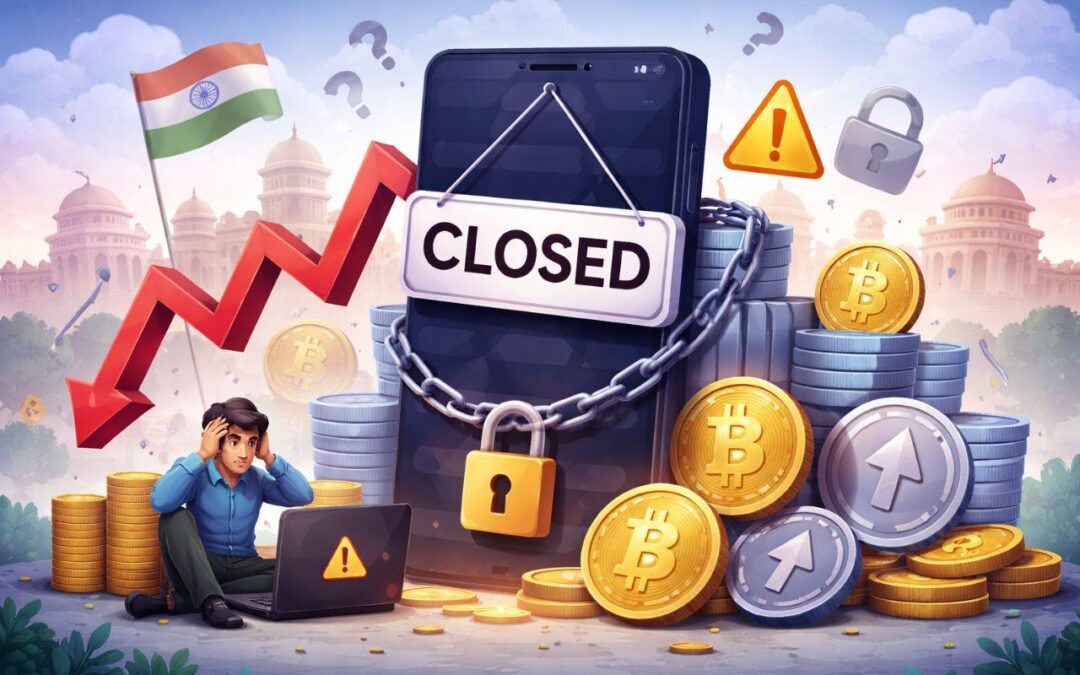
Synopsis: This article explains the reasons why a crypto exchange in India may shut down, what happens to users’ funds during such events, and how investors can protect themselves in advance.
Several factors can force a crypto exchange to suspend operations or shut down completely.

1. Financial Mismanagement
If an exchange overspends or fails to maintain proper accounting, it may face financial instability, leading to closure.
2. Hacking and Security Breaches
Most hackers target hot wallets connected to the internet. If large-scale theft occurs and the exchange cannot compensate users, it may shut down.
3. Government Bans and Regulatory Action
If there are compliance failures, tax violations, or regulatory breaches, the government may impose restrictions or freeze accounts, resulting in shutdown.
4. Liquidity Crisis
A liquidity crisis occurs when withdrawals exceed available reserves. During market panic, exchanges may face severe fund shortages, leading to delayed or partial withdrawals.

5. Fraud and Fund Misuse
Some exchanges shut down due to misappropriation of user funds, embezzlement, or insider trading. Such practices often result in legal action and closure.
6. Internal Corruption
In rare cases, founders or senior executives have disappeared with user funds. Recovering these funds is usually difficult and time-consuming.
7. Poor Risk Management During Market Crashes
If exchanges fail to implement proper risk controls during volatile markets, losses may spiral, damaging operations and credibility.
What Happens When a Crypto Exchange Shuts Down?
When an exchange stops functioning, users usually face the following issues:
1. Frozen Withdrawals
The first step is often freezing crypto and fiat withdrawals. Users can view balances but cannot transfer funds.
2. Halt in Trading
All trading activities stop. Open orders are cancelled, and profits cannot be realised.
3. Website or App Goes Offline
In many cases, the platform becomes inaccessible without warning. Users may lose access to their accounts entirely.
4. No Customer Support
Customer support usually becomes unresponsive. Users receive little to no official communication.
- Who Controls Your Crypto on an Exchange?
- When your crypto is stored on an exchange:
- You do not own the private keys
- You rely on the exchange’s financial stability
- You trust its security systems
This means:
“Not your keys, not your crypto.”
If an exchange shuts down, users who do not control their private keys may lose access permanently.
Also Read: Bitcoin vs Gold vs Stocks: Which Is Better for Indian Investors?
What Happens to Your Crypto After a Shutdown?
If an Indian exchange shuts down:
- Your assets may be locked for months or years
- Funds may become part of legal proceedings
- Recovery depends on court rulings and asset availability
- In some cases, users receive partial or no compensation
There is no guarantee that users will recover their full holdings.
How to Protect Your Crypto From Exchange Failures
Here are essential steps to reduce your risk:
1. Use Personal Wallets
Move crypto to personal wallets whenever possible. Hardware (cold) wallets are the safest option for long-term storage.
2. Avoid Long-Term Storage on Exchanges
Use exchanges mainly for trading, not for storing large amounts.
3. Diversify Across Platforms
Avoid keeping all funds on one exchange. Spreading assets reduces risk.
4. Watch for Early Warning Signs
Be alert to:
- Withdrawal delays
- Poor customer support
- Regulatory warnings
- Negative news reports
These may signal trouble.
5. Maintain Proper Records
Save transaction history, download statements, and take screenshots of balances. These may help in legal claims.
6. Follow Official Updates
Stay connected through official channels, regulatory announcements, and verified social media accounts.
7. Consider Legal and Community Support
Join legal forums or investor groups to stay informed about recovery processes.
8. Explore Insurance Options
Some platforms offer limited insurance coverage. While not foolproof, it can provide partial protection.
9. Use Decentralised Exchanges (DEXs) Carefully
DEXs allow users to retain custody of funds, reducing counterparty risk. However, they also carry smart contract and liquidity risks.
Crypto exchanges offer convenience, but they also involve counterparty risk. In India, regulatory uncertainty and operational challenges make self-custody even more important.
To stay safe:
- Control your private keys
- Avoid overexposure to one platform
- Stay informed
- Act early when warning signs appear
Protecting your crypto is ultimately your responsibility.
Written by Parvati Anilkumar
