
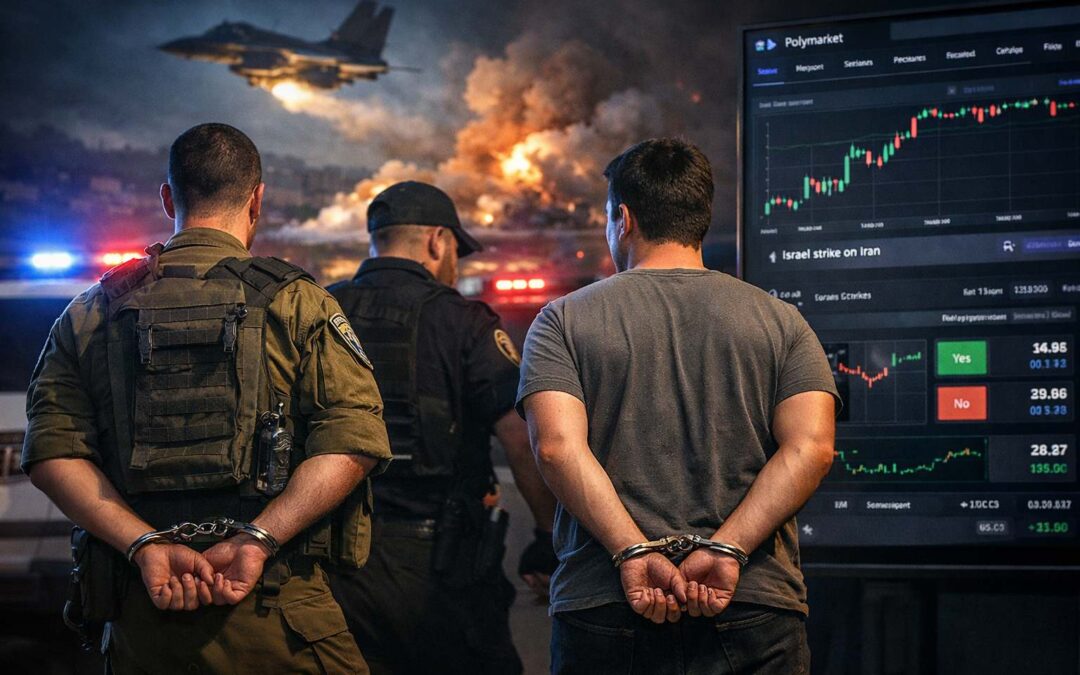
Synopsis: Israeli police arrested a military reservist and a civilian for using secret info on Iran strikes to bet on Polymarket crypto site. They won big but face security charges.
Israeli authorities have cracked down on a dangerous new frontier of insider trading. Two individuals now face serious charges for allegedly exploiting classified military intelligence. They placed cryptocurrency bets on secret operations against Iran. This case marks the first known arrests linking military secrets to prediction market gambling.

The arrests send shockwaves through both security and cryptocurrency communities worldwide. Officials warn that such activities create genuine threats to national security. Moreover, they could potentially reveal sensitive military plans to adversaries monitoring betting patterns.
Military Reservist and Civilian Charged With Security Offenses
On February 12, 2026, Israeli defense officials announced the indictments. A military reservist and a civilian face multiple charges. These include security offenses, bribery, and obstruction of justice.
The reservist allegedly accessed classified information through his position. He worked with Israel’s domestic security agency, Shin Bet. Investigators believe he obtained details about planned military strikes on Iran. Subsequently, he shared this intelligence with his civilian accomplice.
The civilian then used this secret information on Polymarket. This blockchain-based platform allows users to bet on real-world events. They wagered on the timing of Israeli military operations. The Defense Ministry called these actions a “severe ethical failure.”

However, authorities clarified that no operational damage occurred from the leak. The IDF described it as crossing a red line. Nevertheless, the military has implemented stricter security procedures across all units.
The reservist’s lawyer contests the charges. He claims the indictment contains flaws. Notably, prosecutors dropped one charge of harming national security. This suggests the case may involve ethical violations rather than direct security damage.
Suspicious Betting Activity Raises Red Flags
The investigation began after unusual betting patterns emerged on Polymarket. During June 2025, Israel and Iran engaged in a 12-day conflict. A user named “ricosuave666” placed multiple high-stakes bets during this period.
This account wagered tens of thousands of dollars on specific markets. These included “Israel strike on Iran on June 24” and similar military actions. The user’s predictions showed remarkable accuracy. They earned over $152,300 in total profits.
One bet alone generated more than $128,700 in winnings. Israeli broadcaster Kan News reported on this suspicious activity in January 2026. The timing and precision of these wagers suggested insider knowledge.
Authorities have not confirmed whether the arrested individuals operated this account. However, the timing aligns closely with the investigation’s focus. The case highlights how prediction markets can attract those with privileged information.
Also Read: Digital Currency Powers Modern Criminal Networks in Southeast Asia; $260M Tracked in 2025 Alone
Prediction Markets Create New Security Vulnerabilities
Polymarket operates as a decentralized platform using cryptocurrency. Users bet with USDC, a stablecoin tied to the US dollar. The platform allows anonymous trading through blockchain technology.
This anonymity creates both opportunities and risks. Anyone with insider information can potentially profit without detection. Furthermore, adversaries monitoring these markets might glean intelligence from betting patterns.
Joseph Grundfest, a former SEC commissioner, warns about these dangers. He notes that such bets could inadvertently endanger lives. Military enemies might detect operational plans by watching market movements.
This Israeli case follows another scandal earlier in 2026. A Polymarket user profited around $400,000 betting on Venezuela’s president. The bet succeeded just hours before a US raid captured Nicolás Maduro.
These incidents raise serious questions about prediction market integrity. Lawmakers worldwide now scrutinize these platforms more closely. They seek ways to prevent exploitation while preserving legitimate forecasting functions.
Global Implications and Future Regulations
Israel’s Defense Ministry emphasized the gravity of these offenses. Officials stated that bets based on classified information pose “real security risks.” They threaten both military operations and national interests.
The ministry pledged continued action against anyone misusing classified data. Israeli security forces will pursue all such cases aggressively. The military has already tightened information-sharing protocols within units.
This case may accelerate global regulatory efforts. Prediction markets operate across borders with minimal oversight. Their cryptocurrency foundations make enforcement challenging for individual nations.
Experts suggest several potential solutions. These include mandatory identity verification for sensitive markets. Platforms might also need to restrict betting on military operations entirely. International cooperation will prove essential for effective regulation.
Nevertheless, prediction markets continue growing rapidly. They blend speculation with crowd-sourced forecasting in unprecedented ways. Millions of dollars flow through these platforms daily on geopolitical events.
The tension between innovation and security remains unresolved. As this Israeli case demonstrates, the stakes extend beyond money. They encompass national security, military lives, and international stability. Finding the right balance will challenge policymakers for years to come.
Written By Fazal Ul Vahab C H
