
Synopsis: Bitcoin’s rare Short-Term Holder Bollinger Band signal, unseen since 2018, flashed again after a drop from $126,000 peak. Past times led to huge rallies, like 1,900% over three years, could it repeat in 2026?
A rare signal has appeared in Bitcoin’s data. The last time it showed up, Bitcoin surged nearly 1,900% over the next three years. Now, analysts are watching closely to see if history repeats.

Bitcoin recently peaked near $126,000 in October 2025. Since then, it has dropped sharply. However, a key on-chain metric is now flashing a signal that could mean the worst is over.
A Signal Not Seen Since 2018
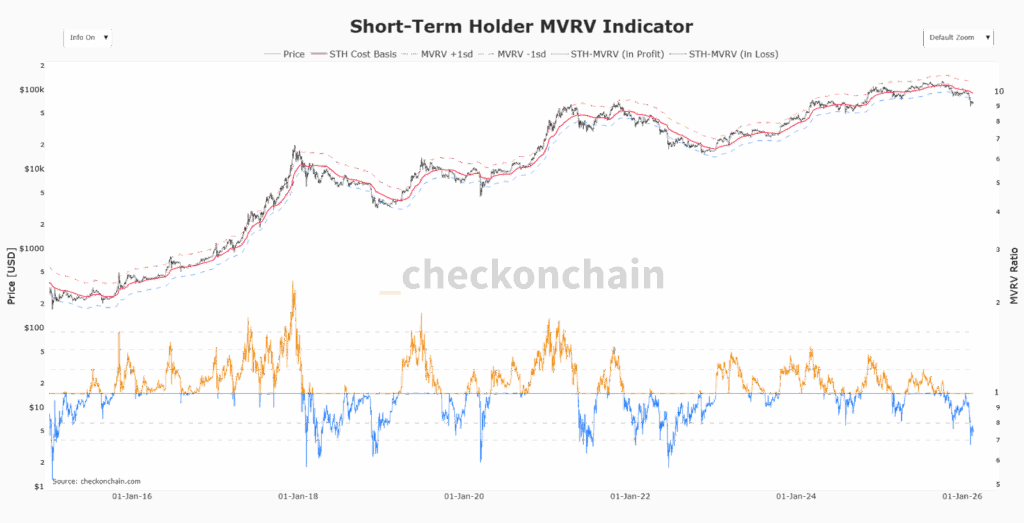
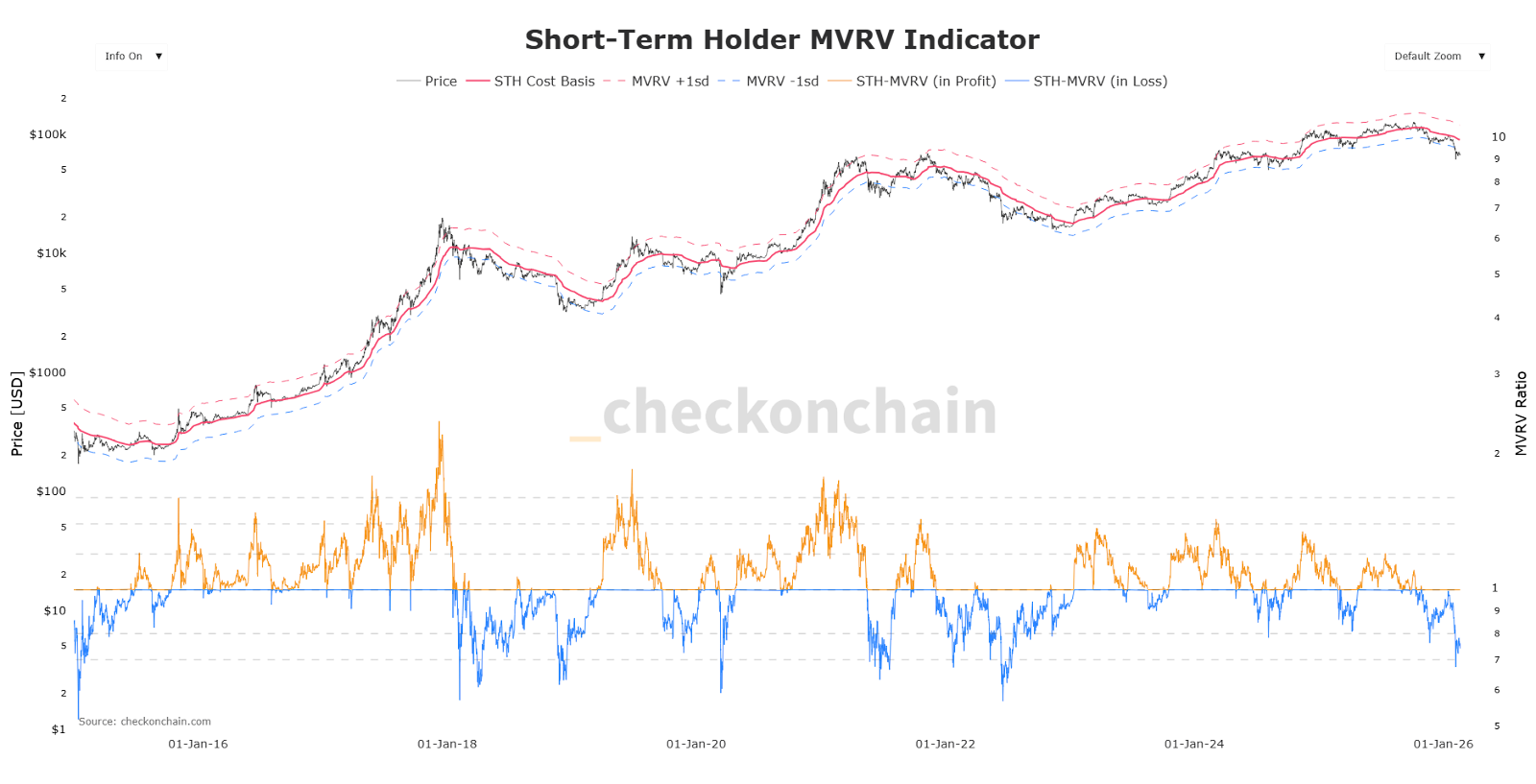
The metric in focus is called the Short-Term Holder (STH) Bollinger Band. On-chain analytics firm Checkonchain tracks this indicator closely. It measures the gap between Bitcoin’s current price and what short-term holders paid for it. Short-term holders are people who bought Bitcoin within the last 155 days.
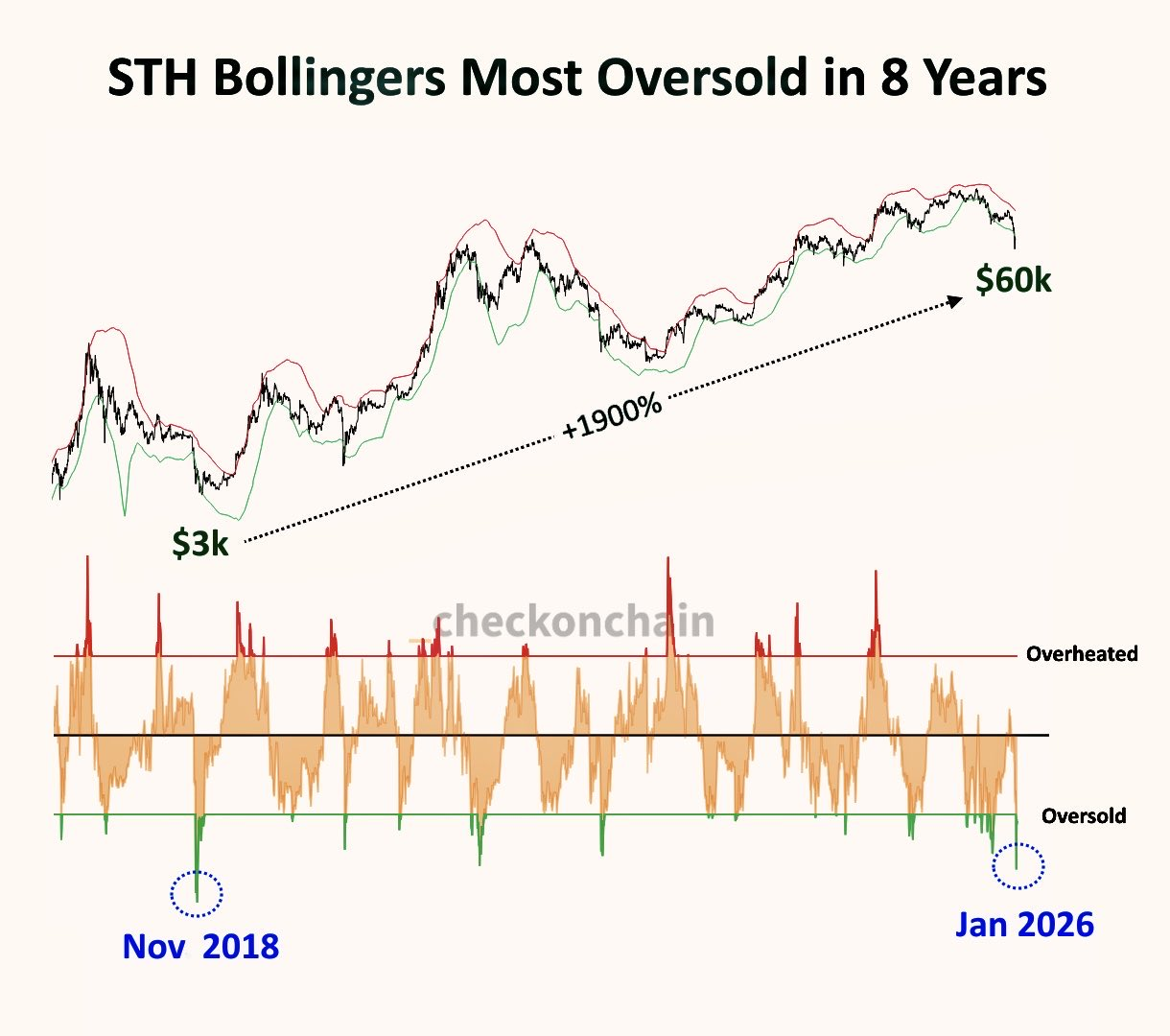
When that gap becomes too wide, the oscillator drops below its lower band. That means Bitcoin is trading far below what recent buyers paid. Historically, this marks a moment of maximum fear in the market. Currently, the indicator has fallen to its deepest oversold level in nearly eight years. The last time it reached this point was during the 2018 bear market bottom.

What History Tells Us
Source: X.com/QuintenFrancois
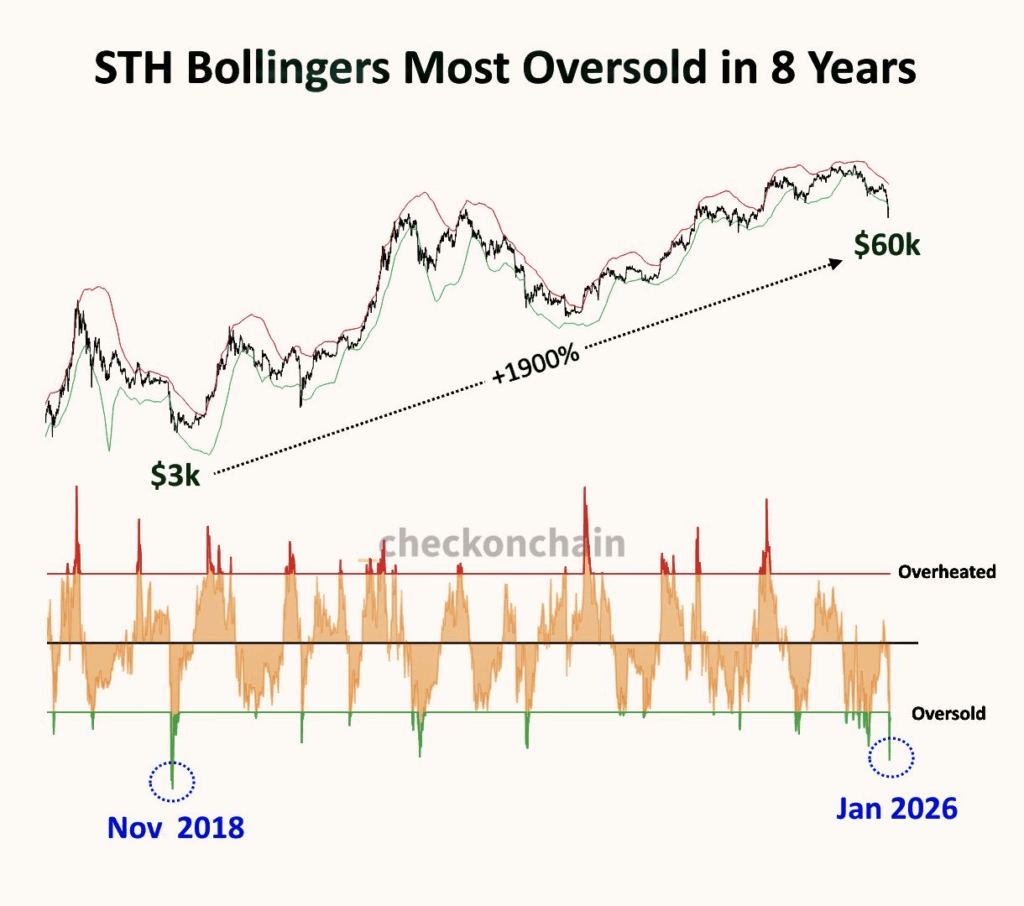
This signal has appeared twice before. Both times, it marked the end of a downturn and the start of a major recovery. In late 2018, Bitcoin hit a low of around $3,200. The same oversold signal appeared at that time. What followed was a 150% gain within one year. Over three years, Bitcoin climbed 1,900%, reaching its 2021 peak near $69,000.
Then in November 2022, the signal flashed again. Bitcoin had dropped to about $15,500 following the collapse of major exchange FTX. After that low point, Bitcoin went on to surge 700%, eventually setting a new record high near $126,270 by October 2025. Therefore, each time this signal appeared, it marked a turning point. Analysts now believe the current reading could do the same.
Also Read: Bhutan’s Crypto Dream Hits a Wall in the Real World
Big Buyers Have Not Sold Yet
One reason analysts feel optimistic is the behavior of large Bitcoin holders. So far, short-term holder whales those who bought large amounts of Bitcoin recently have not sold off their holdings in a panic.
This matters because mass selling by large holders often pushes prices lower. The fact that they are holding on suggests seller exhaustion may be close.
Additionally, the Crypto Fear and Greed Index has recently hit record lows. That kind of extreme fear has historically appeared at market bottoms. As a result, several analysts, including those at crypto platform MatrixPort, believe Bitcoin may be near a cycle low.
A Possible Rebound by End of March
Meanwhile, a fresh wave of money could soon enter the market. Wells Fargo strategist Ohsung Kwon pointed to an unusual tailwind in a note cited by CNBC. He said U.S. tax refunds in 2026 are expected to be larger than usual. Up to $150 billion could flow into markets, including Bitcoin, by the end of March. This kind of liquidity surge could absorb remaining sell pressure and spark a reversal.
This development supports the idea that Bitcoin may find its bottom soon. If buyers step in as refunds roll out, the timing could align with the on-chain signal currently flashing. That said, no signal is guaranteed. Bitcoin markets are also shaped by interest rates, global risk sentiment, and regulatory changes. Some long-term holders have also begun selling at a loss, which adds caution to the outlook.
Still, the data is hard to ignore. The last two times this signal appeared, Bitcoin went on to deliver some of its biggest gains in history. Whether this time follows the same path, the market is watching closely.
Written By Fazal Ul Vahab C H