
Synopsis: Bhutan’s nationwide crypto payments for tourists flopped after launch. Merchants signed up, but zero usage due to poor awareness, weak internet, power cuts, and low digital skills.
Hundreds of merchants signed up. Almost no one used it. Now, Bhutan’s bold bet on digital payments is raising hard questions.

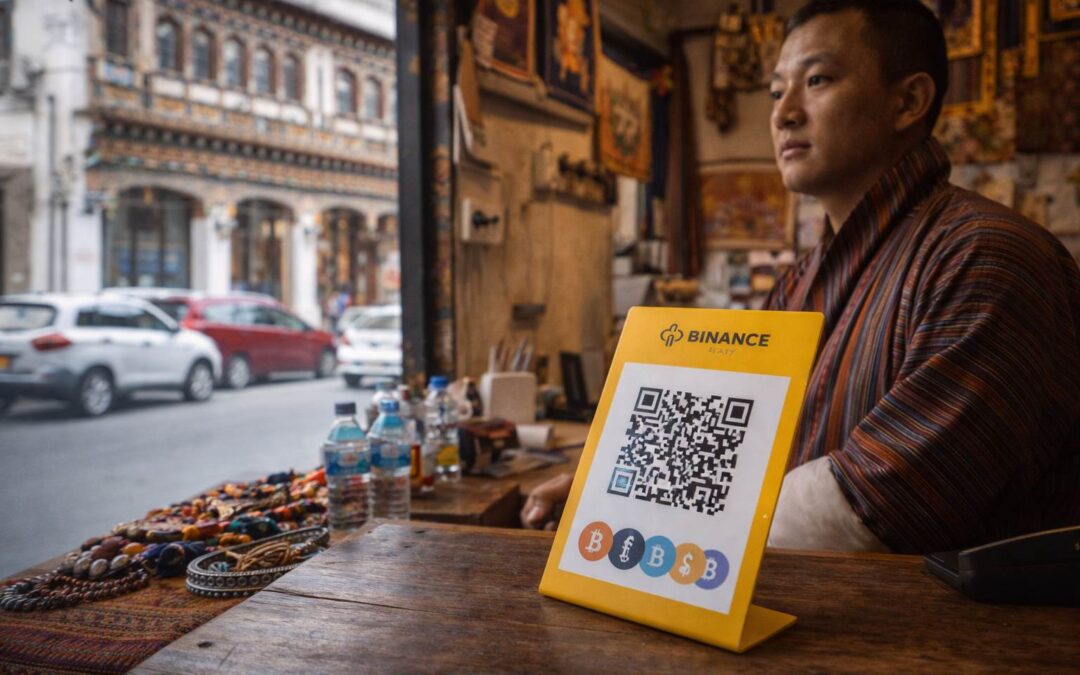
Walk into a shop in Bhutan’s capital today, and you might spot a QR code on the counter. It’s for crypto payments. But ask the shopkeeper when someone last used it, and the answer is almost always the same: never. Nearly a year after Bhutan launched one of the world’s most ambitious crypto payment experiments, the results tell a quiet story of a big idea meeting an even bigger reality.
A Big Launch, A Quiet Aftermath
In May 2024, Bhutan made history. The Himalayan kingdom became the first country to roll out a nationwide crypto payment network for tourists. Visitors could pay for visas, flights, hotels, and meals using more than 100 cryptocurrencies through Binance Pay.
The early numbers looked promising. Within the first month, over 1,000 merchants signed up. The government called it a milestone. Headlines followed. But the excitement faded fast.
“It has been four to five months, but no customer has used it until now,” said Sonam Dorji, who works at Lotus Peak Enterprise, a handicraft store inside the Le Meridien hotel in Thimphu. “No one knows that we accept cryptocurrency and Binance Pay.” His experience is not unique. Across Thimphu, QR codes sit untouched at hotel counters and café tables. For most merchants, the system exists on paper not in practice.

Why Tourists Aren’t Paying in Crypto
The problem starts before a tourist even reaches the shop counter. Most visitors arriving in Bhutan simply don’t know the option exists. Marketing for the system has been thin. There is no aggressive push at airports, hotels, or visitor centers to tell tourists they can pay in crypto. Even merchants who enrolled in the program often fail to mention it.
“Initially, there was talk about expanding crypto payments to other sectors,” said Ugyen Dendup, co-founder of NoMindBhutan, Bhutan’s first AI startup. “But in practice, I haven’t seen this happen in any significant way yet.”
Beyond awareness, the technical barriers are real. Tourists need a Binance account set up before they arrive. Many casual travelers won’t bother. And even those open to it may hesitate. crypto’s reputation for complexity and volatility is not easy to shake.
The Structural Problems No App Can Fix
Experts say the deeper issues run well below the surface. Bhutan’s infrastructure simply isn’t built for digital payments at scale. The average business in the country deals with power cuts 19 times a year. One in five businesses owns or shares a generator, according to World Bank data. Cryptocurrency requires stable electricity and reliable internet. two things Bhutan cannot yet guarantee consistently.
Then there’s literacy. One-third of Bhutan’s population cannot read. Navigating a digital payment app requires a baseline of digital literacy that many citizens do not yet have. “Countries with shaky infrastructures and low rates of literacy are not the best places for introducing new types of legal tender,” said Jay Zagorsky, a professor at Boston University’s Questrom School of Business.
He points to El Salvador, which made Bitcoin legal tender in 2021. The country reversed that decision in 2025, after the International Monetary Fund stepped in to address a struggling economy. The Central African Republic had a similar experience. It legalized Bitcoin in 2022 and abandoned the decision within a year.
Bhutan’s system differs from those cases. it does not make crypto legal tender, and payments convert instantly to the local currency, the ngultrum. That reduces merchant risk. However, adoption has still stalled.
Also Read: South Korea Reopens Crypto Market to Corporates After Nine-Year Ban
Who Is This Really For?
The government’s motivation is not hard to understand. Bhutan began mining Bitcoin in 2019, using surplus hydroelectric power from its rivers and mountains. By October 2024, its Bitcoin reserves had grown to $1.4 billion. the largest state-backed green-mined reserve in the world.
Bitcoin has given Bhutan something it lacked before: a way to pay for imports without relying on hard currency. In 2023, the government used $72 million from Bitcoin sales to fund a 50% salary increase for civil servants.
“Mining bitcoin gives Bhutan a currency to purchase imports that it didn’t have before,” Zagorsky said. “However, just because the central bank is pushing Bhutan society toward digital payments does not make it sensible.”
The payment system, therefore, appears to serve the government’s broader crypto strategy more than it serves the merchants who signed up. Officials from Bhutan’s Department of Tourism and DK Bank did not respond to requests for comment.
Crypto regulations in the country remain unclear. “It exists in a kind of gray area,” Dendup said. “Some people push for it, some are cautious, and enforcement or guidance isn’t very clear.”
A Lesson for the World
Bhutan’s experiment is not a failure yet. However, it is a sharp reminder of what digital money advocates often overlook: technology alone cannot drive adoption.
People use payment systems they trust, understand, and can access reliably. Without strong infrastructure, clear regulations, and genuine public awareness, even the most well-designed system gathers dust. like a QR code on a shop counter in Thimphu that no one has scanned in months.
The lesson here isn’t that crypto can’t work. It’s that making it work requires far more than a launch event.
Written by Fazal Ul Vahab C H
