
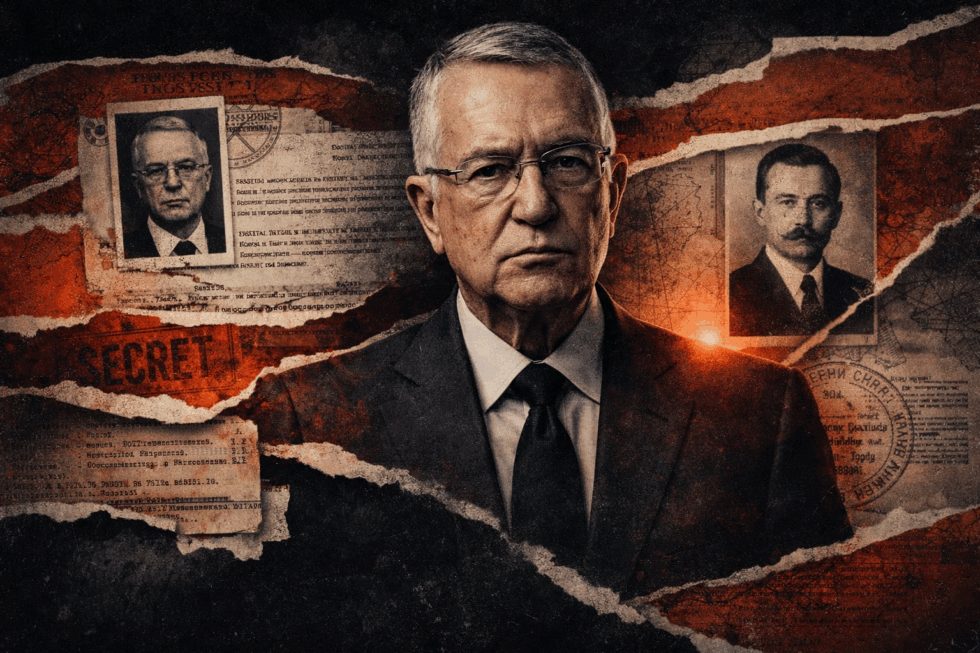
Synopsis: Mexican billionaire Ricardo Salinas lost $400M in Bitcoin collateral to Astor Capital fraudsters who sold his Elektra shares secretly, loaned back proceeds as “loan.” Legal battle rages; $1B+ claims across countries.
Mexican tycoon Ricardo Salinas trusted the wrong lender and lost nearly half a billion dollars.

Ricardo Salinas Pliego had a big plan in 2021. Bitcoin was surging. The Mexican billionaire wanted to bet $400 million on the cryptocurrency. He had the ambition. He just didn’t have the cash.
So, he did what the ultra-rich often do. He borrowed using shares in his family company as collateral. What happened next would cost him nearly everything he put up.
The Lender That Was Never Real
Salinas needed an extra $150 million on top of what legitimate banks had already offered. Through his Swiss adviser and a London broker, he found Astor Capital Fund.
The broker described Astor in an email as built on the wealth of the famous Astor family. The firm claimed backing from university endowments and elite family offices. On a video call, a man called himself Thomas Astor-Mellon. He appeared to be sitting on a yacht. He said his firm specialized in stock-lending deals.

However, none of it was true. “Thomas Astor-Mellon” was actually Alexei Skachkov. He had convictions for forging prescriptions and stealing jewellery. The real deal-maker was a man called “Gregory Mitchell” who was, in fact, Val Sklarov. Sklarov was a Ukrainian-born American with a long criminal history, including an $18 million Medicare fraud conviction from the 1990s.
The two men had built a business on image alone. Thick paperwork. Prestigious names. Reassuring branding. Everything looked legitimate. Nothing was.
Shares Sold, Money Loaned Back
In July 2021, Salinas signed a 31-page contract with Astor Asset Management 3. He pledged roughly 7.2 million Elektra shares, worth over $416 million. In return, he expected a secured loan.
Instead, Sklarov and his associates secretly sold those shares almost immediately. They generated around $360 million from the sales. Then, they loaned that money back to Salinas his own money, returned to him as a “loan.” The rest went into their own pockets. AOn the other hand, Salinas received account statements showing his shares were safe. He had no idea they were already gone.
“It was the perfect fraud,” Salinas later said. “The guy took my stock, sold it, and gave me the money as a loan.” Furthermore, investigators found that one entity Cornelius Vanderbilt Capital Management, a Belize-registered company named after yet another famous dynasty received $359 million from Elektra share sales. About $229 million of total proceeds ended up with Sklarov or connected parties. Another $88 million remains missing.
Also Read: Russia Leads Global Illicit Stablecoin Activity as Criminal Networks Expand Across Five Nations
The Collapse Goes Public
By spring 2024, Salinas’s team grew suspicious. They asked the share custodian for proof the Elektra shares still existed. In July 2024, Salinas offered to repay all four lenders early. The three banks accepted.
Astor refused. Instead, it issued a default notice, listing 11 alleged contract breaches. Shortly after, the truth became public. Elektra’s shares crashed 20% in a single day. The Mexican stock exchange suspended trading. Around $5.5 billion in market value was wiped out in hours. Salinas went public on social media, naming the fraudsters and vowing to pursue them.
A Legal Fight Across Continents
As a result, Salinas took Sklarov to England’s High Court. London judges found a strong case for fraud in two separate rulings. The court froze assets and blocked attempts to dismiss the case. The trial is still pending as of early 2026.
Sklarov, who denies fraud, argues that the contract allowed him to sell the shares. He says borrowers knew the terms. “Every borrower I have worked with gave permission,” he claims.
But court records tell a different story. Sklarov and companies linked to him face fraud claims totalling at least $1 billion across multiple countries. Cases span New York, Hong Kong, Jamaica, Georgia, and the Bahamas.
Salinas admits his own team failed to do proper checks. “I’m an idiot,” he says. “We were careless and now we’re paying the price.” Still, he keeps fighting not just for money, but for accountability. “If this is not stopped,” he says, “I won’t be the last.” And on the key question where are the shares? Sklarov has offered no clear answer.
Written By Fazal Ul Vahab C H
