
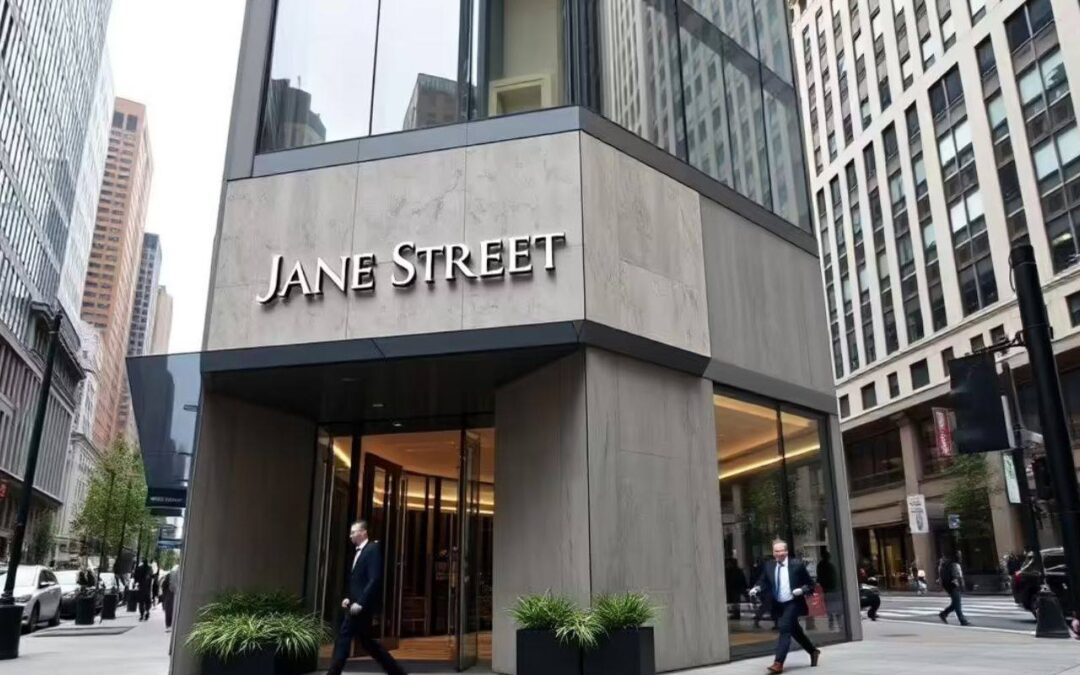
Synopsis: Jane Street faces U.S. lawsuit over $200M Terra/Luna insider trading and India ban for $4.3B index manipulation. Regulator alleges expiry-day traps profited from aggressive buy-sell schemes.
Jane Street Capital is in deep trouble and on two fronts. The powerful trading firm now faces a federal lawsuit in the United States over the collapse of a $40 billion crypto ecosystem. Meanwhile, India’s top market regulator has already barred it from trading there. Together, the two cases paint a troubling picture of a firm that may have used its privileged position to profit at the expense of ordinary investors.

Jane Street is no small player. The firm generated $20.5 billion in net trading revenue last year alone. It handles roughly 10% of all U.S. equity trades. Yet, despite its size and reach, the firm has avoided most public scrutiny until now.
A Crypto Lawsuit That Could Change Everything
On February 23, 2026, a federal lawsuit landed in the Southern District of New York. The case was filed by Todd Snyder, the administrator overseeing the bankruptcy of Terraform Labs. It names Jane Street Group, Jane Street Capital, co-founder Robert Granieri, and two employees Bryce Pratt and Michael Huang.
The complaint makes a bold claim. It alleges that Jane Street used inside information from Terraform Labs. This information, it says, helped the firm avoid more than $200 million in losses. Those losses would have come from the Terra/Luna collapse in May 2022, which wiped out roughly $40 billion in value.
The key moment came on May 7, 2022. That day, Terraform quietly withdrew 150 million UST tokens from a decentralized exchange called Curve3pool. This move had not been announced publicly. Within just 10 minutes, a wallet linked to Jane Street pulled 85 million UST from the same pool. That was the largest single swap the platform had ever processed.

The combined withdrawal destabilized UST’s liquidity. Within a week, the entire Terra Luna ecosystem had collapsed.
According to the complaint, the trade “would have been impossible without inside information.” Jane Street, however, called the lawsuit “desperate” and a “transparent attempt to extract money.”
The case includes 13 counts. These span insider trading, securities fraud, Commodity Exchange Act violations, unjust enrichment, and breach of confidence. Many details remain under seal.
The Intern Who Built a Secret Chat
How did Jane Street allegedly get this inside information? The complaint points to one key figure: Bryce Pratt. Pratt interned at Terraform Labs during the summer of 2021. He then joined Jane Street that September. By February 2022, he had set up a group chat. He called it “Bryce’s Secret.” The chat included a Terraform software engineer and members of Terraform’s business development team.
In one exchange cited in the filing, a Terraform engineer wrote directly about Jane Street. He said: “bro we all know who the buyer is. its where u work… Jane Streeeeeeeet.”
When someone raised questions about the legality of sharing information, Pratt allegedly replied that it was probably fine. His reasoning: if a rival firm could legally do it, Jane Street could too.
Meanwhile, Terraform founder Do Kwon received a 15-year prison sentence in December 2025. He was convicted of wire fraud and conspiracy. Additionally, a separate $4 billion lawsuit filed that same month accuses Jump Trading of a secret deal to buy Luna at $0.40 when the market price was $110.
India Said Stop Jane Street Kept Going
Long before the Terraform lawsuit, a similar story was unfolding in India. In July 2025, India’s Securities and Exchange Board known as SEBI issued a sweeping 105-page enforcement order. It barred four Jane Street entities from Indian securities markets entirely.
SEBI accused Jane Street of manipulating two major Indian stock indices: BANKNIFTY and NIFTY 50. The alleged manipulation happened across 18 derivative expiry days between January 2023 and March 2025. Total profits from this strategy, according to SEBI, came to roughly $4.3 billion.
The regulator described a two-phase strategy it called an “expiry day trap.” In the morning, Jane Street’s entities would aggressively buy index stocks and futures. Often, they accounted for more than 20% of market volume in individual securities. This pushed the index higher. In the afternoon, they reversed course entirely. They dumped their positions, driving the index back down. Short options positions built in the morning then became profitable as prices fell.
On a single day January 17, 2024 this strategy allegedly generated 735 crore rupees in profit.
SEBI called the trades “sharp, large and aggressive.” It said they created “a false or misleading appearance of market activity.” What’s more, when India’s National Stock Exchange issued a written warning in February 2025 and told Jane Street to stop, the firm acknowledged the letter then continued the same practices anyway.
SEBI called this response “egregious behaviour, in clear disregard of the explicit advisory.” As a result, the regulator impounded approximately $566 million in alleged unlawful gains.
Jane Street dismissed the SEBI investigation as “biased” and “pre-determined.” It filed an appeal with India’s Securities Appellate Tribunal. That hearing was adjourned on February 25, 2026 the very same week the Terraform lawsuit was filed in New York.
Also Read: Binance Targets Top Spot in South Korean Crypto Market Through GoFi Repayment
Two Cases, One Pattern
The legal theories in these two cases are different. The Terraform lawsuit alleges insider trading through the misuse of confidential information. The SEBI order describes market manipulation through aggressive trading patterns. However, both describe a strikingly similar structure.
In both cases, the allegations center on the same idea: use a privileged position to move one market, then harvest profits in the derivative layer sitting on top of it. In India, Jane Street allegedly pumped index stocks to profit from short options. In crypto, it allegedly used inside knowledge to exit before the crash.
This structural similarity matters even more given Jane Street’s current role in crypto markets. The firm was one of the original four authorized participants for BlackRock’s iShares Bitcoin Trust (IBIT) the largest spot Bitcoin ETF in the world. Its most recent filing showed roughly $790 million in IBIT shares as of the fourth quarter of 2025.
Furthermore, current U.S. disclosure rules require reporting long equity positions. They do not require reporting futures, swaps, or most over-the-counter derivatives. As a result, Jane Street’s actual net exposure to Bitcoin whether it is long, flat, or short is unknown to the public. The SEC has proposed expanding these rules, but the change has not yet been implemented.
Both cases remain in early stages. Jane Street denies all claims in both jurisdictions.
Still, the firm now faces scrutiny on two continents. Regulators and plaintiffs are describing variations of the same concern: that a trading operation built on speed and information advantages may have crossed lines. And for a firm that serves as gatekeeper to the largest Bitcoin ETF, the question goes beyond legal liability. It asks whether the infrastructure around digital assets has matured enough to keep up with the firms now operating inside it.
Written By Fazal Ul Vahab C H