

Synopsis: Spot Bitcoin ETFs demonstrate slowing flows but few redemptions, indicating more structural support than accumulation. Flow patterns, changes in AUM, and concentration in issuers have become important factors in assessing market impact.
Spot Bitcoin ETFs have entered a less eventful period. While initial inflows were explosive, daily creations have slowed, but few redemptions have occurred. For crypto investors, ETF flow patterns have become a significant market driver and sentiment indicator.

Key Stats and Data
- U.S. spot Bitcoin ETFs have cumulatively gathered 800000+ BTC so far.
- The combined assets under management (AUM) are above $40-50 billion, depending on the BTC price.
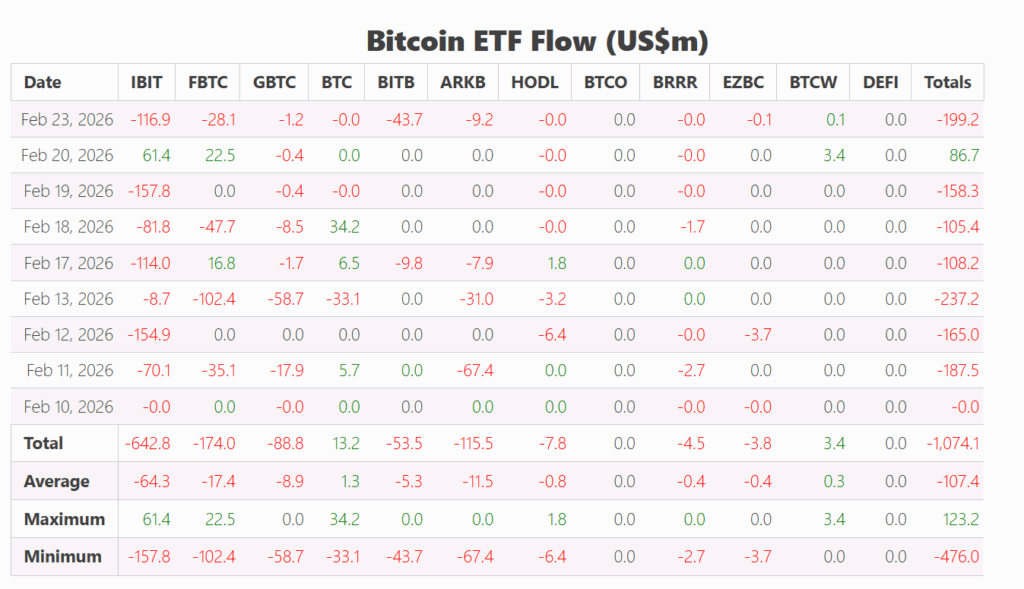
- The peak daily net inflows touched $1 billion, but recent days see little to mixed inflows.
- Outflows are seen in selective ETFs, not spread across the abroad.
- ETFs hold approximately 4% to 5% of the total circulating BTC supply.
- The shift in trends is evident; the explosive net buying has slowed down, but the structural outflows have not picked up.
Flow Slowdown: Accumulation Fatigue or Structural Base?
Following the launch, U.S. spot Bitcoin ETFs have seen significant net inflows, reducing supply and providing a strong price floor. This growth phase has now slowed down.
While daily inflows are lower and more erratic, total AUM still remains high, signifying a slowdown in accumulation rather than the beginning of a distribution phase. Crucially, inflows are dominated by handful of leading issuers, with occasional outflows in other ETFs, signifying a rotation rather than a systematic dump.
Lack of redemption pressure suggests institutions are holding positions rather than actively selling.This is a natural slowdown in growth, rather than a structural shift, which is common after a launch-driven growth phase.
Supply Absorption and Market Structure Implications
The demand for ETFs has a direct impact on the liquidity supply of Bitcoin. When investment funds issue new shares, the underlying BTC is taken out of circulation and locked away in long-term storage. This has a structurally deflationary effect on supply.

If investment inflows slow down but not reverse, the market will see less incremental demand, but no new supply pressure. This is an important point.
In previous crypto cycles, demand was fueled mainly by retail leverage and derivatives trading. ETF-driven demand is now regulated, custodied, and often of longer-term duration. This represents a meaningful shift in Bitcoin’s market structure shift.
Source: Bitbo
Impact on Investors
For Short-Term Traders
- Less Directional Tailwind: Less capital inflows mean less structural support for prices.
- Flow Volatility as a Leading Indicator: A series of net outflows over multiple days can be a sign of reduced institutional interest.
- Correlation Between Flows & Volatility: A higher correlation between ETF outflows and intraday volatility could increase the downside risk.
- AUM Adjusted for Price Effects: Watch for AUM outflows that exceed the price movement of BTC- this would be a sign of actual capital outflow.
Also Read: Hong Kong Launches Digital Bond Platform to Connect Regional Tokenization Hubs
For Long-Term Investors
- Retention Over Daily Noise: The stability of aggregate positions matters more than the noise of daily flows.
- Institutional Commitment Signal: The persistence of ETF balances is a signal of portfolio allocation rather than trading.
- Supply Compression Effect: The presence of BTC in the ETF custody system compresses supply, solidifying structural demand.
- Macro Asset Maturation: Institutional commitments to Bitcoin’s price accelerates the asset’s evolution from a high beta trade to a recognized macro allocation.
Outlook
Bitcoin ETFs are currently in a phase of consolidation rather than distribution. The aggressive accumulation wave has subsided, but systemic redemptions are not extensive. This is a good sign for structural support, although it may slow the price’s upside momentum.
The next major move will probably depend on whether money flows resume at a rapid pace in favourable macro environments or if redemptions start to compound. Until then, the persistence of ETF flows is one of the cleanest indicators of institutional conviction in this cycle.
Written by Ansh Kapoor