

Synopsis: Stablecoin market cap drops $2.24B in ten days as investors exit crypto for gold and silver. Bitcoin falls 30% while gold hits record highs, revealing preference for traditional safe havens.
Investors are abandoning cryptocurrencies in favor of traditional safe havens. A sharp decline in stablecoin market capitalization signals that capital is flowing out of the crypto ecosystem.

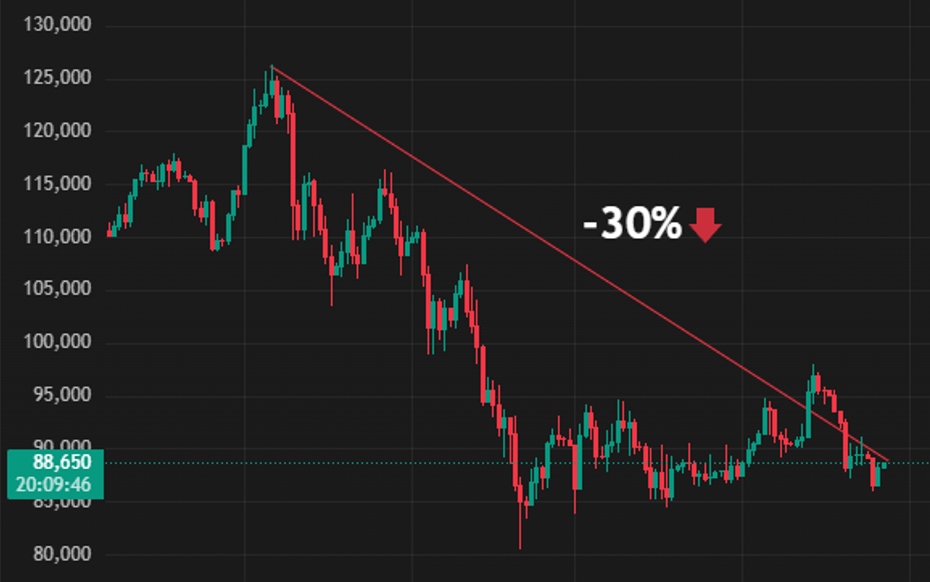
On the other hand, gold and silver have surged to record highs. Bitcoin has tumbled nearly 30% since October’s market crash. This shift raises questions about crypto’s role during economic uncertainty. The data suggests investors prefer safety over risk when markets turn volatile.
Source: Tradingview
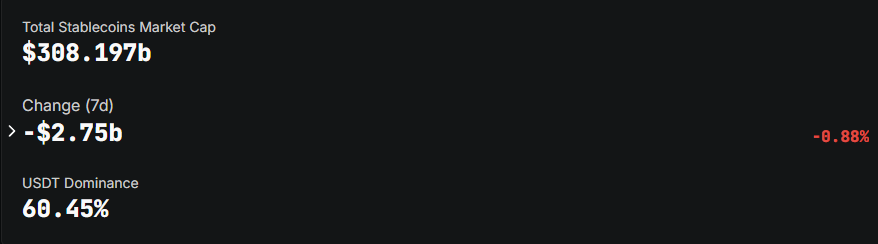
Stablecoin Market Loses $2.24 Billion in 7 Days
The total stablecoin market capitalization has dropped by $2.75 billion over the past 7 days. The data indicates that investors are cashing out to fiat currency instead of preparing for potential buying opportunities. This pattern suggests weakening confidence in the crypto market’s near-term prospects.
Source: defillama.com

Bitcoin has fallen from approximately $126,000 to $88,600 since the October crash. The broader crypto market has followed this downward trajectory. Gold has risen more than 25% to break the $5,000 barrier during the same period. Silver has more than doubled in market value. These contrasting movements highlight a clear preference for traditional assets.
Santiment explained that falling stablecoin market capitalization reveals investor behavior. Many are converting their crypto holdings to traditional currency. Rising demand for gold and silver confirms that investors are choosing safety over risk. Money typically flows into assets seen as stores of value during economic stress. Volatile markets like crypto struggle to attract capital in such environments.
Also Read: What Is the CMC Crypto Fear and Greed Index?
Bitcoin Functions as ATM During Market Stress
Bitcoin’s behavior during recent geopolitical tensions contradicts its reputation as digital gold. The cryptocurrency lost 6.6% of its value amid Trump’s tariff threats against NATO allies. Gold gained 8.6% during the same period. This divergence exposes Bitcoin’s vulnerability during times of market stress.
NYDIG’s Global Head of Research, Greg Cipolaro, explains the phenomenon. Bitcoin’s always-on trading and deep liquidity make it easy to sell quickly. Investors treat it like an ATM when they need to raise cash. Gold, despite being less accessible, tends to be held rather than sold. This fundamental difference affects how each asset performs under pressure.
Liquidity preference dominates during periods of stress and uncertainty. Bitcoin remains volatile and gets reflexively sold as leverage unwinds. Investors use it to raise cash, reduce risk, and de-risk portfolios. Gold continues to function as a true liquidity sink. This dynamic hurts Bitcoin far more than gold during market turbulence.
Large Holders Drive Divergent Patterns
Central banks have been buying gold at record levels. This creates strong structural demand that supports prices. Bitcoin faces the opposite pressure from large holders. Long-term Bitcoin holders are actively selling their positions according to NYDIG’s analysis.
Onchain data shows vintage coins moving toward exchanges. This suggests a steady stream of selling pressure. The seller overhang dampens any potential price support. Stablecoin issuer Tether has become one of the biggest gold buyers recently. The company purchased 27 metric tons worth $4.4 billion in the fourth quarter of 2025 alone.
This behavior from major market participants reinforces the flight to safety. Traditional assets benefit from institutional accumulation. Meanwhile, crypto faces consistent selling pressure from established holders. The contrast creates challenging conditions for market recovery.
Recovery Requires Stablecoin Growth Revival
Santiment believes crypto market recovery depends on stablecoin growth first. Historically, strong crypto recoveries begin when stablecoin market caps stop falling. Rising stablecoin supply signals fresh capital entering the ecosystem. It also indicates renewed confidence from investors.
Until stablecoin growth returns, smaller and riskier crypto assets will suffer disproportionately. Altcoins get hit much harder than Bitcoin in these environments. Bitcoin often holds up better due to its established position. However, reduced stablecoin supply still limits upside across the entire market.
The current turbulence stems from episodic events like tariffs and policy threats. Gold has long served as a hedge for short-term uncertainty. Bitcoin appears better suited to longer-term concerns. These include fiat debasement or sovereign debt crises. Gold excels in moments of immediate confidence loss and war risk. Bitcoin hedges against long-run monetary disorder and slow-moving trust erosion. As long as markets view present risks as dangerous but not foundational, gold remains preferred.
Written By Fazal Ul Vahab C H
