
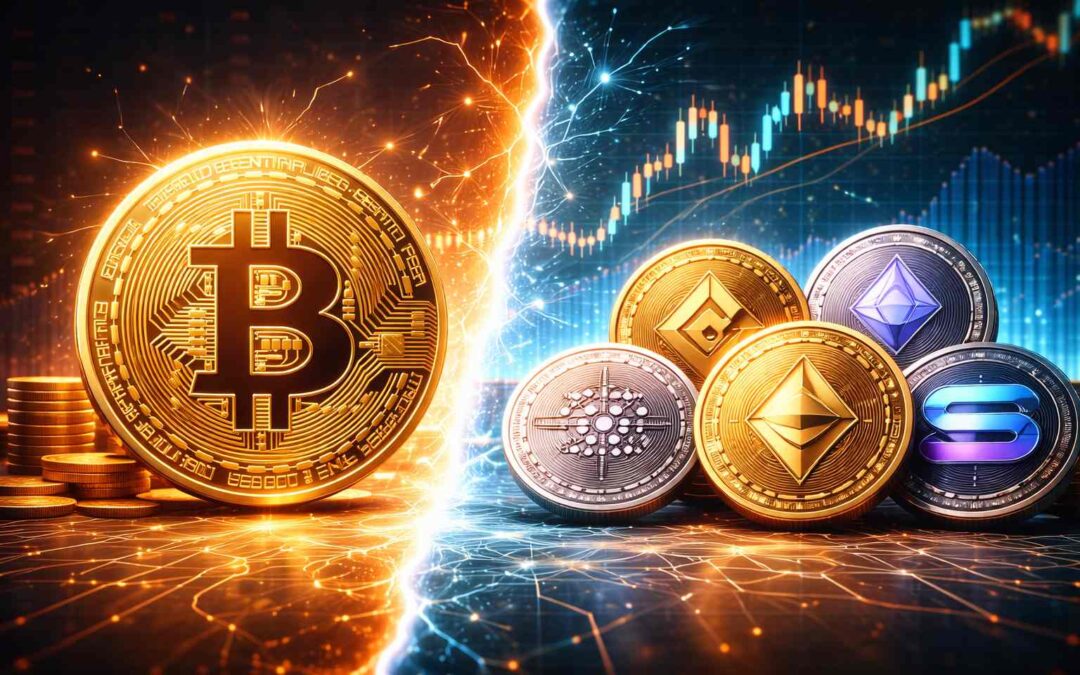
Synopsis: This article examines Bitcoin and alternative cryptocurrencies (altcoins), exploring why Bitcoin maintains its dominant position in the cryptocurrency market and highlighting the fundamental differences between Bitcoin and other digital assets.
Bitcoin was launched in 2009 as the world’s first cryptocurrency, establishing it as the most recognizable digital asset. Any cryptocurrency other than Bitcoin is classified as an “altcoin” (alternative coin). Despite the emergence and growth of thousands of altcoins, Bitcoin continues to dominate due to its large market capitalization and high liquidity.

Many cryptocurrency enthusiasts question whether Bitcoin’s popularity is justified, given that newer altcoins often employ more advanced technologies designed for better scalability and lower transaction costs. However, Bitcoin’s established position and proven track record continue to attract investors and users worldwide.
Core Purpose and Design Philosophy
The most crucial difference between Bitcoin and altcoins lies in their fundamental purpose. Bitcoin operates on a decentralized blockchain with a fixed supply cap of 21 million coins. It relies on the proof-of-work consensus mechanism to validate and secure transactions. Bitcoin primarily serves two functions:
Digital currency for peer-to-peer transactions
Store of value (often compared to digital gold)

Altcoins’ Diverse Objectives
As the name suggests, “altcoin” combines “alternative” and “coin.” These cryptocurrencies were created to address perceived limitations in Bitcoin’s design. Altcoins typically fall into categories such as platform tokens or utility tokens.
Popular examples include:
- Ethereum: Enables smart contracts and decentralized applications
- Litecoin: Offers faster transaction times
- Ripple (XRP): Designed for efficient cross-border payments
- Stablecoins: Maintain stable value pegged to fiat currencies
Market Position and Adoption
Bitcoin maintains the largest market capitalization in the cryptocurrency ecosystem, typically representing 40% to 60% of the total crypto market value. This dominance translates to wider acceptance among merchants, institutions, and regulatory frameworks compared to most altcoins.
Altcoins’ Market Challenges
Altcoins generally have lower market valuations and face greater challenges in achieving widespread acceptance. Contributing factors include:
- Higher price volatility
- Limited real-world use cases
- Less established regulatory status
- Smaller network effects
Technical Differences: Consensus Mechanisms
Bitcoin uses the proof-of-work consensus mechanism, which requires significant computational power to mine new blocks and secure the network. While this approach has proven highly secure over Bitcoin’s 15+ year history, it does consume substantial amounts of electricity.
Altcoins’ Alternative Approaches
Many altcoins employ different consensus mechanisms, including:
- Proof-of-Stake: More energy-efficient validation method
- Delegated Proof-of-Stake: Faster transaction processing
- Proof-of-Authority: Enhanced privacy features
These alternative mechanisms enable features such as faster transactions, lower fees, enhanced privacy, and support for decentralized applications directly addressing some of Bitcoin’s perceived limitations.
Also Read: What Is Margin in Crypto Trading?
Supply Economics
Bitcoin’s supply is permanently capped at 21 million coins, with new coins released through mining on a predictable schedule that halves approximately every four years. This programmed scarcity makes Bitcoin comparable to digital gold, providing a hedge against inflation for long-term holders.
Altcoins’ Varied Supply Models
Most altcoins do not have Bitcoin’s strict supply cap. Many feature:
- Higher or unlimited maximum supplies
- Different emission schedules
- Token burning mechanisms
While these features may support ecosystem growth and functionality, they typically reduce the asset’s store-of-value characteristics compared to Bitcoin.
Institutional Investment and Adoption
Bitcoin has gained significant institutional support, evidenced by:
- Holdings by publicly listed companies (e.g., MicroStrategy, Tesla)
- Adoption by sovereign wealth funds
- Approval of spot Bitcoin ETFs in major markets
- Inclusion in corporate treasury strategies
Altcoins’ Growing Interest
While altcoins are gradually attracting institutional attention, the market remains more speculative and retail-driven compared to Bitcoin. Some altcoins with clear utility, such as Ethereum, are beginning to see increased institutional investment.
Market Performance and Risk Profile
Altcoins often outperform Bitcoin during bull markets when market liquidity and risk appetite are high. Their higher volatility can generate substantial gains, attracting traders seeking larger returns. However, this same volatility creates significantly greater downside risk.
Risk Considerations
Bitcoin is generally considered the least risky cryptocurrency investment due to:
- Established track record
- Greater liquidity
- Wider acceptance
- More predictable behavior
Altcoins carry additional risks including regulatory uncertainty, technological failures, and the possibility of projects becoming obsolete.
Bitcoin and altcoins serve different purposes within the cryptocurrency ecosystem. Bitcoin functions as the foundational asset the “digital gold” that established the entire industry and continues to serve as the primary store of value and most widely accepted cryptocurrency.
Altcoins represent ongoing experimentation and innovation, addressing specific use cases and pushing technological boundaries. They expand the possibilities of blockchain technology beyond simple value transfer, enabling smart contracts, decentralized finance, and countless other applications.
For investors and users, understanding these fundamental differences is essential for making informed decisions about participation in the cryptocurrency market. Bitcoin offers relative stability and proven resilience, while altcoins provide opportunities for innovation and potentially higher returns albeit with correspondingly higher risks.
Written by Parvati Anilkumar
