
Synopsis: India’s RBI proposes linking BRICS nations’ digital currencies for faster cross-border payments. This could cut U.S. dollar reliance, boost trade, and ease tourism amid global tensions. Set for 2026 summit agenda.
India’s central bank is pushing for a major shift in how BRICS nations move money across borders. The Reserve Bank of India (RBI) wants member countries to connect their digital currencies, a move that could speed up trade and tourism payments while gradually reducing dependence on the U.S. dollar amid rising geopolitical tensions. If implemented, this could mark a significant moment for emerging economies seeking greater financial autonomy.

A Proposal for 2026 BRICS Summit
On January 19, sources revealed that the RBI proposed the idea of linking BRICS central bank digital currencies (CBDCs) to the Indian government. The initiative is expected to feature on the agenda of the 2026 BRICS summit, which India will host later this year.
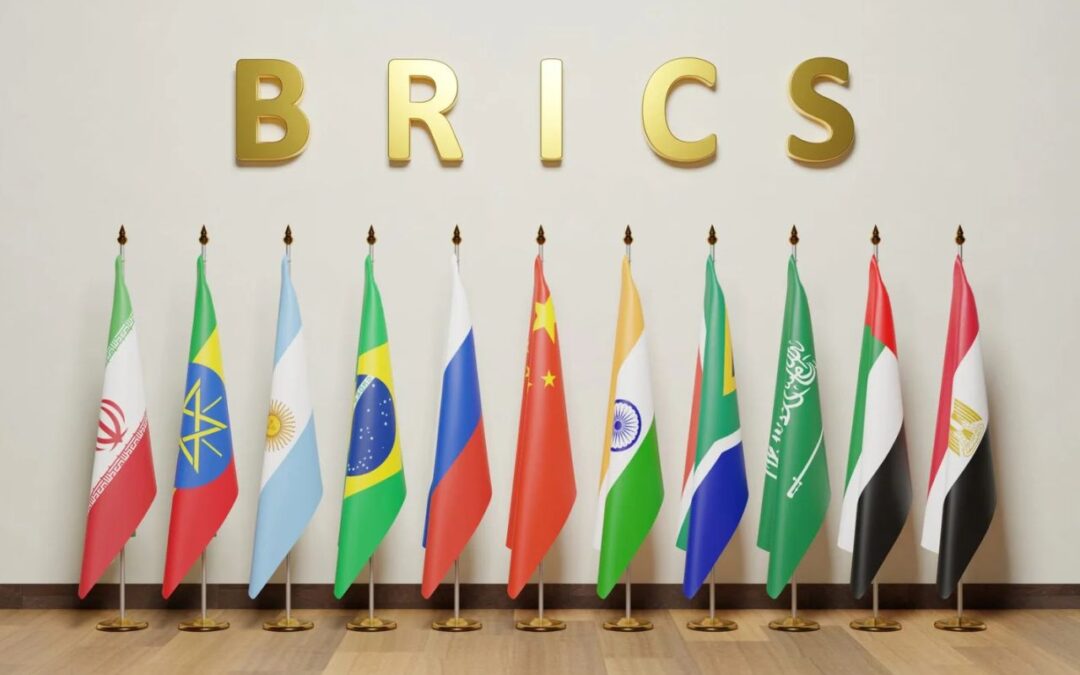
Speaking anonymously due to lack of official authorization, sources said the plan aims to integrate the digital currencies of BRICS members Brazil, Russia, India, China, and South Africa as well as newer members such as the UAE, Iran, and Indonesia. The goal is to create a more seamless system for cross-border payments and financial settlements.
So far, the RBI, Indian government, and central banks of Brazil, China, South Africa, and Russia have declined to comment. While no official confirmation has been made, discussions appear to be gaining momentum behind the scenes.
Building Digital Bridges Across Borders
The initiative builds on last year’s BRICS summit in Rio de Janeiro, where leaders emphasized the need for interconnected payment systems. India now seeks to take that vision further by linking CBDCs, potentially enabling faster and cheaper cross-border transactions without heavy reliance on the U.S. dollar.

All core BRICS members are currently running CBDC pilot programs. India’s e-rupee has already onboarded around 7 million retail users since its launch in 2022. China continues to expand its digital yuan, while other members are testing their own systems. The RBI has also enhanced the e-rupee with offline payment capabilities and programmable features for targeted subsidies, with fintech firms developing compatible digital wallets.
However, success depends on shared technical standards and governance frameworks. One proposed solution for managing trade imbalances includes bilateral foreign exchange swaps between central banks, with settlements cleared weekly or monthly. Russia and India previously attempted local currency trade, but challenges arose due to excess rupee accumulation. To address this, the RBI now allows investment of those funds into Indian bonds.
Despite potential hurdles such as resistance to foreign technology and the need for consensus progress appears feasible.
Also Read: Crypto Trader Converts ₹26,000 Into ₹5.7 Cr Overnight — But Was The Game Rigged?
Tackling Trade Imbalances and Tech Challenges
For digital currency integration to work effectively, BRICS nations must establish interoperable platforms with common technical standards. Addressing trade imbalances remains crucial, with currency swap mechanisms seen as a practical solution.
Past attempts at BRICS monetary integration have failed. Brazil once proposed a common BRICS currency, but the idea was ultimately abandoned. However, this CBDC initiative differs because it prioritizes practical benefits rather than ideological ambitions. Faster trade settlements and easier tourism payments are among the tangible advantages.
Geopolitical tensions also add urgency. U.S. President Donald Trump has criticized BRICS as anti-American and threatened tariffs against member nations. India, facing trade friction with the U.S. while deepening ties with Russia and China, sees this digital payment system as a way to create sanction-resilient financial pathways.
Although the RBI insists this is not an attempt to dethrone the U.S. dollar, linking CBDCs could reduce reliance on SWIFT and correspondent banking networks, lowering costs and increasing transaction speed.
Why India Prefers CBDCs Over Stablecoins
India strongly favors CBDCs over private stablecoins. RBI Deputy Governor T. Rabi Sankar recently warned that stablecoins could facilitate illicit financial flows, weaken monetary control, and destabilize the banking system.
Indian regulators fear that widespread stablecoin adoption could fragment the payment ecosystem and undermine financial stability. As reported by Reuters in September, the RBI views the e-rupee as a safer, regulated alternative.
Since its formation in 2009, BRICS has expanded in influence, especially amid rising global trade tensions. Trump’s tariff threats have further highlighted the bloc’s strategic importance, with India carefully balancing its economic and diplomatic relationships.
BRICS Digital Payments
The 2026 BRICS summit will be a critical milestone. The Indian government must first approve the RBI’s proposal before formal discussions begin among member states. Achieving consensus on technical and regulatory frameworks may take time, but momentum is building.
If successful, this initiative could transform cross-border finance within BRICS, boosting trade efficiency, simplifying travel payments, and gradually reducing dollar dominance without an outright confrontation.
With growing CBDC adoption across member nations led by India’s e-rupee and China’s digital yuan the groundwork is already in place. Challenges remain, but the shift from the Rio declaration to concrete plans in Delhi suggests meaningful progress.
India is now at the forefront of this digital financial push. As the world watches, the question remains: will BRICS successfully unite their digital currencies and reshape global trade? The answer could define the next chapter of emerging-market finance.
Written By Fazal Ul Vahab C H
