
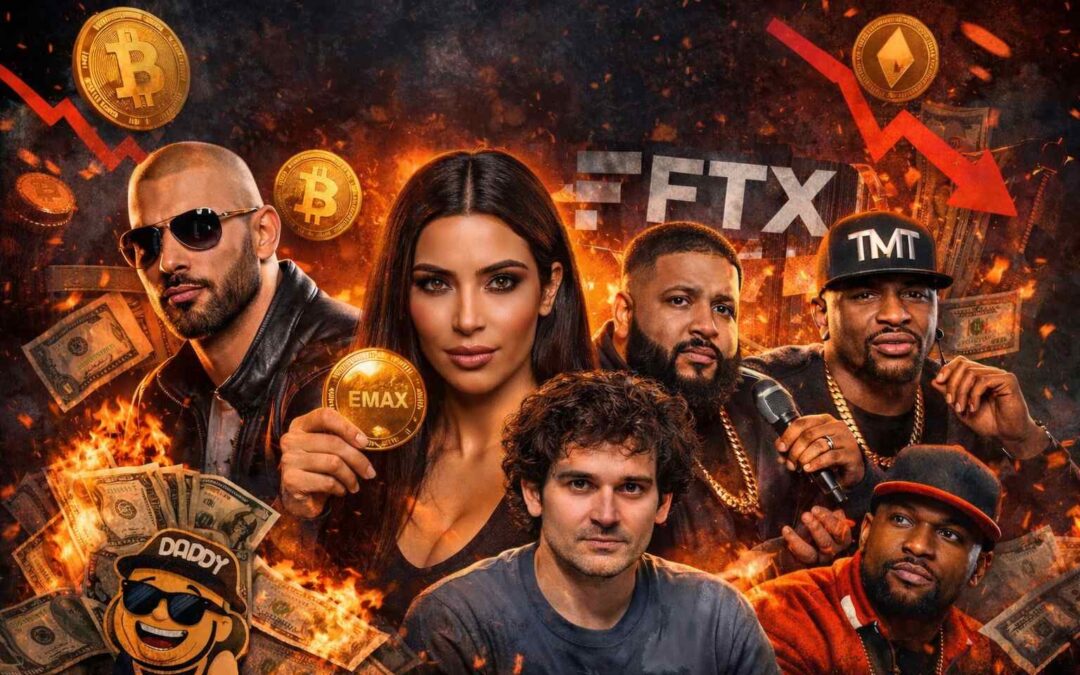
Synopsis: Celebrity-endorsed crypto scams exploit FOMO via social media hype around memecoins and NFTs, causing billions in losses. Tate’s DADDY, Kardashian’s EMAX, and FTX highlight red flags like insider dumps.
Celebrity-endorsed crypto scams have become a major threat to retail investors, especially during speculative market cycles. As cryptocurrencies gained global popularity, scammers increasingly exploited celebrity influence to promote fraudulent or high-risk crypto projects. According to blockchain analytics firms and global regulators, crypto scams have resulted in losses of over $1 billion globally in multiple years, not from a single category alone.

These scams primarily thrive on social media platforms, where celebrities, influencers, or fabricated endorsements are used to create artificial hype. Many of these schemes involve complex products such as memecoins, non-fungible tokens (NFTs), and tokenised investment projects. The lack of consistent global crypto regulations has further enabled such scams to spread across jurisdictions.
How Celebrity-Endorsed Crypto Scams Work
Celebrity crypto scams typically rely on visibility rather than fundamentals. Influencers or public figures promote a token to millions of followers, creating fear of missing out (FOMO). Once prices surge, insiders often exit their positions, leaving retail investors with heavy losses.
High-Profile Celebrity Crypto Scams
1. Andrew Tate
Andrew Tate is a controversial British-American influencer. In mid-2024, social media posts claimed that Tate had launched a memecoin called DADDY, allegedly inspired by the success of other viral tokens. The project was marketed using themes of masculinity and empowerment.
Blockchain analytics platform Bubblemaps later highlighted concentrated token ownership and suspected insider trading, common indicators of pump-and-dump activity. The DADDY token eventually fell significantly below its launch price, causing losses for late investors.

2. Jack Doherty’s Livestream
Jack Doherty promoted a memecoin named MCLAREN during livestreams and social media posts. The aggressive promotion led to a rapid price surge. Shortly after, Doherty reportedly sold his holdings, causing the token’s price to collapse.
After the crash, promotional posts were deleted, a common pattern seen in influencer-driven crypto scams. As of now, no formal regulatory action has been taken against him, highlighting enforcement challenges in influencer-led promotions.
Also Read: Why Crypto Gambling Could Be the Next Billion-Dollar Industry
3. The FTX Collapse
FTX was a major cryptocurrency exchange founded in 2019 by Sam Bankman-Fried. The exchange collapsed in November 2022, not 2024, after it was revealed that customer funds were misused by Alameda Research.
Several celebrities, including Tom Brady and Gisele Bündchen, had equity stakes or endorsement deals with FTX. Multiple class-action lawsuits were filed after the collapse, and some celebrity endorsers reached settlements in 2023–2024 without admitting wrongdoing.
4. EthereumMax and Kim Kardashian
The EthereumMax (EMAX) token became infamous after promotions by Kim Kardashian and Floyd Mayweather. Kardashian promoted the token on Instagram without disclosing that it was a paid advertisement.
In 2022, the U.S. Securities and Exchange Commission fined Kardashian USD 1.26 million, including penalties and disgorgement. She also agreed not to promote crypto securities for three years. Mayweather’s compensation disclosure issues were addressed in a separate enforcement action.
5. Centra Tech and the Mayweather–DJ Khaled Promotion
Centra Tech claimed to offer a crypto-backed debit card system. The project was promoted by Floyd Mayweather and DJ Khaled.
Investigations later revealed that the business model and partnerships were fabricated. The founders were arrested and convicted of fraud. Mayweather paid USD 614,775 in penalties and accepted a three-year ban on promoting securities.
Key Red Flags to Watch Out For
Pressure Tactics and Unrealistic Returns: If a crypto project promises guaranteed profits or urges immediate investment, it is likely fraudulent. Legitimate investments never guarantee returns.
Social Media Manipulation: Common warning signs include bot-driven engagement, fake testimonials, repeated promotional posts, and screenshots showing unrealistic gains.
Deepfakes and Fabricated Endorsements: Scammers increasingly use AI-generated videos and images to create fake celebrity endorsements, making verification more important than ever.
Celebrity-endorsed crypto scams exploit trust, visibility, and regulatory gaps. Investors should remain cautious, verify claims independently, and avoid decisions driven by hype. Recognising red flags early is the most effective defence against these scams.
Written by Parvati Anilkumar
