
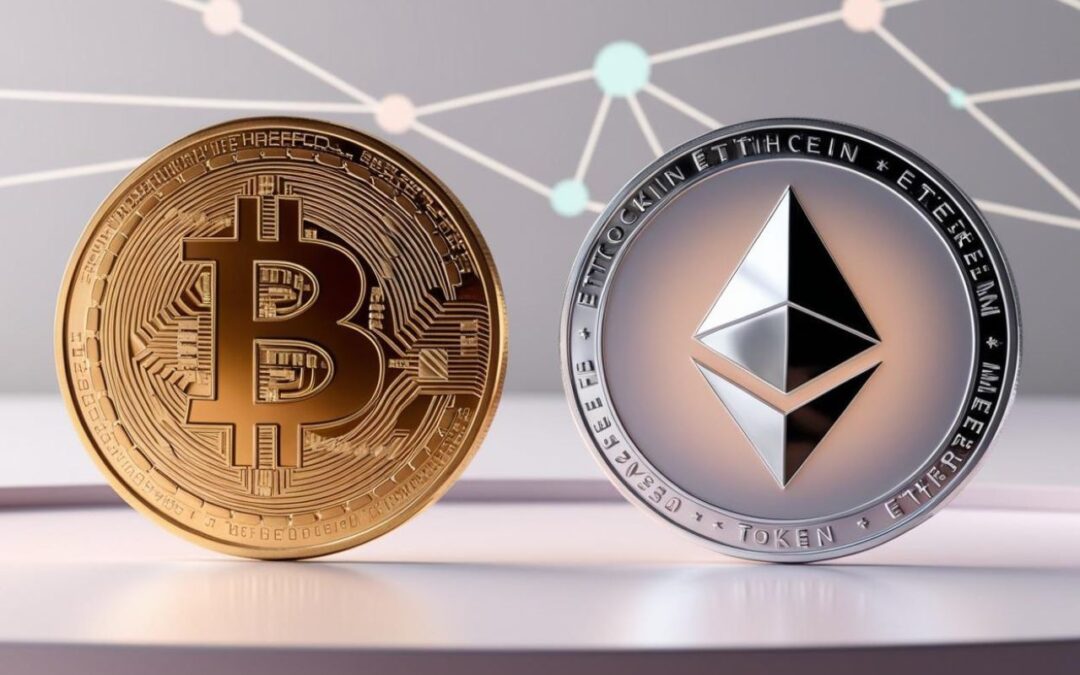
Synopsis: This article explains what crypto coins are, what crypto tokens are, and the key differences between them, along with their use cases and investment implications.
Many people use “coins” and “tokens” interchangeably, but they are not the same. While both are digital assets, they differ in how they are created, where they operate, and how they are used within blockchain ecosystems.

What is a Crypto Coin?
A crypto coin is a native digital asset that operates on its own independent blockchain. Examples: Bitcoin (BTC), Ethereum (ETH), Binance Coin (BNB), Dogecoin (DOGE), Solana (SOL)
How are coins created?
Coins can be created through:
- Mining (e.g., Bitcoin)
- Staking (e.g., Ethereum after its transition to Proof of Stake)
- Pre-minted supply at genesis, depending on the blockchain design
Important clarification
Bitcoin did not host Ethereum or Litecoin on its blockchain. Ethereum and Litecoin run on their own separate blockchains. Litecoin was created using modified Bitcoin code (a fork), not as a layer on Bitcoin.
What is a Crypto Token?
A crypto token is a digital asset that does not have its own blockchain and instead operates on an existing one (such as Ethereum, BNB Chain, or Solana).

Examples:
Uniswap (UNI), Aave (AAVE), Tether (USDT), Shiba Inu (SHIB), Chainlink (LINK), Axie Infinity Shards (AXS)
How are tokens created?
Tokens are created using smart contracts on existing blockchains. They typically serve specific functions within decentralised applications (dApps), such as governance, utility, or rewards.
Can a Token Become a Coin?
Yes. A token can become a coin by launching its own blockchain.
Example:
Binance Coin (BNB) started as an ERC-20 token on Ethereum
Later, Binance launched its own blockchain (Binance Chain / BNB Chain), making BNB a native coin
Also Read: Technical Analysis vs Fundamental Analysis in Crypto
Key Differences Between Coins and Tokens
| Basis | Coin | Token |
| Blockchain | It has its own blockchain | It runs on another blockchain |
| Uses | Payments and network utility | Utility, governance, and rewards |
| Creation Complexity | It is hard as a new blockchain is created | It is easy through smart contracts |
| Investment Role | Store of value | Project-specific |
| Time Horizon | Long-term | Short to medium term |
| Investment decisions | Safe and long-term investment | Project risk but higher ROI |
| Blockchain innovation | Foundational to the network | Fuel ecosystem of apps and projects |
| Security and Risk | Harder to exploit | Dependent on smart contract security and the project’s trustworthiness |
| Examples | BTC, ETH, SOL | USDT, UNI, SHIB |
Uses of Tokens
1) Governance: Governance tokens allow holders to propose and vote on changes to a protocol.
2) Utility: Utility tokens provide access to services, features, or platforms within a blockchain ecosystem.
3) Staking: Some tokens can be staked to earn rewards and, in some cases, help secure a network.
4) Rewards: Many platforms distribute tokens as incentives for participation, such as liquidity provision or content creation.
Uses of Coins
1) Payments: Coins function as digital money for peer-to-peer transactions.
2) Store of Value: Some investors hold coins (like Bitcoin) similarly to gold, though they remain highly volatile.
3) Transaction Fees (Gas Fees): Most blockchains require users to pay fees in the native coin to process transactions.
Coins and tokens play distinct but complementary roles in blockchain ecosystems. Coins form the backbone of their networks, while tokens power applications, governance, and decentralised finance. Understanding this distinction helps investors, developers, and users make more informed decisions. As the crypto industry evolves, clearer regulations around coins and tokens are likely to emerge to reduce fraud and enhance transparency.
Written by Parvati Anilkumar
