

Synopsis: When everyone tries to sell one coin at the same time, buyers disappear, prices fall very fast, and panic spreads. Late sellers suffer the most, especially small traders who react slowly.
Every crypto market cycle has that one moment where the chart just falls off a cliff. No slow pullback. Just red candles stacking one after another. This usually happens when too many people try to sell the same coin at the same time. Selling only works when someone else is willing to buy. When buyers step away, prices drop fast. It sounds simple, but the mechanics behind it are brutal. And if you trade or invest, this part actually matters more than people think.

Key stats and data
- During the March 2020 crash, Bitcoin dropped nearly 50% as the COVID panic hit.
- In May 2022, LUNA went from $80 to near zero within a week.
- During major sell-offs, exchange inflows often jump 3 – 5x above normal.
- Order books thin fast, slippage rises, and market sells fill much lower than expected.
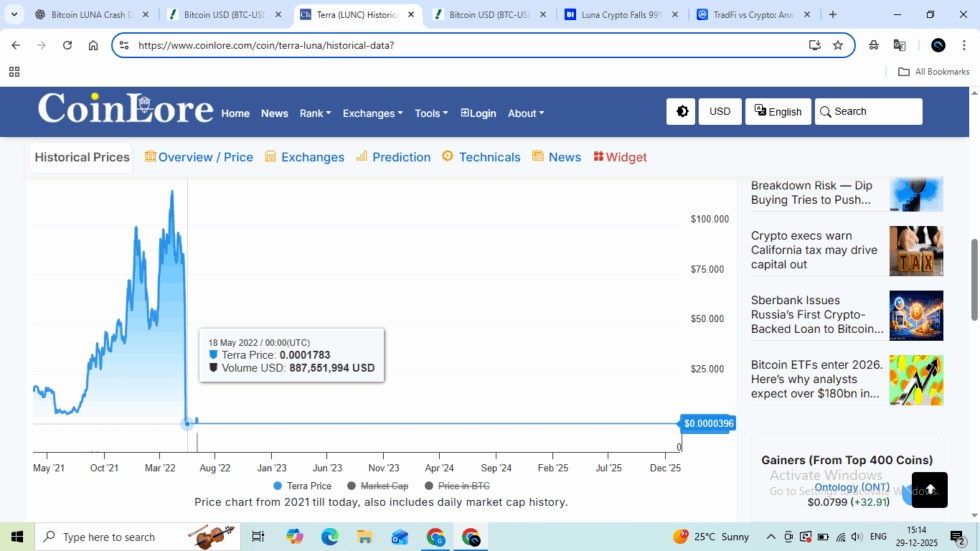
(Source: CoinLore)
What Happens When Too Many People Sell?
Crypto markets work smoothly only when buyers and sellers stay balanced. When everyone tries to sell at the same time, the balance breaks. Sellers stack up and buyers step away. The market doesn’t pause; it keeps falling until someone is finally willing to buy.
Crypto runs on order books. When there are no buyers at higher prices, sell orders get filled at lower and lower levels. That’s how a small drop suddenly turns into a crash. Nothing magical. Just supply overwhelming demand.
This is where most people get it wrong. They think price falls because of news. News is only the trigger. The real damage comes from panic selling, leverage, and low liquidity, which turn normal selling pressure into a full blown crash.

How Leverage Makes Everything Worse
Leverage is gasoline on an already burning fire. When price drops quickly, leveraged long positions start getting liquidated. These liquidations turn into forced market sells. More selling pushes prices lower, which then triggers even more liquidations.
This is why sell-offs often overshoot. Price doesn’t stop at “fair value.” It blows right past it, because forced selling doesn’t care about valuation.
The Role of Sentiment and Crowd Psychology
Crypto is emotional by design, where fear spreads faster than facts. When selling starts, people don’t analyze; they react. Seeing red candles triggers more selling, social feeds amplify panic, and silence from a team only makes things worse.
Impact on Different Types of Traders
For a short-term trader, this is an existential threat. Stop-loss orders start to fail; they become meaningless. A “stop-loss at $50” doesn’t guarantee a sale at $50. It becomes a market sell order the moment the price hits $50.01. If the next buy order is at $30, that’s where you get filled. The volatility is so extreme that risk management tools you relied on simply break.
Scalpers and high-leverage traders usually get wiped out first. Not because their analysis is wrong, but because the price moves faster than risk controls can react.
Long-term investors face a mental test. Even strong projects fall during panic. The real question becomes survival. Does the project still work? Is the team active? Is the network alive? If yes, recovery is possible. If not, the coin often fades away.
Key Factors That Decide How Bad It Gets
- Liquidity depth: Thin books mean sharper crashes.
- Leverage exposure: High open interest accelerates sell-offs.
- Market trust: Once confidence breaks, charts don’t matter.
- Exchange stability: Outages and delays make panic worse.
- Narrative damage: Hacks, insolvency rumors, or regulatory shocks amplify fear.
Mass selling isn’t rare in crypto. It’s part of every cycle. The smart move isn’t predicting crashes but recognizing warning signs early. Watch liquidity, leverage, and on-chain behavior. When everyone rushes for the exit, the market always reveals who was prepared and who wasn’t.
Written By: Gautham Nishad
