
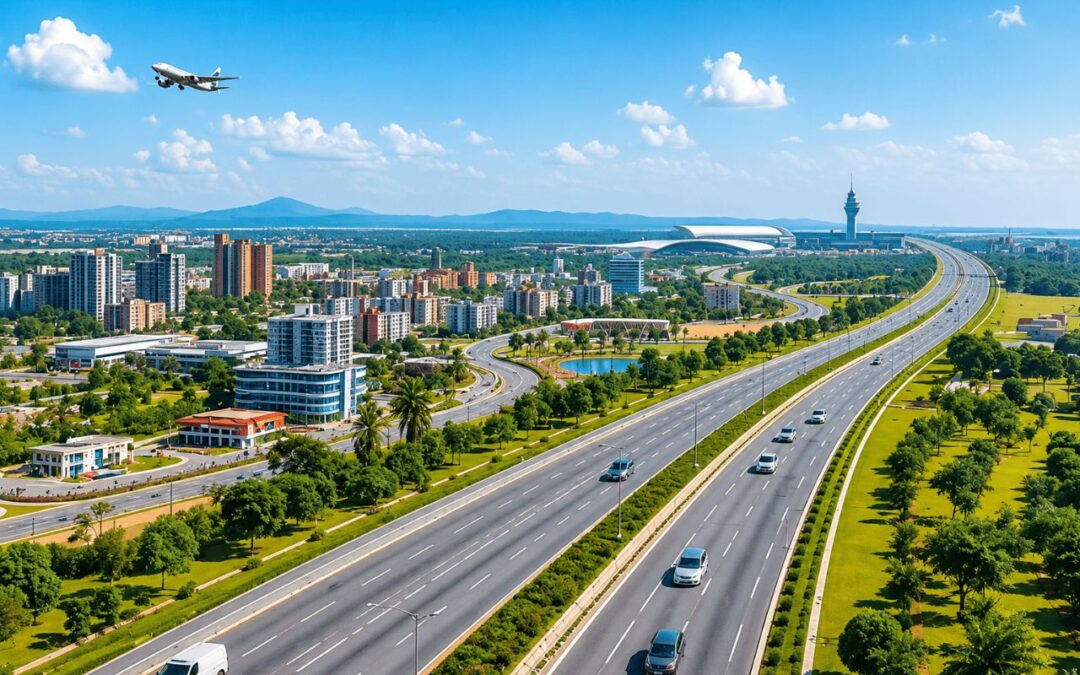
Synopsis: Airport-led urban expansion in India is reshaping the surrounding geographies into self-sustaining satellite cities and greenfield airports are acting as anchors for commercial, industrial and residential landscapes. From Delhi to Gujarat, these five major airport corridors are rewriting India’s urban growth story.
Expanded international airports are not just a transit infrastructure in India anymore, they have become catalysts for entirely new cities. Metro extensions, expressways, government-backed industrial developments, and IT parks are converging around these airport hubs, and creating the next generation of satellite cities that are attracting investment, employment, and people well beyond the city centres. List of Airport Corridors that are Creating India’s Next generation of Satellite Cities
1. Delhi NCR: Yamuna Expressway and Jewar Corridor
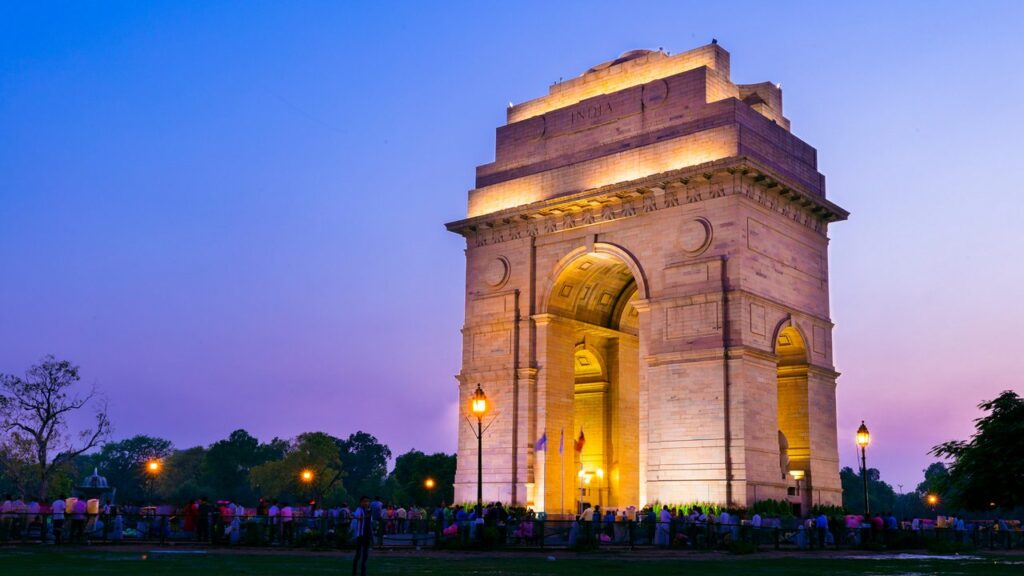
This corridor is among India’s actively transforming airport-linked urban belts and is being built under a public-private partnership (PPP) model, and is spread over 7,200 acres.
- Greater Noida- This place is 45 km away from the Indira Gandhi International Airport, and the housing plots near airport-linked corridors have recorded an appreciation of 84% to 118% in just 4 years.
- Jewar- Jewar International Airport also known as Noida International Airport (NIA) was set to begin commercial flight operations, and the Namo Bharat rapid rail line is expected to have a 25-station corridor stretching from Ghaziabad to Noida airport, and the estimated project cost is around ₹16,189 crore. The recorded 3 year appreciation is 46.9%.
2. Mumbai Metropolitan Region: Navi Mumbai Corridor
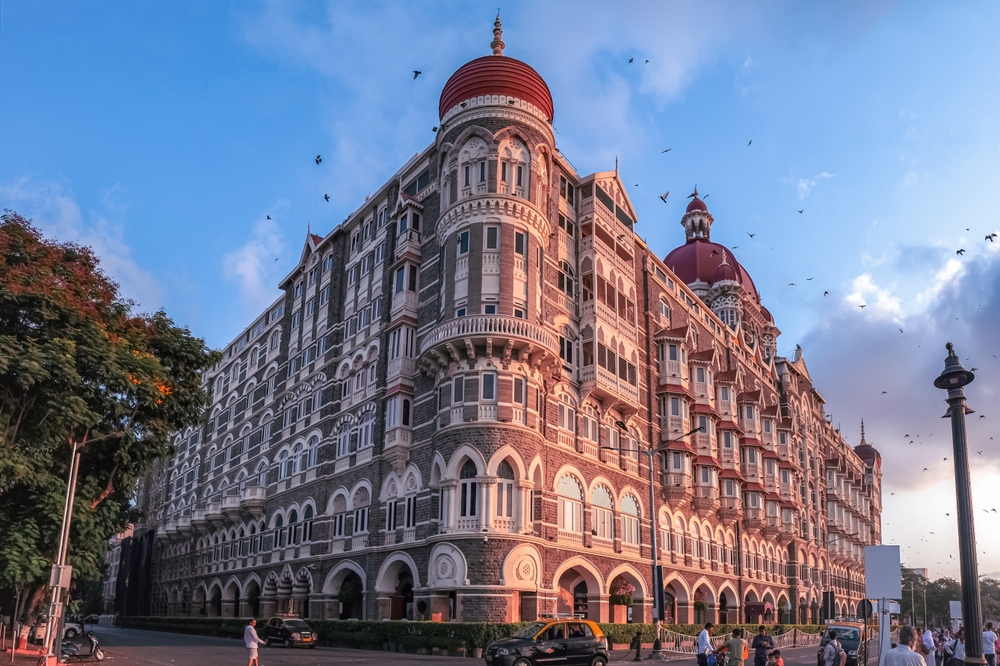
Developed by the Adani Airports in collaboration with CIDCO, the Navi Mumbai International Airport (NMIA) is the key factor of new urban expansion with the estimated project cost of ₹16,700 crore built at a cost of ₹19,650 crore.
- Panvel- This area is slowly becoming a commercial hotspot, as it benefits from NMIA. As the real estate prices are expected to appreciate by 10% to 15% in Navi Mumbai, Panvel will attract MNCS and startups due to its connectivity and strategic location.
- Ulwe- This area is expected to undergo a price appreciation of ~20% due to NMIA, along with the key infrastructure projects and full capacity planned for up to 90 million passengers per year.
- Kharghar-The Gold Line, Metro Line 8 is a 35 km corridor linking Chhatrapati Shivaji Maharaj International Airport (CSMIA) and NMIA, passing through key areas including Kharghar. Properties within the 1 km periphery of the proposed metro station are expected to appreciate by 15% to 25% upon completion.
- Taloja- Due to the combination of Mumbai Trans Harbour Link (MTHL), the Multimodal Corridor, and the expanding metro network, it is witnessing a rising interest from the investors and buyers. The micro-markets of Panvel, Ulwe, Kamothe, Kharghar, and Taloja together constitute ‘Third Mumbai’, covering an area of over 400 sq km around the Navi Mumbai Airport.
3. Bengaluru: Devanahalli-Yelahanka Corridor
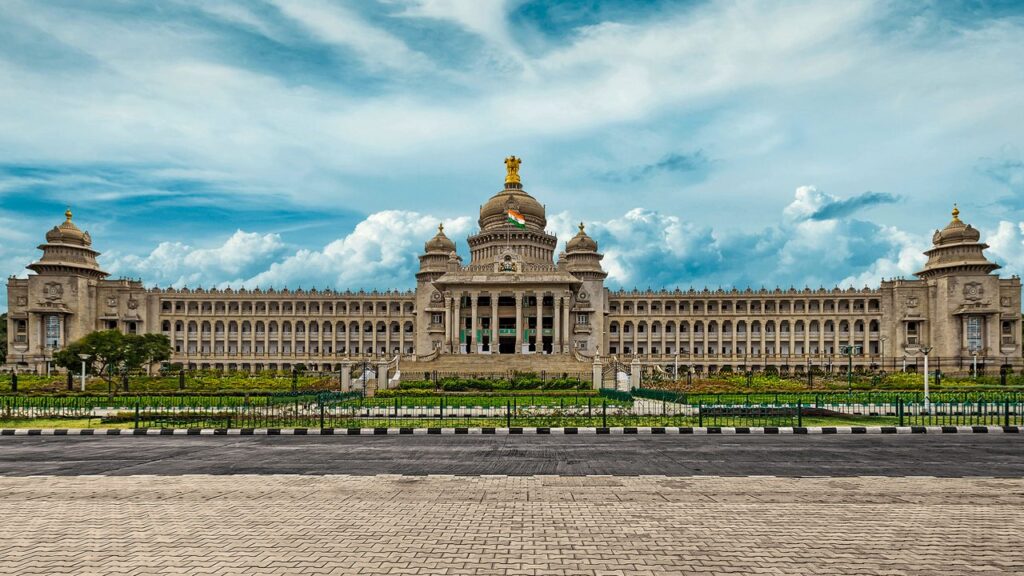
The Kempegowda International Airport (KIA), is emerging as the most dynamic real estate airport corridor in north of Bengaluru and is driving plot prices up to 118% in 4 years.
- Devanahalli- The KIADB growth, Foxconn $2.8 billion investment, STRR road development and the airport expansion the plots prices appreciated by 35% to 40% between 2022 and 2025.
- Yelahanka- Property prices have jumped between 69% to 133% since FY21, and the Airport Metro Blue Line Phase 2B via Hebbal-Yelahanka to KIA will further reduce commute times and support rental yields in the area.
- Doddaballapura- This region saw a 39% price appreciation in the last year driven by a direct circular rail network in this region and also being the primary location for the planned KWIN City.
- Hoskote- Hoskote is the most emerging town in east Bengaluru, with its proximity to KIADB and STRR. The average property price of this region is ₹6,150 per sq. ft.
Also read: Top 5 Emerging Property Corridors Along the Bengaluru–Mysuru Expressway With Long-Term Potential
4. Hyderabad: Shamshabad-Aerocity Corridor
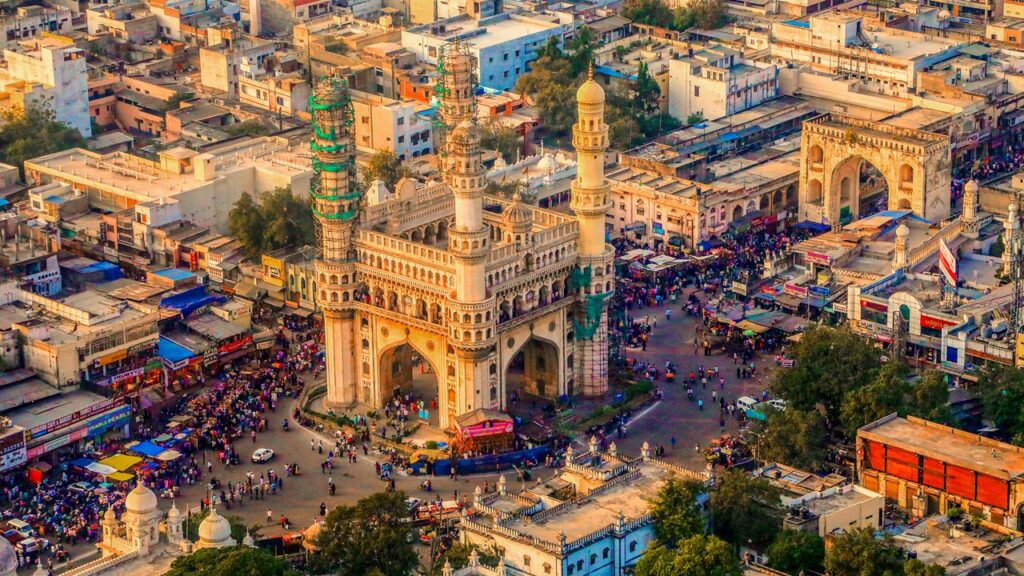
Hyderabad Aerocity which spans over 1,500 acres is being built at Rajiv Gandhi International Airport (RGIA), and is maturing into a multi-nodal urban cluster.
- Shamshabad- In this area, the upcoming Bharat Future City along with the airport infrastructure is expected to generate employment for 5+ lakh workers. The land appreciation of 118% over four years is recorded.
- Tukkuguda- This area is located just 15 minutes away from the Hyderabad International Airport, and 30 minutes away from the Financial District, Gachibowli, and HITEC City, and drives effective employment migration to the area.
- Adibatla- This region along with Tukkuguda benefit from the development of Future City of 762.28 sq km, and their proximity to the Shamsadabad Airport further makes this area a closely watched corridor. Under the ORR urban node framework, Adibatla and Tukkuguda are designated as Aero Sense and Hardware zones.
5. Ahmedabad: Dholera SIR Corridor
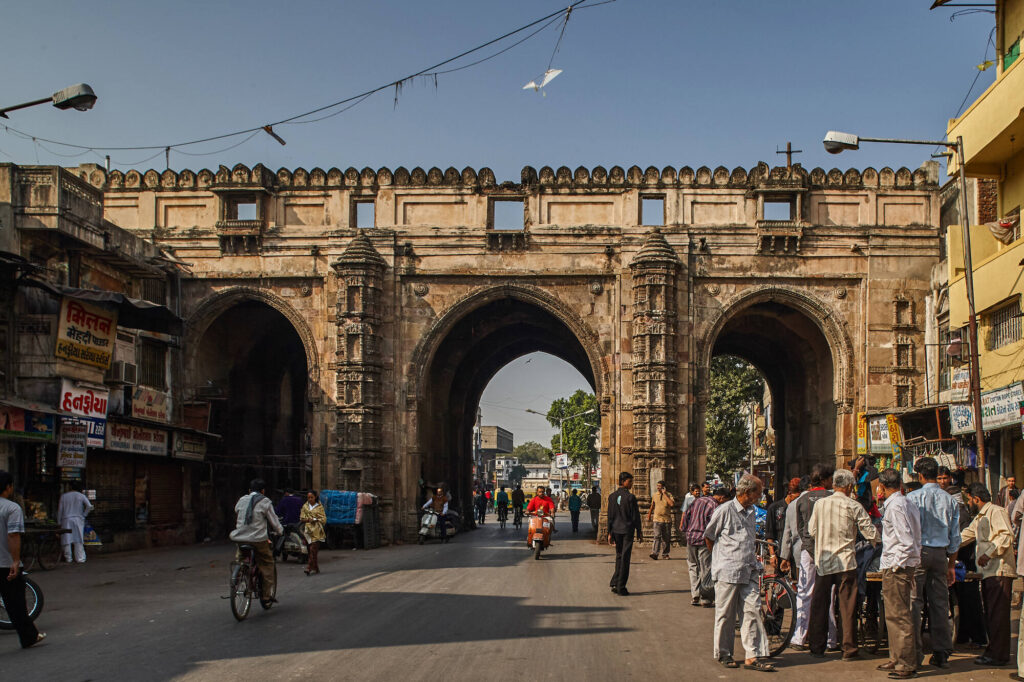
This Special Investment Region (SIR) is Gujarat’s greenfield smart city project and is spread across 920 sq km and is backed by Dholera Industrial City Development Limited (DICDL).
- Dholera- The Dholera International Airport Company Limited (DIACL) initiated air cargo operations internationally in 2025. This city is also becoming a hub for semiconductor manufacturing. The average property price of this area is ₹7,200 per sq ft.
- Sanand- This city is Gujarat’s leading industrial corridor and is further attracting global giants like Tata Motors, Ford, Hitachi, and Colgate Palmolive. The average property price of this area is ₹3,350 per sq ft.
- Changodar- This area is well-connected via the Sardar Patel Ring Road and National Highway 8A. The average property price of this area is ₹2150 to ₹3650 per sq. ft.
Also Read: PM MITRA Scheme: 7 Mega Textile Parks to Attract ₹70,000 Crore Investment and Create 20 Lakh Jobs in India
All in all
India’s airport corridors are no longer just peripheral additions to the existing city but rather they are becoming entirely new urban centres attracting further industrial investments in the region, rising residential demand, and is further reshaping the metropolitan geography. These satellite cities are becoming India’s next tier of economic powerhouses.
Written by Jahnavi