
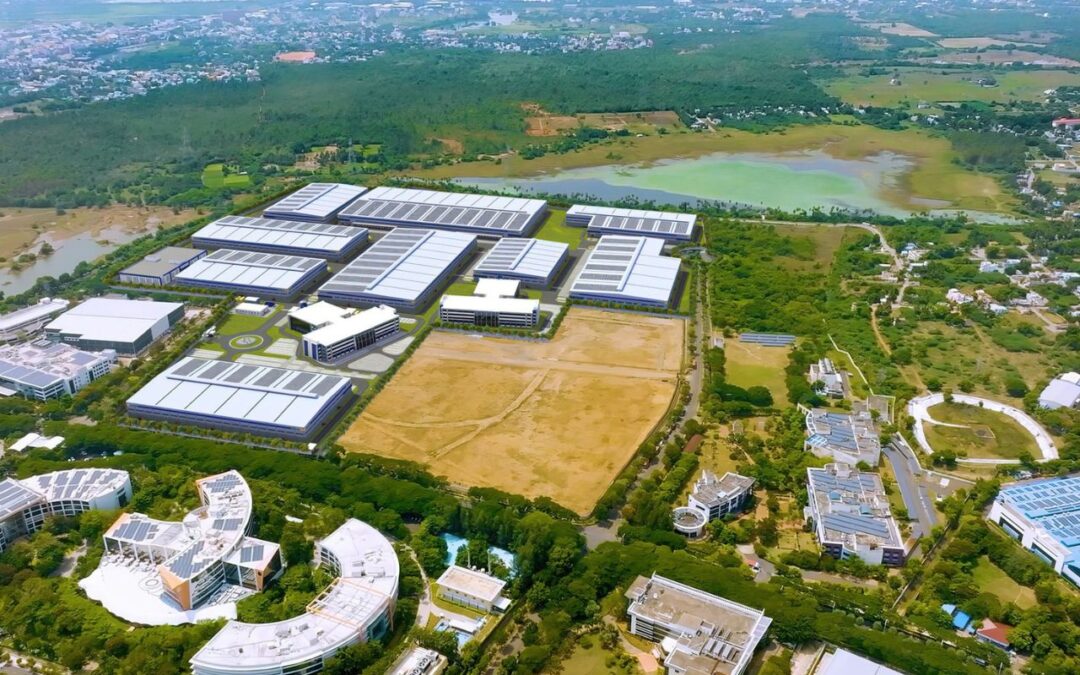
Synopsis: This article gives an overview of the PM MITRA Scheme and seven mega textile parks being built in India. The article will focus on the infrastructure, investment potential, employment opportunities and the impact it is expected to have on the textile manufacturing and export ecosystem in India.
The PM MITRA Scheme is reshaping the entire textile industry in India, which is one of the major employers and exporters. The government has envisioned a unified integrated textile ecosystem by setting up seven world class integrated textile parks in different states to provide a single platform for manufacturing, processing, logistics and exports.
Pradhan Mantri Mega Integrated Textile Region and Apparel (PM MITRA) Scheme was started in 2021 for the promotion of large-scale integrated textile parks in India. The total investment planned is ₹4,445 crore, which would bolster the entire textile value chain right from raw material production to processing, manufacturing, and exports. The government has approved seven PM MITRA Parks in the states of Tamil Nadu, Telangana, Gujarat, Madhya Pradesh, Uttar Pradesh, Karnataka and Maharashtra.
Key Features of PM MITRA Parks
- Integrated textile eco-system: It includes the spinning and weaving, garment making, and export value chain.
- Plug and play infrastructure: Industrial facilities which are ready to use to enable the manufacturer to start up production quicker.
- Common processing facilities: Shared dyeing, Printing and Processing units can cut down the operational cost.
- Test labs, quality control labs: Check that products are of good quality both nationally and internationally.
- Distribution centers and transportation: Optimize storage, transport and export operations.
- Skill development centres: Train to develop skill based human resource for textile industry.
- Worker housing and social infrastructure: Hostels, housing, essential facilities for the employees.
- Strong infrastructure: Power supply, water network and road infrastructure.
- Sustainable infrastructure: Common Effluent Treatment Plants (CETPs) and waste management systems encourage environmentally responsible manufacturing practices.
- Export oriented facilities: To increase efficiency, competitiveness and market access to the world.
Financial support and incentives
- Allocation of ₹4,445 crore by the Central Government for the development of seven PM MITRA Parks.
- Development Capital Support (DCS): Provision of up to ₹500 crore for development of the core infrastructure in each park.
- Competitive Incentive Support (CIS): It supports up to ₹300 crore to promote private involvement and speed up the development of projects.
- Public-Private Partnership (PPP) model: Parks are being developed in collaboration with central governments and state governments and private developers.
- Support from state government: States offer land, external infrastructure, connectivity and policy support for infrastructure investment.
- Investor friendly ecosystem: The scheme is to cut down the logistics cost, ease of doing business and to attract onshore and offshore textile manufacturers.
Seven Mega Textile Parks
1. Virudhunagar, Tamil Nadu
- The park is being built on 1,052 acres of land in Virudhunagar district and is expected to be one of the biggest integrated textile manufacturing centers in India.
- The park has also gained significant interest from investors, with the first phase seeing 23 textile companies receive almost 190 acres of allotments.
- Textile Processing Units, Garment Manufacture Units, Warehouses, Testing Labs, Worker Housing and Logistics Supports are some of the planned infrastructure.
- The park has a strong base of industrial ecosystem and skilled manpower in Tamil Nadu as the state is renowned for its strengths in spinning, knitting and garment exports.
2. Warangal, Telangana
- The Warangal PM MITRA Park is one of the most prominent textile infrastructure projects in Southern India, which has been developed over an area of about 1461 acres.
- It is expected that the park will create direct and indirect jobs of around 1 lakh and will be able to attract investments of more than ₹11,000 crore.
- It will continue to support all the textile value chain from spinning to weaving, processing, garment manufacturing and technical textiles.
- The project takes advantage of the cotton producing areas of Telangana where raw material is easily available and the cost in the supply chain is minimal.
- Planned facilities: common processing centres, testing labs, logistics infrastructure, worker accommodation, sustainable systems for treating waste.
3. Navsari, Gujarat
- The park has been spread over 1142 acres at Vansi-Borsi, Navsari and is being developed as a greenfield integrated textile hub under PM MITRA Scheme.
- Around ₹10,000 crore investments are expected in the project and more than 3 lakh people would get job opportunities from the project.
- The park is accessible only 45 km from Surat, which is India’s largest man-made fabric and synthetic textile hub, and has an existing textile ecosystem and skilled workforce.
- The park’s strategic location allows for easy access to key transport infrastructure such as railways, highways, and ports, facilitating the efficient transportation of raw materials and goods to and from the region.
- It will provide space for the entire textile value chain like spinning, weaving, processing, garment manufacturing, warehousing, testing laboratories, logistics hubs and Common Effluent Treatment Plants (CETPs) making it an export based manufacturing hub.
4. Dhar, Madhya Pradesh
- The PM MITRA Park at Dhar is being developed over 1563 acres, one of the biggest textile parks under the PM MITRA scheme.
- Around ₹10,000 crore will be invested in the project and it will create nearly 3 lakh jobs both directly and indirectly.
- The park is situated in the Malwa-Nimar region, which is known for its cotton production, making it easily accessible for raw materials and, thus, lowering the sourcing and transportation costs for the textile industry.
- Dhar is well connected with important highways and industrial corridors, enhancing its linkages with domestic and export markets.
- There will be the integrated facilities in the park for spinning, weaving, processing, apparel manufacturing, warehousing, testing laboratories, logistics centres and environmental management systems.
- The project seeks to consolidate the entire value chain of the textile industry in one place and make Madhya Pradesh a major textile manufacturing and export hub.
5. Lucknow-Hardoi, Uttar Pradesh
- Development of PM MITRA Park is underway on about 1,000 acres in Lucknow-Hardoi area, which will boost the textile and apparel manufacturing ecosystem in the state.
- Investments in the project would be estimated around ₹10,000 crore and provide almost 3 lakh direct and indirect jobs.
- The park is strategically located close to Lucknow where it enjoys a strategic location that connects the park with major highways, rail networks, airports and large consumer markets in North India.
- The integrated textile hub will facilitate the spinning, weaving, processing, garment production, technical textiles production, warehousing and logistics.
- The park is also a popular choice for domestic and international textile companies, given the state of Uttar Pradesh’s high number of working people and a thriving apparel sector.
- This project will enhance exports, empower MSMEs and provide much economic activity to the region.
6. Kalaburagi, Karnataka
- The PM MITRA Park at Kalaburagi is under development on a spread of around 1000 acres and will result in a significant integrated textile manufacturing center in the North of Karnataka.
- The project will draw in investments of ₹10,000 crores and create jobs of nearly 3 lakh direct and indirect.
- The park is situated in one of the prime cotton belt areas of Karnataka and is easily accessible to acquire raw material, which helps to minimize procurement and transportation expenses.
- The integrated hub will cater to the full textile value chain from spinning, weaving, processing and garment making, technical textiles, warehousing to logistics.
- Kalaburagi has good connectivity with major industrial hubs in Karnataka, Maharashtra and Telangana, making it more attractive as a regional textile hub and an export centre.
- Common infrastructure like testing laboratories, Common Effluent Treatment Plants (CETPs), worker housing, skill development centres, and logistics facilities will help to enhance operational efficiency and sustainability.
7. Amravati, Maharashtra
- PM MITRA Park is under development in about 1020 acres of land in the cotton belt region of Vidarbha in Maharashtra.
- Around ₹10,000 crore of investment is likely to be attracted and almost 3 lakh direct and indirect job opportunities will be created in the project.
- The textile industries have access to raw materials from Amravati which is situated in one of the largest cotton producing belts of India, in a reliable and cost-effective manner.
- The park will cater to the entire textile value chain such as spinning, weaving, processing, garment manufacturing, technical textiles, warehousing and export oriented business.
- Highway, rail, and access to major industrial centres will enhance market access and logistics costs.
- Future infrastructure like common processing facilities, testing laboratories, logistics hubs, worker housing, skill development centres and environmental management systems are planned to make a world class textile manufacturing ecosystem.
Economic impact on Textile Sector in India
The integrated manufacturing ecosystem will improve efficiency of the production process and improve the rank of India in the textile and apparel market. The total investments in the seven PM MITRA Parks combined are projected to be more than ₹70,000 crore, enabling significant industrial activity. The scheme will generate approximately 20 lakh direct and indirect employment opportunities, benefiting both urban and rural areas.
The integration of the facilities and connectivity will cut transportation costs and enhance the efficiency of the supply chain. Common infrastructure and shared facilities will help the small and medium textile units grow at a lower cost. The parks will foster the retention of value within the domestic textile value chain by incorporating the value chain from spinning to weaving, processing, manufacture of garments to export. The parks are distributed among seven states, and are fostering industrial development beyond the traditional centres of the textile industry, creating jobs in emerging areas.