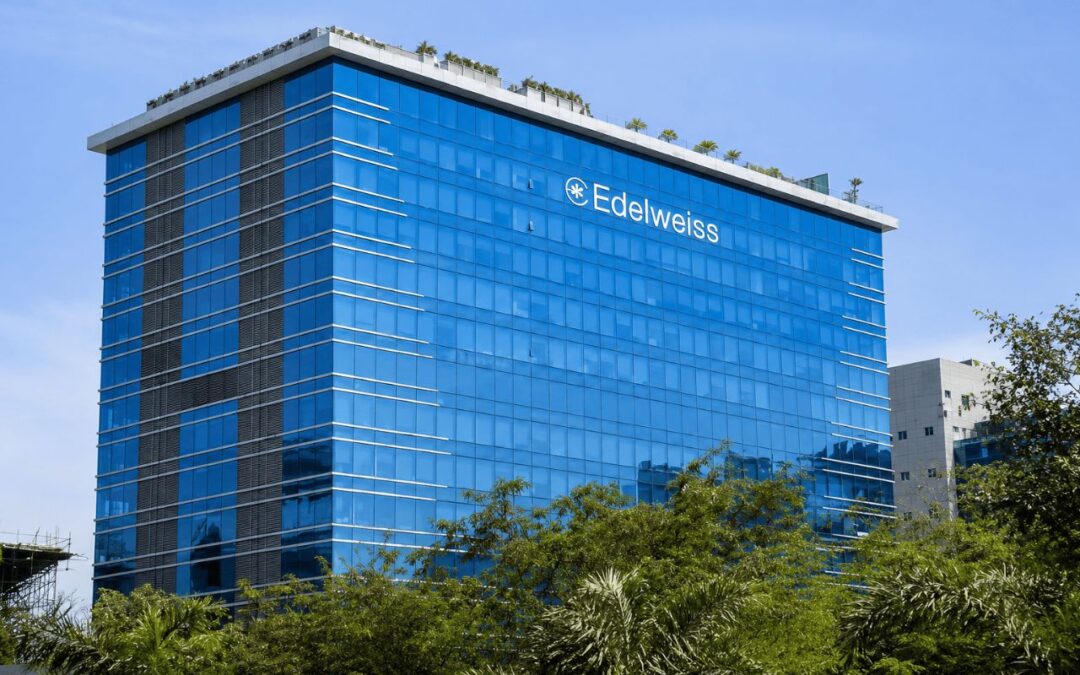
Synopsis: Edelweiss Mutual Fund’s new Nifty Metal ETF (NFO) focuses on India’s metal industry as it believes India has had good index return and structural demand drivers, and low per-capita consumption compared to other countries.
Edelweiss Mutual Fund has launched the Edelweiss Nifty Metal ETF, an open-ended passive ETF that tracks the Nifty Metal Total Return Index. The NFO is open for subscription from 6th July to 20th July 2026, offering investors exposure to India’s metals and mining sector amid rising infrastructure, manufacturing and energy-transition demand.
What is Edelweiss Nifty Metal ETF?
The ETF is designed to track the Nifty Metal TRI by investing in the same basket of metal and mining stocks in similar proportions. As a passive fund, it does not involve active stock selection, with the fund manager focusing on maintaining index alignment. After the NFO period, investors can buy and sell units on the NSE through a demat account, similar to trading a stock.
Why Metals, Why Now?
Metals are essential for infrastructure, manufacturing, renewable energy, electric vehicles and defence. The fund house believes India’s economic growth and industrial expansion could support long-term demand for metals. Consumption data backs this up. India’s per-capita metal usage still lags the global average by a wide margin:
- Steel: 102 kg vs. global average of 215 kg (48%)
- Aluminium: 3.1 kg vs. 12 kg (25%)
- Copper: 0.6 kg vs. 3.2 kg (18%)
That gap, the AMC argues, is headroom for future growth rather than a sign of weak demand.
The Structural Demand Drivers
Three factors that will help keep metal consumption increasing are the following:
- Infrastructure development: ₹11.2 lakh crore of government infrastructure spending in FY26 in roads, railways, metro trains, airports and ports.
- Transition to renewable energy: 500 GW of non-fossil fuel power generation capacity target by 2030, which will require large amounts of aluminium wire, copper wire and special steel.
- Development of manufacturing sector: ₹6,322 crores of PLI allocation, as well as expected ₹29,500 crore of investment in the Specialty Steel PLI scheme.
The green transition itself is quite challenging as for example an EV car needs 3-4 times more copper (83 kg compared to 23 kg of steel) than a conventional car, while wind turbines and solar panels need a lot of steel, copper and aluminium per MW. India has emerged as one of the biggest producers of metals, such as steel and aluminium, putting it in the league of the world’s top producers.
Inside the Nifty Metal Index
The index is based on the Nifty 500 universe and is designed to include top 15 stocks with the highest free-float market cap and cap limit of 33% of the universe due to single stocks and 62% due to the top three holdings. It is rebalanced once every six months (March and September).
Top holdings (as of 30th June 2026)
Among industries, Iron & Steel dominates by 44% while Aluminium and Trading-Minerals each account for 21% and 11%.
Historical Performance
Here’s where the pitch gets the best support. The last 10 years have seen the Nifty Metal TRI index be the highest performing sector index in India, with a CAGR of 21.4%, beating out Energy, Realty, Infra, and all other sectors considered, and significantly higher than the Nifty 50 index (12.5%) and Nifty 500 index (13.9%).
However, noting that the index outperformed all other benchmarks in only 6 out of the past 11 years which shows that despite having a good average over time, the index experienced severe volatility, including a drop of -29.4% in CY15 and an increase of 73.4% in CY21.
Also read: SBI Funds Management IPO Opens Soon: What’s Inside India’s ₹12.5 Lakh Crore Asset Management Giant?
Advantages of the ETF Route
- Low Costs: Passive nature helps keep costs down, with the maximum TER capped at 0.90%.
- Transparency: Follows the index, giving the investors an insight into the underlying securities and their respective weightages.
- Liquidity: The ETF units are tradable on the NSE during trading hours.
- No Exit Charges: Investors can exit without any exit loads (charges for brokerage and market may be applicable).
- Diversification in Sectors: Exposure to several metal stocks in the steel, aluminum, copper, zinc, and mining sectors.
Risks Investors Should Know
- Carries a “Very High” risk rating, making it unsuitable for conservative investors.
- Metal stocks are cyclical and influenced by global commodity prices, demand trends, and currency movements.
- High concentration in top holdings can impact returns if major companies underperform.
- As a fully invested equity fund, it does not provide downside protection during market falls.
- Returns may differ slightly from the index due to tracking error and fund expenses.
- The index may underperform broader markets during certain periods despite strong long-term returns.
Who Should Consider Investing?
This ETF is better suited for investors with an existing diversified equity portfolio who want a tactical allocation to the metal sector. It may appeal to high-risk investors with a long-term view on India’s infrastructure, manufacturing, and energy transition themes. Conservative investors seeking stable returns or those uncomfortable with volatility may find it unsuitable.