
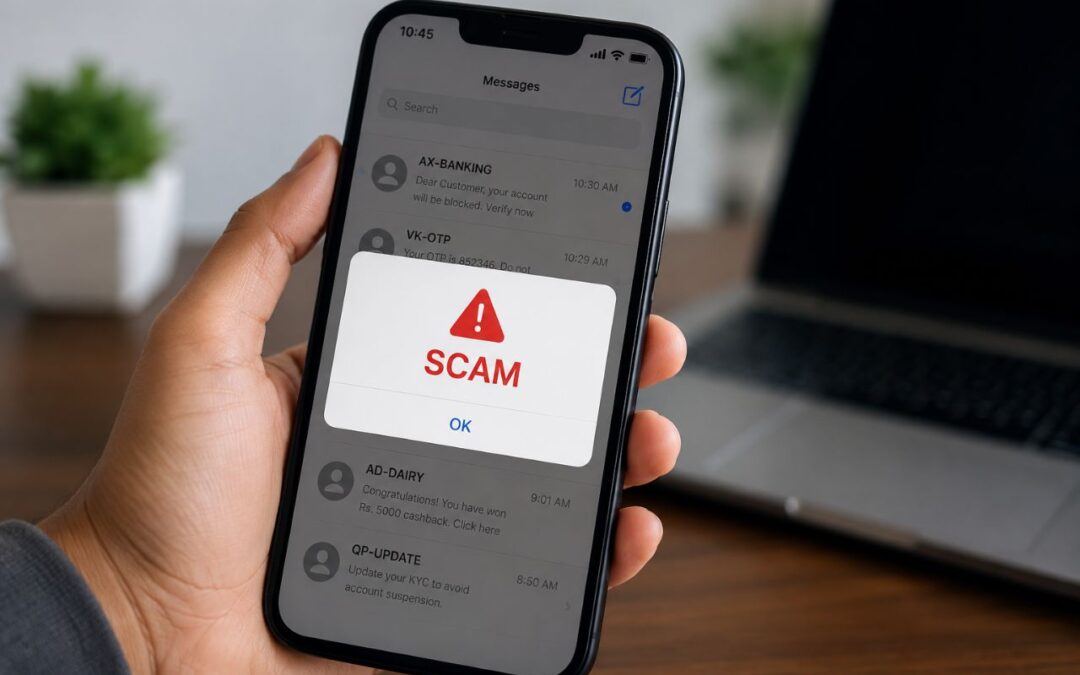
Synopsis: Whether it’s fake KYC alerts, offers of reward points, UPI refunds or courier scams, fraudsters use these deceptive text messages to trick you into sending money and personal details. This article covers 10 bank fraud messages you could receive.
While digital banking has been faster and easier than ever to pay, it has also given rise to more and more sophisticated scams. Commonly, fraudsters would use SMS and WhatsApp messages to pose as banks, UPI platforms, courier companies or government departments and force recipients to click on links or provide details to execute the scam. When you can identify these types of messages, you will not have to worry about losing money or your personal information.
1. KYC Expiry Alert
Scammers foster a sense of urgency, saying that your KYC is up for renewal and that your account, debit card or net banking service will be suspended if you don’t click a link. Example message: The mail will come with the message “Dear Customer, your Bank KYC has expired. Your account will be blocked within 24 hours. Update now: bit.ly/xxxx”.
2. Account/Card Suspension Warning
The fraudsters send messages saying that your debit card, credit card, net banking or bank account is suspended for security reasons. The purpose is to induce you to panic and click a verification link, and then foist a request for your banking information that can be used to gain access to your account. Example message: “Alert! Suspicious activity on your Debit Card has been detected and the card has been temporarily blocked. Reactivate immediately: www.verify-card-now.com”
3. Fake Debit Alert
These messages are meant to cause panic and alarm by stating that “a large sum has been debited from your account.” To complete the transaction, victims rush to click on the link or to call the fake customer care number provided, thus revealing their banking information or OTP to the fraudsters. Example message: You have just been debited ₹24,999, if this is not you, click here right away to cancel the transaction: secure-bank-help.com
4. Fake Credit Alert
Fraudsters issue fake credit notifications to deceive people that they’ve received an accidental credit. They then request the victim to pay it back by sending a payment link or via the UPI app. Example message: You are missing some money in your account, the amount is ₹50,000, please contact us through the link below to avoid further legal action.
Also Read: ITR Filing Deadline 2026: Only 5 Days Left Till July 31 – Key Things to Recheck Now
5. Provide reward, cash back or loan
Many times, scammers claim to be a bank or UPI platform to offer a fake cashback, loan approval or reward points. These messages will have links that will lead to pages designed to capture banking details, details of cards, or even OTP from the victim and request him to “claim” the offer. Example message: “Congratulations! If your bank has given you some cash back, you can claim it now before midnight – claim-reward-now.com.
6. Message for turning off electricity.
Fraudsters from the electricity board call and claim that electricity is going to be cut off. Example message: “Dear Customer, Your electricity bill is due, Your power supply will be cut off tonight if you don’t pay now: bill-update.co.in”
7. Parcel under the custody of Customs/Courier.
The messages are designed to appear to come from a courier firm, saying your package is on hold until a payment or address verification is made. Example message: “Follow the link above and enter the customs fee amount of ₹99 to complete the delivery.You can pay ₹99 for the unpaid customs fee and the parcel can be delivered, if you follow the link above.”
8. UPI Collect Request/Refund Message
This scam makes the recipient think that he/she must approve a request for money. The truth is, if you enter the UPI PIN, it does not mean that the payment is refunded, but it means that the payment is being made. Example message: “You can now get the ₹2,500 back by clicking on ‘Accept’ and entering the UPI PIN as it appears on the screen.”
Also read: How to Report Capital Gains Correctly While Filing Your ITR for AY 2027–28
9. SIM Card or Aadhaar Block Alert
The scammers claim to be from a telecom company or Government and state that the SIM card or Aadhaar will expire if you do not do so now. Example message: “Due to incomplete Aadhar verification, Your sim card will be blocked in 2 hrs. If you have an update, make sure to update now to prevent service disruption.”
10. Credit card reward points expiry
Fraudsters send fake reward redemption emails disguised as a bank or credit card company. Example message: “Your credit card reward points that are worth ₹8,750 will expire today. Redeem them before it’s too late by clicking: rewards-update.in”
What you should not do
- Don’t click on links sent in unsolicited SMS, WhatsApp or email messages.
- Never share your OTP, UPI PIN, CVV, ATM PIN, Internet banking password, or card details with anyone.
- Don’t call customer care numbers mentioned in suspicious messages. Contact only your bank’s official number mentioned on the website or application.
- Avoid downloading apps or APK files from links or messaging apps.
- Don’t scan QR codes or accept requests for UPI collect from trusted sources.
- Avoid messages that induce fear of account suspension, SIM deactivation and legal consequences.
- Never send money to “confirm” your account, to get a refund, or to return money that you think you’ve been credited by mistake.
- Do not act immediately- Always confirm the message via your bank’s official channels before acting on it.
Conclusion
Banking fraud messages are getting more convincing and start to look like authentic messages from banks, UPI apps, courier services, and government organizations. When reading a message, always check who is the sender, don’t click on suspicious links and never give out private banking details. With just a few seconds of precaution, you can avoid losing your credit, personal information, and online identity to cyber criminals.