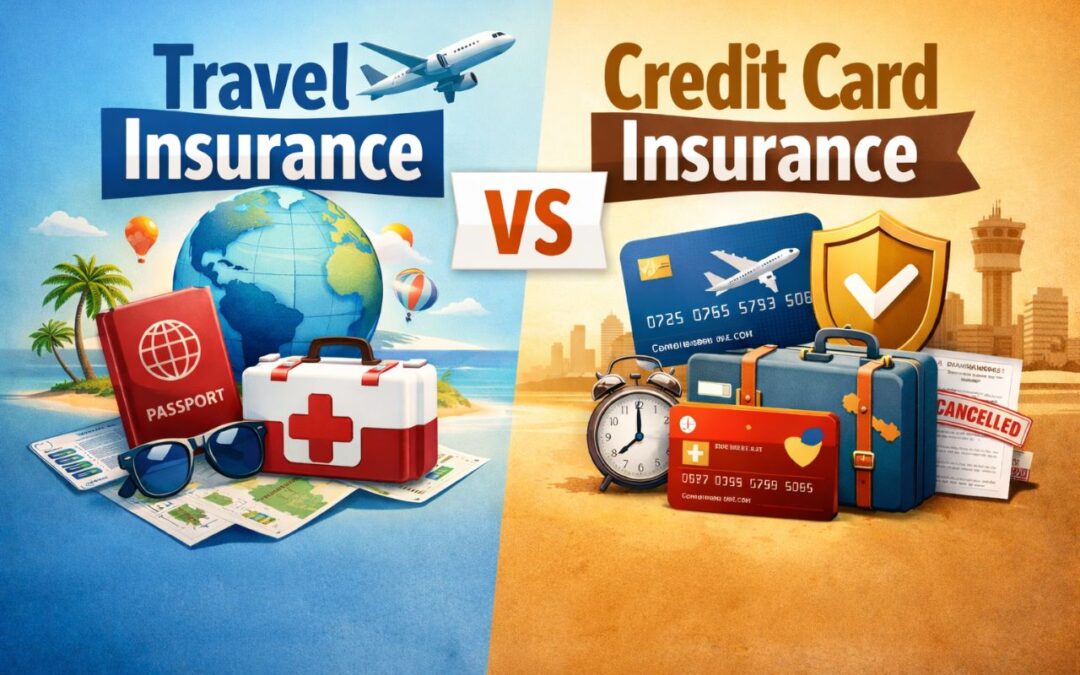
Synopsis: Although travel insurance and credit card travel insurance are very similar, they function in completely different ways. This article provides clarifications about both and assists you in coming up with a decision regarding which one is the winner in terms of protection for your journey.
Travel insurance offers comprehensive protection covering medical emergencies, trip cancellations, baggage loss, and delays, while credit card travel insurance usually comes with limited, conditional coverage. Understanding the differences can help you choose the option that truly safeguards your trip and finances.
What Is Travel Insurance?
Travel insurance is a different policy you purchase for a particular trip. It is intended to provide protection against unforeseen events that may occur while traveling, which may involve medical emergencies, flight delays or lost luggage. This policy is in effect throughout the duration of the trip and serves as a primary safety net during international travel. Travel insurance typically covers:
- Medical emergencies and unexpected hospital expenses during the trip
- Emergency evacuation and repatriation, if the situation demands it
- Trip cancellation or interruption due to unforeseen circumstances
- Flight delays, rescheduling issues and missed connections
- Loss, theft or delay of checked baggage
- Loss of passport with necessary assistance and support
- Personal accident cover to ensure safety throughout the journey
Examples
- Tata AIG Travel Insurance – Provides strong international and domestic coverage with flexible plans for families, students and different types of trips.
- ICICI Lombard Travel Insurance – A popular choice offering travel medical cover, baggage protection and support for travel- related inconveniencies.
- Aditya Birla Capital Travel Insurance – Customizable travel coverage with 24/7 assistance for handling flight delays, emergencies, and other issues during your journey.
Credit Card Travel Insurance
Credit card travel insurance is an in-built travel benefit that comes with certain premium credit cards. It gets activated when you book your travel tickets using the card. Instead of being a separate policy, it works as an added layer of protection offered by the card issuer. Credit card travel insurance generally covers:
- Compensation for flight delays and related disruptions
- Coverage for lost, delayed or damaged baggage
- Protection against accidents during air travel
- Personal accident cover while one is travelling
- Medical emergency assistance for unexpected situations abroad
- Support for travel inconveniences, including missed connections
Examples
- HDFC Bank Regalia Credit Card – Provides limited overseas medical coverage and air accident insurance along with travel protection benefits.
- Standard Chartered Visa Infinite Credit Card – Offers medical insurance and air accident cover, plus protection for baggage and travel protection delay.
- Axis Bank Privilege Credit Card – Gives travel insurance perks like air accident cover and baggage protection tied to travel bookings.
Also read: Planning a Trip in 2026? Here’s a List of the Best Travel Insurance Providers in India
Comparison Between Travel Insurance and Travel Credit Cards
| Usage Scenario | Travel Insurance | Credit Card Travel Insurance |
| Medical emergency abroad | Covers hospital bills, treatment, and emergency care | Provides basic medical assistance during travel |
| Flight delays or missed connections | Offers compensation after crossing defined delay thresholds | Provides fixed delay benefits linked to flight bookings |
| Baggage loss or delay | Covers loss, delay, or damage of checked-in baggage | Covers baggage issues related to air travel |
| Trip cancellation or early return | Helps recover prepaid and non-refundable trip expenses | Offers cancellation or interruption benefits in select cases |
| Loss of passport | Covers assistance and related expenses | Provides limited support for passport loss |
| Personal accident during travel | Provides accident cover throughout the trip | Covers air-travel-related personal accidents |
| Multi-city or long-duration trips | Suitable for short, long, and multi-country travel | Best suited for single or short-duration trips |
| Overall usage | Designed for comprehensive trip protection | Designed as a travel-friendly card benefit |
Conclusion
Travel insurance and credit card travel insurance both have their use cases. Credit card coverage is good as an additional advantage and may assist with minor travel troubles. But since this coverage is linked to card use and has specified conditions, it is only effective as a tertiary layer. Normal insurance for traveling, however, is created for travel-related hazards and provides wider, more trustworthy protection during the trip. For those travelers who need to have no doubts and want to stay relaxed, purchasing travel insurance is still the most choice.
Written by Aditee Das