Synopsis: This article explains in detail everything about Groww BSE Hospitals ETF FoF which was recently launched. It covers what the fund is, NFO details of the fund, fund managers, investment objective, strategy, risk associated and finally who should consider investing in this new launch.
Groww Mutual Fund has launched a new ETF-based fund focused on India’s hospital and healthcare services sector, offering investors targeted exposure to this fast-growing segment. According to IBEF, the hospital sector in India is projected to reach $193.6 billion by 2032, growing at an annual rate of around 8%. With such strong growth potential, hospital and healthcare service providers are increasingly emerging as a key investment segment for long-term investors.
What is Groww BSE Hospitals ETF FoF?
A Fund of Funds (FoF) invests the pooled money in mutual funds, hedge funds, or ETFs, instead of investing in stocks or bonds like mutual funds do. Here, the Groww BSE Hospitals ETF FoF is an open-ended FoF scheme launched by Groww Mutual Fund that invests in the Groww BSE Hospitals ETF.
It uses the BSE Hospitals Index-TRI, which tracks the hospital sector, as its benchmark index. Therefore, the returns of the fund depend on the performance of the healthcare sector.
NFO Details at a Glance
| Particulars | Details |
| Category | Sectoral- Hospitals |
| Launch Date | February 11, 2026 |
| Closing Date | February 25, 2026 |
| Allotment Date | March 5, 2026 |
| Initial NAV | 10 |
| Exit Load | Nil |
| Benchmark Index | BSE Hospitals Index-TRI |
| Minimum SIP Amount | 500 |
| Minimum Lump Sum Amount | 500 |
Who is the Fund Manager?
Lead Manager: The lead manager of the fund is Nikhil Satam, who has a master’s in finance and prior experience working at Groww Invest Tech Pvt. He also manages other thematic funds like Groww NIFTY India Railways PSU Index Fund Direct Growth and Groww NIFTY EV & New Age Automotive ETF FoF Direct Growth.
Co-Fund Managers: The fund has two co-fund managers- Aakash Ashokkumar Chauhan and Shashi Kumar. Aakash Chauhan holds an MBA in Finance and has prior experience working at Trust Mutual Fund, Mirae Asset Capital Markets and BP Wealth. Whereas, Shashi Kumar has educational qualifications such as BBA and PGDBM and has prior experience working at Bharti AXA Life Co and Canara HSBC Life Insurance Co.
Also read: Top Performing Mutual Funds: 5 Midcap Funds That Delivered Up to 28% Returns in 1 Year
Investment Objective and Strategy of The Fund
The primary investment objective of the fund is to generate returns similar to the performance of the BSE Hospitals Index TRI. The fund aims to provide exposure to hospital and healthcare service companies listed in India by investing in Groww BSE Hospital ETF.
As the ETF follows an index-replicating strategy, we can expect returns to align with the underlying index. Furthermore, the fund follows a passive investment strategy where stock selection and weightages are replicated from the index instead of active fund manager calls.
What is The Risk Associated with the Fund?
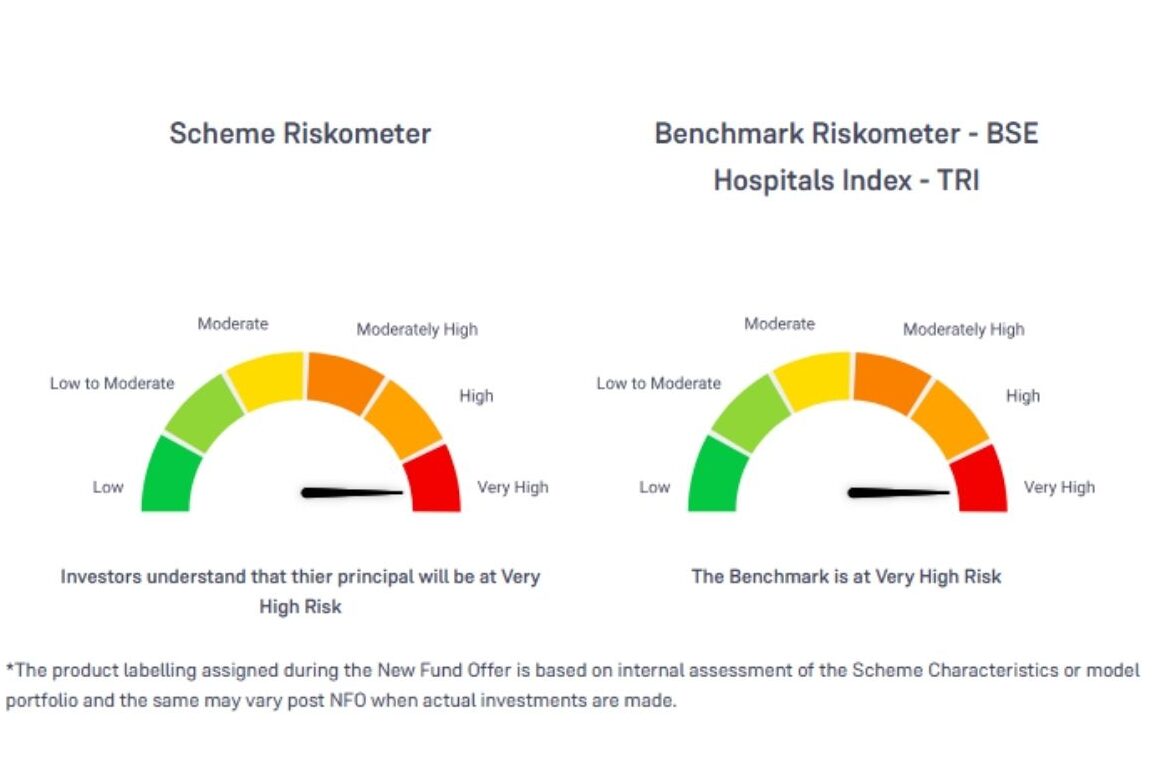
According to Groww’s scheme riskometer, Groww BSE Hospitals ETF FoF is of high risk, and its benchmark index, BSE Hospitals Index-TRI, is also of high risk. This is mainly because the fund only invests in the hospital sector, and therefore any prolonged underperformance of the sector can lead to low returns.
Who Should Consider this Fund?
Groww BSE Hospitals ETF FoF Direct Growth is a good option for investors who are willing to take on high risk. This fund works for those who are comfortable with sectoral or thematic funds, understand the risks that come with limited diversification, and for investors who believe in the growth potential of India’s hospital and healthcare services sector.
They should be ready to stay invested for at least five years to ride out market and sector fluctuations. The fund may also attract investors looking for a passive, index-linked way to invest in the hospital sector through a mutual fund structure.
Conclusion
By investing in the BSE Hospitals ETF, the fund seeks to capture the long-term growth potential of an important sector while offering the convenience of a mutual fund format. However, as a sector fund, it comes with higher risk and limited diversification. This makes it suitable only for investors who have a long investment horizon and can handle more risk. Investors should carefully consider their financial goals, asset allocation, and risk profile.
Written by Nila Maria Jacob