
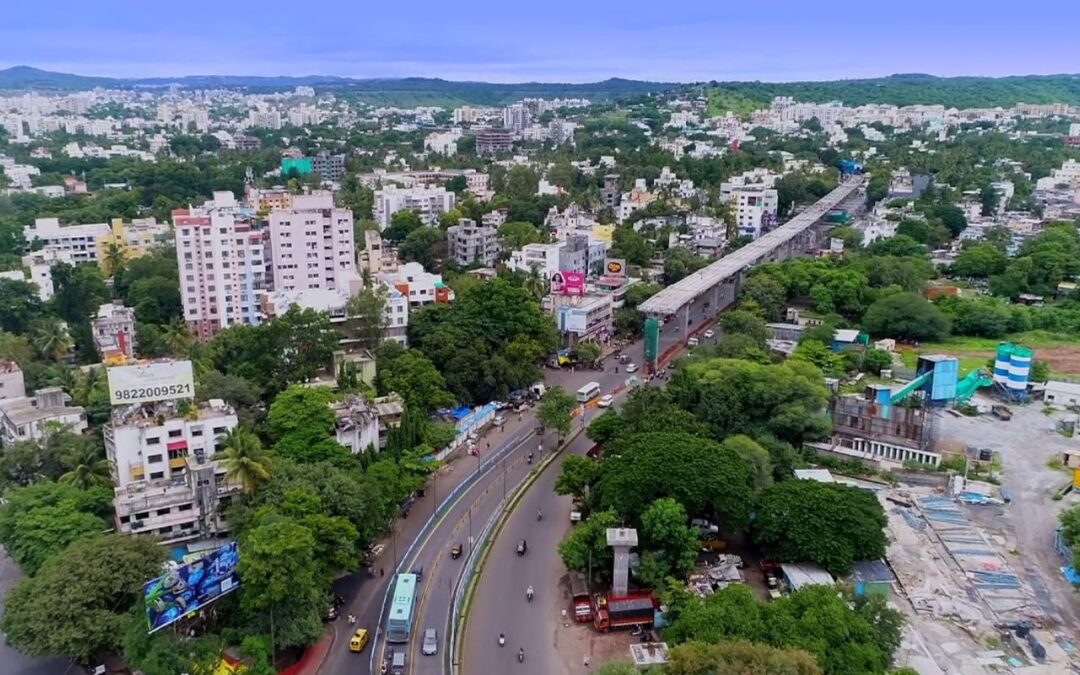
Synopsis: With the actively operating Kempegowda International Airport (KIA), Informational Technology Investment Region (ITIR), Aerospace Park and premium residential developments, Devanahalli has emerged as the epicentre of North Bengaluru’s expansion. To further strengthen the region, state govt has recently notified the ‘Devanahalli Special Investment Region’ (SIR), spanning 3,117.9 acres across 13 village panchayats.
Growth Story of Devanahalli
Devanahalli has evolved from a quiet town to Karnataka’s fastest-growing economic zones. The region’s transformation accelerated after the establishment of Kempegowda International Airport in 2008. The recent activites in Devanahalli show the area’s investment appeal. In 2023, foxconn invested INR 21,911 Cr for a manufacturing facility on 300 acres of land and created employment opportunities. Boeing purchased 43 acres and invested INR 1600 Cr and Amazon India relocated its corporate headquarters to Devanahalli, Walmart leased over 1 Lakh sq. ft for its global capability center. The region has attracted global companies like Rolls-royce, Airbus, Collins aerospace and HAL. The region has secured investments more than INR 13000 Cr and in Feb 2025, Emvee group announced INR 15000 Cr manufacturing facility on solar energy equipment.
Property market dynamics:
- As of 2025, property prices range between INR 4500-7500 per sq. ft in areas of North Bengaluru while land rates vary from INR 3500-8550 per sq. ft with locations near NH-44 and airport.
- The property market has shown appreciation in rates, with land rates increasing by 14% in the last year to 103% over three years and 364% over the past decade.
- Commercial property rates range from 8000-10000 in INR per sq ft. and a standard one-acre plot (45,000 sq. ft) costs between INR 3-4 Cr as experts predict the value could double within the next few years. The average rental yield stands at 3% with 6-7% annual rental growth.
What is Special Investment Region (SIR)?
- SIRs are large-scale industrial zones designed as global hub for economic activity spanning typically 100 sq kilometers or more, designed specially to attract investments through world-class infra and policy incentives. Key features of the SIR include single-window clearance systems for faster approvals, master planning that integrates industrial, residential and commercial spaces, connectivity infra through highways, railways, and airports.
- KIADB as the apex authority, aims to upgrade industrial clusters such as Devanahalli General Phase 1, Devanahalli General Industrial Area Phase 2 and Adhinarayana Hosahalli Phase 2 into globally competitive economic hubs.
Also read: Devanahalli: Is It Better to Live Here or Invest in Property?
How the SIR status will drive Investment in Devanahalli
- Areas under SIR will be under direct monitoring of the state government. Infra development will accelerate under the SIR framework. The region will be receiving a prior funding for roads, power supply, water resources and digital connectivity. The planned BIAL ITIR spanning 12000 acres with INR 1 lakh Cr investment, will create up to 40,000 jobs and make Devanahalli as one of India’s largest IT hub.
- Tax benefits and fiscal incentives offered under the SIR framework make the region more attractive compared to other locations. The framework also provides exemptions on stamp duty, property tax and other levies during the initial years.
- Strategic positioning near the international airport provides logistics advantages for aerospace, electronics and export-oriented industries.
Future Outlook of Devanahalli’s Growth Trajectory (2025-2030)
The next five years seem to transform growth for Devanahalli. Real estate experts predict 10-15% annual property appreciation, with land near the airport city and ITIR potentially doubling in value. The World Trade center being developed across 74 acres is expected to open by 2027 adding to the commercial infra.
The completion of metro connectivity by 2027 will integrate Devanahalli into Bangalore’s urban and drive residential demand by making daily commuting viable for professionals. The ITIR project is expected to attract leading IT firms including Infosys with region targeting INR 2 Lakh Cr in IT investments over the next decade.
Employment generation will be increased with 4 million jobs (both direct and indirect) which is created via ITIR, aerospace SEZ and manufacturing hubs making Devanahalli one of India’s industrial and residential destinations.
Written by Vijai Krishna