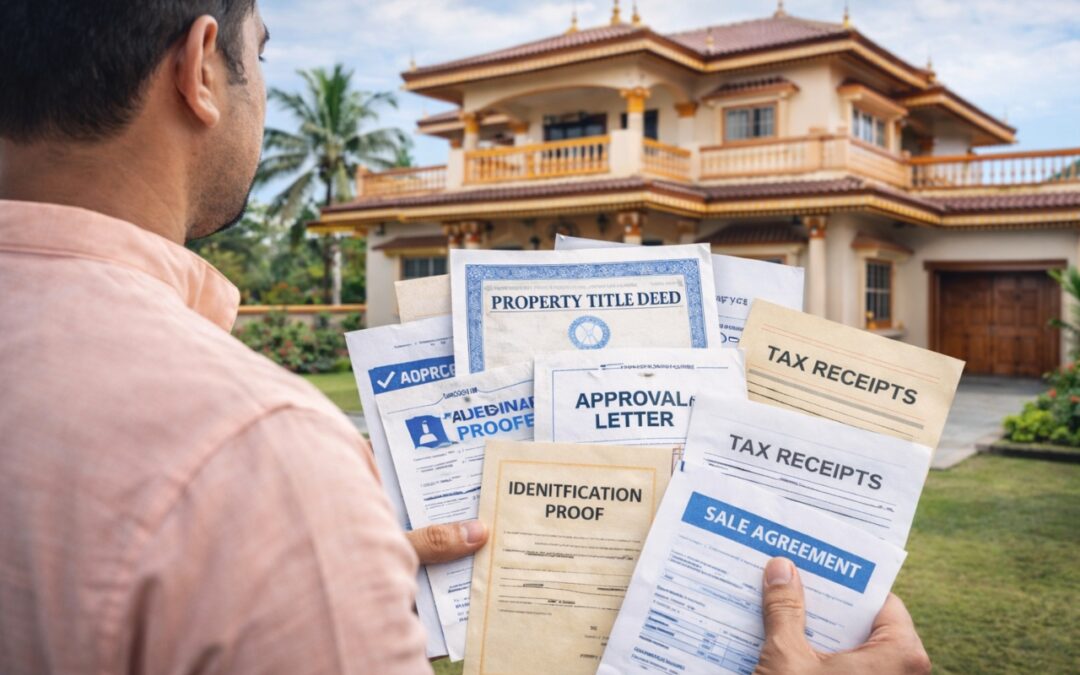
Synopsis: This article covers the 10 important documents that are crucial before buying a property in India. It also discusses why document verification is important.
According to Quoins Region, approximately 9,000 property fraud cases are registered in India every year, and this accounts for over ₹10,000 crore of loss annually. These cases happen mainly due to fake titles, approvals or improper document verification. This is a sign that Indians need to be more careful with document verification before property purchases.
Why Document Verification Is Important in Indian Real Estate
You cannot neglect the importance of document verification in the Indian real estate market, since the ownership of property in India typically goes through a trail of multiple historical property transfers and numerous compliance inspections. A single document lost or damaged in that chain can lead to disagreements, failure of a loan or cause issue in resale. Risk profile also varies when purchasing a builder-project or a resale house.
There is a tendency to get builder projects without approvals or with hold-up certificates, whereas resale homes have an underlying tendency to conceal the liabilities, such as outstanding dues or incomplete ownership transfers.
10 Must-Have Documents to Verify Before Buying Property
1. Sale Deed: This is the primary document that establishes ownership of the seller on the property and the right to transfer the property. It is issued by the Sub-Registrar’s Office.
2. Mother Deed: This document traces the past transfers of the property, the history of ownership, and makes sure that there are no disputes or gaps in the previous transfers.
3. Encumbrance Certificate: This document ensures that the property does not have any active legal complications or liabilities, such as court cases or mortgages. It is advisable to get the EC of the past 13-30 years to make sure that there are no legal issues tied to the property.
4. Building Plan Approval: This document is issued by the local development authority to confirm that they have approved the construction of the building as per the zoning and building laws. Always make sure that the construction of the property is according to the approved plan.
5. Completion Certificate: This document is given only after the construction of the property is finished as per the approved plan. Without this document, the property will be considered unauthorised, and it can lead to legal complications.
6. Occupancy Certificate: This document is to verify that the property is safe to be occupied, and it is issued by the municipal authorities. Absence of OC will lead to rejection of home loans, especially for ready-to-move-in property units.
7. Conversion Certificate: This document is used to confirm that the land of the property was converted from agricultural to non-agricultural use, legally and not illegally. Buying property without this certificate might lead to considering the property as illegal construction.
8. Property Tax Receipts: These receipts act as proof that the seller of the property has paid all the municipal taxes due up to the date of the sale of the property. This is important because unpaid taxes might become a liability after ownership transfer.
9. Mutation Records: This document confirms that the ownership of the document is updated in the revenue records of the government after the last property transfer. Note that this document is known by different names across different states.
10. RERA Registration Certificate: In some cases, the RERA registration document might be asked to confirm that the project is legally approved as well as regulated. It protects the buyers against delay on finishing the project and other false promises. The verification of project details can be done on the respective state RERA portal.
Bonus Documents Buyers Often Ignore (But Shouldn’t)
- 1. NOCs: No Objection Certificates (NOCs), such as society, lender, builder, and environmental NOCs, confirm that no third party has any legal objection to the sale of the property.
- 2. PoA: Power of Attorney (PoA) gives another person the authority to act on behalf of the property owner. However, keep in mind that most property-related frauds in India happen due to the misuse of PoA.
- 3. Possession Letter: This document is used to verify the date and other terms of the handover of the property from the seller to the buyer.
Conclusion
One should keep in mind that verbal promises are legally meaningless. Only the registered and verifiable documents actually make ownership and legality. Most property frauds in India occur due to people being careless or hasty with document checks. In this way, careful checks prior to payment are not an empty ritual, but a very important protection for all real estate purchasers.
Written by Nila Maria Jacob