
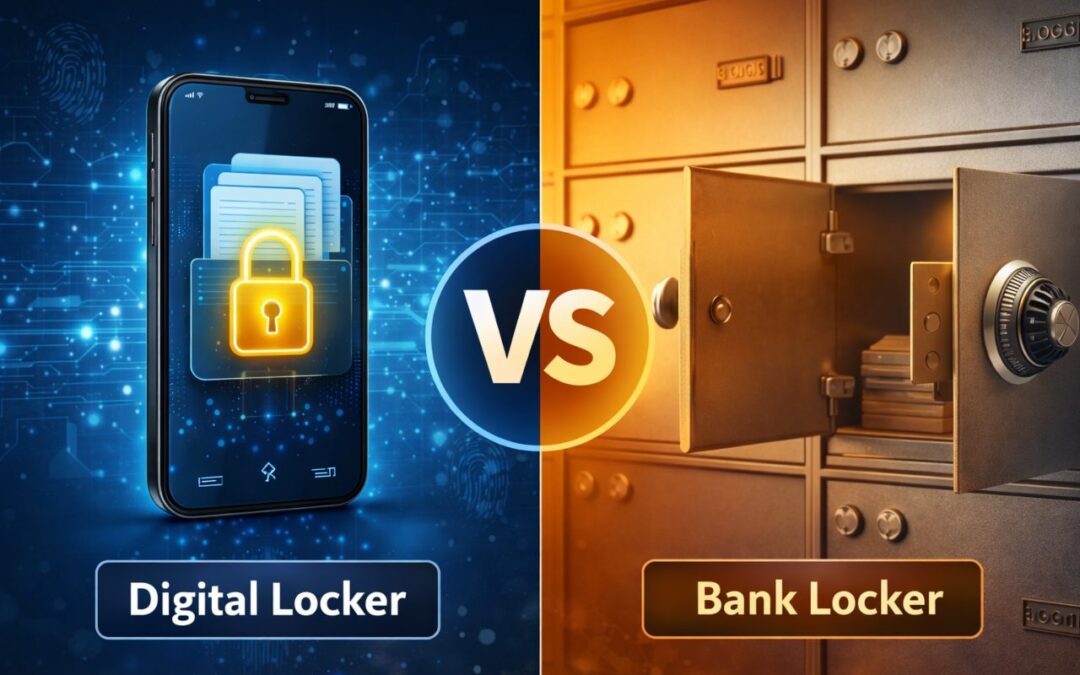
Synopsis: Digital lockers are convenient and loss-proof, but with cyber risks, whereas bank lockers are physical but expensive to use. Layered approaches usually work best, and hence are the safest and most frequently.
In the contemporary age that has been characterized by the digital era, it is essential to protect valued papers such as property documents, IDs, certificates, among others in case of loss, theft, or destruction. Cloud-based access is provided by digital lockers like the DigiLocker of India, whereas traditional bank lockers provide physical lockers. This article contrasts their safety to enable you to make a prudent decision.
What is a Digital Locker?
It is linked to Aadhaar and offers 1GB of free storage space to digital documents under the governmental project DigiLocker, which offers equivalent legal legitimacy when compared to their original counterparts. Users can access files anytime, either through the app or the web and share them with consent-based eSign. It eliminates physical damage as a result of fire or loss and reduces paperwork.
What is a Bank Locker?
Bank lockers are safe metallic containers in the vaults guarded by CCTV, guards, two key systems, and alarm systems, which would be good in the case of physical objects that cannot be replaced easily, such as gold or original deeds. It is bank hours and keyed, and the RBI requires banks to charge 100 times each year of rent (₹1,000-₹10,000 generally) in case of negligence. Nevertheless, banks do not claim full liability for the contents.
Safety Comparison
Digital lockers are convenient and are anti-loss, but may result in digital breaches, which can be reduced by government security measures, such as adherence to the IT Act. Bank lockers are appropriate for high-value physical objects despite the restrictive access and low payouts.
Also Read: Top 7 States With the Highest Number of RERA-Registered Projects in India
Pros and Cons
Digital Locker Pros
- Real-time access to all parts of the world without the need to have physical copies.
- Ecological, paperless.
- Free and scalable storage.
Digital Locker Cons
- Internal- Lockout by forgotten passwords; tech-savvy.
- Not suitable for non-digitizable goods such as jewellery.
- However, there are cyber threats, which are reduced by encryption.
Bank Locker Pros
- Strong physical protection against catastrophes.
- Banks will not access trusted content.
- Regulated by RBI.
Bank Locker Cons
- Limited access (bank hours).
- No complete insurance and annual fees.
- The cases of theft have fewer recourse.
Which is safer?
Neither of them can stand alone- digital suits are to replace the replaceable documents, such as IDs, and bank Excel files are to cover the irreplaceables. The best way to hedge risks is by using layered use (digital copies + physical storage), as it is suggested by experts.
Conclusion
To the majority, the digital lockers for easy access and bank lockers for valuables are as safe and convenient as they can be. Determine the character of your documents, ensure that, where necessary, and keep watch on the emerging threats to guarantee the permanency of protection.
Written By Jayanth R Pai