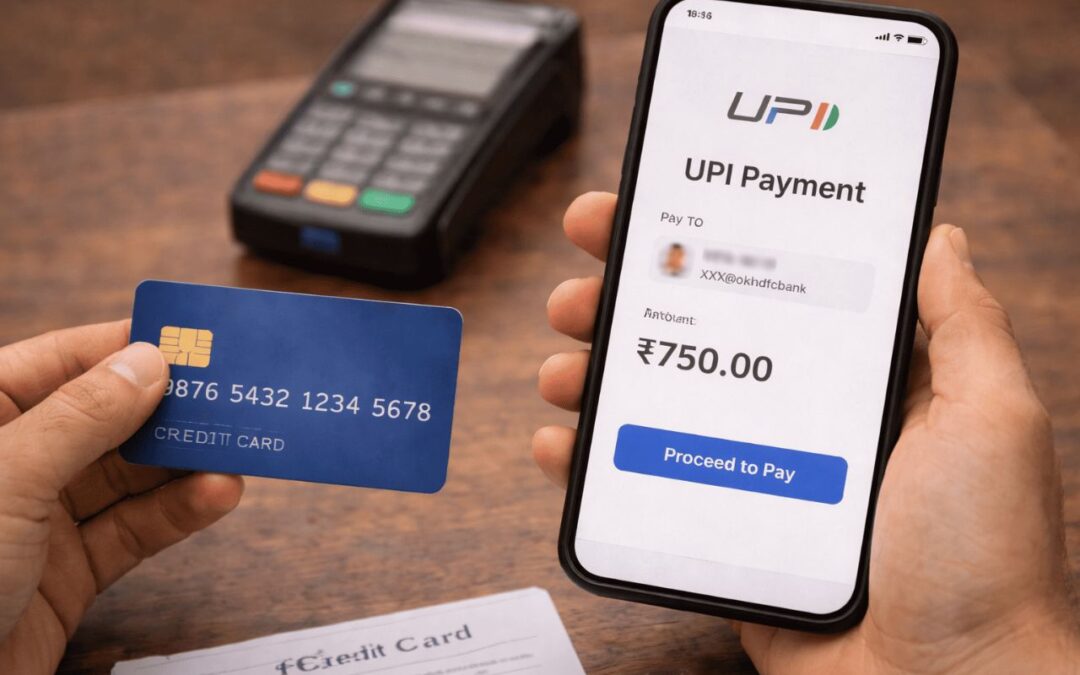
Synopsis: RuPay credit cards now smoothly integrate UPI in their offerings. The digital payment segment now not only offers convenience but now it is convenience plus rewards. This article identifies the top 9 credit cards that offer the highest cashback and reward rates for UPI transactions.
The integration of RuPay credit cards with UPI has truly been a game changer for the many users. Earlier credit cards were reserved for high value POS swipes or online transactions and UPI was the king of everyday payments. Now, by merging these two banks allows you to use your credit limit for everything from miniscule spends like ₹10 to a high spend like that of monthly grocery runs.
Can You Transfer Money to Individuals?
A common point of confusion is whether these UPI Credit Cards allow you to transfer money to friends or family (P2P transfers). The answer is no. To maintain the integrity of the credit domain, RuPay credit cards on UPI can only be used for Merchant (P2M) transactions. You cannot send money to a personal UPI ID or a phone number unless it is a verified merchant QR code. This helps in maintaining the credit facility used for commerce only rather than as a tool for interest-free cash rotation between individuals.
1. Axis Bank SuperMoney RuPay
One thing to note is that this card is best benefited to those who are inside the SuperMoney circle. In simple words those who use the Super.Money segment more as it is a product backed by Flipkart and Walmart.
- Joining Fee: Nil (Lifetime Free)
- Annual Fee: Nil
- Cashback Value:
- 3% Cashback on UPI QR transactions made via the SuperMoney app
- 1% return as cashback on all other eligible spending including UPI and non-UPI
- Direct cashback credit to the card account (no redemption hassle)
2. Tata Neu Infinity HDFC Bank
The card is with no doubt a best choice for those who shop more than often in the Tata extensions.
- Joining Fee: ₹1,499 + GST
- Annual Fee: ₹1,499 + GST (Waived on annual spends of ₹3 Lakh)
- Cashback Value:
- 1.5% NeuCoins on all UPI spends (capped at 500 NeuCoins per month).
- 5% NeuCoins on Tata Neu app spends.
- 1 NeuCoin = ₹1
- If you want to apply for the card, please visit the Official Website
3. Kiwi RuPay Yes Bank Credit Card
Kiwi Rupay Yes Bank card is a fintech product that mostly prioritises Scan & Pay method of payment to merchants and it provides tiered rewards for it.
- Joining & Annual Fee: ₹0 (LTF)
- Cashback Value:
- 1.5% Cashback on UPI Scan & Pay transactions.
- 0.5% Cashback on online transactions.
- Up to 5% Cashback for Neon members (milestone-based).
- If you want to apply for the card, please visit the Official Website
4. Jupiter Edge+ RuPay (CSB Bank) Credit Card
This is a card that offers high rewards on lifestyle categories often paid via UPI
- Joining Fee & Annual Fee: ₹0 (LFT for limited period offer)
- Cashback Value:
- 1% Cashback on all UPI and credit card spends.
- 10% return as cashback on top shopping platforms like Amazon & Flipkart
- Rewards earned as “Jewels” (5 Jewels = ₹1).
Also read: Top 5 Credit Cards with High Cashback and Free Lounge Access in 2026 – See Which Suits You Best
5. HSBC RuPay Cashback Card
A premium entry into the RuPay space that rewards daily essentials and dining.
- Joining Fee: ₹499
- Annual Fee: ₹499 (waived on a total annual spends of ₹2 Lakh)
- Cashback Value:
- 10% Cashback on dining, food delivery, and grocery (includes UPI merchants in these categories).
- 1% Cashback on all other UPI spends (capped at ₹400/month)
6. HDFC Bank UPI RuPay Credit Card
A dedicated virtual card made specifically to be linked to UPI apps.
- Joining Fee: ₹99
- Annual Fee: ₹99 (waived on a total spends above ₹25,000 annually)
- Cashback Value:
- 3% CashPoints on Groceries, Dining, and PayZapp.
- 2% CashPoints on Utility spends.
- 1% CashPoints on other UPI spends.
7. IDFC FIRST Digital RuPay Credit Card
An instant virtual card offered primarily to existing IDFC customers to boost their UPI earnings.
- Joining & Annual Fees: ₹199+ taxes
- Cashback Value:
- 3X return as reward points on UPI spends that is above ₹2,000
- 1X return as reward Points on UPI spends that is below ₹2,000
- Welcome benefit of up to ₹200 cashback on the first 4 UPI transactions
8. ICICI Coral RuPay Credit Card
This card offers lounge access perks along with UPI integration and rewards
- Joining Fee: ₹500+ taxes
- Annual Fee: ₹500+ taxes (waived at a total annual spends of ₹1.5 Lakh)
- Cashback Value:
- 2 reward points per ₹100 spent on UPI (0.5% value back).
- 1 reward point on each ₹100 spend on utility and insurance payments
- 25% discount on movie tickets via BookMyShow.
9. IndusInd Platinum RuPay Credit Card
A straightforward reward-earning card with a high base rate for UPI.
- Joining Fee: Nil
- Annual Fee: Nil
- Cashback Value:
- 2 Reward Points per ₹100 on UPI transactions (approx. 0.7% to 1% value depending on redemption).
- Comprehensive insurance cover for travel and baggage.
- If you want to apply for the card, please visit the Official Website
Monthly Cashback Comparison
This comparison is based on an example total monthly spend of ₹10,000 on each card. The assumption of ₹5,000 spent on accelerated categories and ₹5,000 on general UPI.
Why RuPay UPI Cashback Is More Valuable Than It Looks
The cashback numbers in the table may appear very less for many people and it is valid to think so. You see UPI is used for dozens of micro-transactions daily in many categories where regular credit cards were never used. When credit is used on UPI these cards convert routine cash expenses into reward earning transactions. The transaction which earned zero rewards before now earns cashbacks in most spends.
Consider a simple example- If a user spends ₹300 daily via UPI that means they roughly spend ₹9,000 a month. Even at a conservative 1% cashback, this earns ₹90 monthly or over ₹1,000 annually on expenses that would otherwise offer no benefit. Now layer this with occasional higher category spends like groceries or dining, where some cards offer 2% to 5% returns and the total reward pool expands.
Conclusion
RuPay credit cards on UPI are now a practical extension of everyday payments. They fill the gap between small UPI transactions and reward credit usage which allow users to earn consistently across categories that were previously unrewarded. The cashback percentages may seem modest in isolation but their impact becomes significant when applied to daily spends.
As adoption grows and issuers refine their reward structures, these cards are likely to become a default choice for routine payments. When one uses these cards properly it can quietly improve overall savings without altering spending habits.
Written by Kenbi Riba