
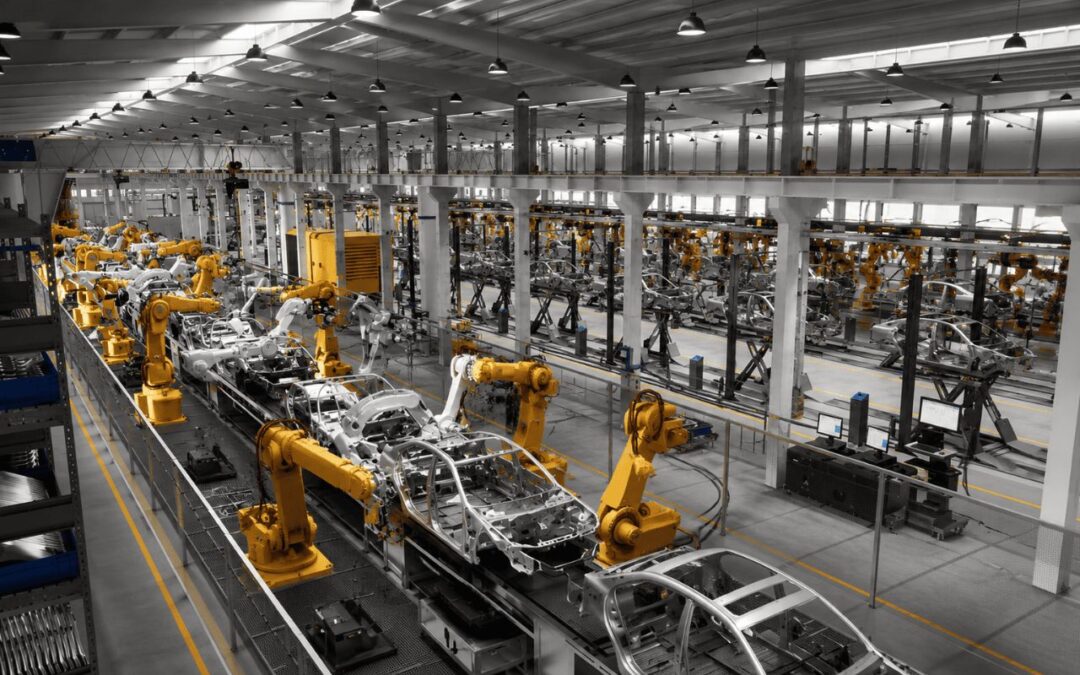
Synopsis: This article discusses the proposed AI, Robotics and Innovation Centre of Excellence in Peenya, and how it will affect the MSME industry in Karnataka. The potential of the initiative to spread technology adoption, bolster skill development, enhance productivity and bring about Industry 4.0 transformation in thousands of manufacturing firms.
As the world shifts to an era of AI and automation, India’s manufacturing industry is increasingly turning to technology to drive growth and competitiveness. It’s a big step towards this change that the government has announced the setting up of a Centre of Excellence for AI, Robotics and Innovation in Peenya, an industrial belt in Bengaluru. The project will also be expected to generate new business opportunities and enhance the region’s reputation as a leading manufacturing and technology hub.
Peenya- the heart and soul of the manufacturing sector in Bangalore
Peenya Industrial Area is one of the largest industrial areas in Asia occupying an area of almost 40 sq. km. (12,000 acres) and is a main manufacturing area of Karnataka. There are several thousand micro, small and medium enterprises (MSMEs) here which are pivotal to engineering, machine tools, electronics, auto parts and precision manufacturing. With its strong industrial base, infrastructure and manufacturing centers, it is an ideal location to establish a Centre of Excellence for AI and Robotics using its technology.
Services the New Centre of Excellence will deliver
- The proposed Centre of Excellence will act as a technology help desk for the MSMEs to help them avail advanced manufacturing solutions.
- It will be required to provide access to tools powered by AI, robotics applications, testing facilities and expert advice. This is significant as Peenya Industrial Area is one of the biggest industrial areas in Asia with more than 13,000 industries.
- The centre will also provide training programs, tie-ups with industry and innovation incubation to help small businesses try out new and advanced technologies without having to make huge investments on their own.
- It is seen as being in tune with the Government’s policy of modernising an industry which contributes almost 31% of India’s GDP and has a labour force of nearly 33 crore.
Also read: Data Centres or Warehouses? Which Investment Could Deliver Higher Returns Over the Next Decade?
What are the advantages of MSME’s to use AI and Robotics?
- Enhanced productivity: AI and automation can help increase productivity by reducing the need for human intervention and downtime.
- Reduced operating expenses: Automated processes can reduce labour, energy and material consumption, providing long-term cost savings.
- Enhanced quality control: AI systems can identify defects more quickly and accurately, minimizing waste and rework.
- Rapid decision making: Real-time data analytics enables businesses to identify the issues and improve operational efficiency.
- Global competitiveness: The use of Industry 4.0 technologies helps the MSMEs meet the global export standards and the quality demanded.
- Solving labour issues: Robotics can perform repetitive and dangerous tasks, freeing up human time and manpower for more valuable tasks.
Potential Impact on Karnataka’s MSME Sector
- Supporting one of the major economic contributors: MSMEs account for almost 31% of the GDP of the country and approximately 36% of manufacturing output and around 45% of exports to the country, and hence it is important to take up technologies for sustainable growth.
- The business value would be tremendous with the CoE mainly serving the 13,000+ industries in Peenya, which would require a huge investment in AI and automation technologies.
- Manpower reduction: Depending on the size and scope of industry operation, the manpower requirement can be reduced up to 20-30% by the automation in the industry.
- Enhanced export competitiveness: AI powered quality control and precision manufacturing can help MSMEs adhere to international standards, thus contributing to the target of growing manufacturing exports set by India.
- Shaping the transition towards Industry 4.0: The centre will drive small and medium enterprises to more and more smart manufacturing, data analytics and automated production systems.
- Employment and economic multiplier effect: MSMEs are already providing job opportunities to over 33 crore citizens of the country and with greater efficiency and growth in businesses, a number of new and skilled jobs will be created and the industrial ecosystem will be strengthened in Karnataka.
Economic opportunities for jobs and skills
- Expand workforce upskilling support of more than 33 crore jobs supported by MSMEs in India and workforce upskilling is a key requirement with automation on the rise.
- The demand for AI experts is projected to rise by 25–35% in India, which will also increase the demand for professionals who will be skilled in AI, robotics and automation.
- The CoE can help thousands of workers in Peenya’s over 13,000 industrial establishments to acquire skills of Industry 4.0.
- Helping to fill the skill gap: Only about 50% of engineering graduates are deemed “industry-ready” and specialised training can help them make the grade.
- More valued jobs: It is expected that the introduction of new technologies will lead to more technical work, supervisory and innovation-based jobs.
Growing AI Ecosystem in Bengaluru
- Bengaluru is the startup power city with more than 13,000 industries and is home to almost 35-40% of the startup ecosystem in India.
- AI market growth in India: The AI market is projected to grow in India at a 25–35% CAGR and the city of Bengaluru has the heart of many AI investments, talent and research.
- Poorly tech leadership: Karnataka has almost 40% of tech exports from India and is a hub of AI, automation and digital innovation.
- AI and Deep Tech are among the most popular investment drivers of the startup ecosystem in Investment Hub Bengaluru with investments exceeding $10 billion in the past few years.
- Industry-academy strength: Hundreds of R&D centres, startups and engineering institutions are present in the city, which is a strong ecosystem for the adoption of Industry 4.0.
- Economic impact: If a small percentage of the industrial units in Peenya (13,000+ across the city) use AI and automation, the CoE has the potential to boost the productivity, competitiveness and manufacturing output of the state of Karnataka.
Conclusion
Peenya is developing its new Center of Excellence which will help 13,000+ industries to lead towards adopting AI and robotics to enhance their productivity and competitiveness. This will help in boosting contribution to the country’s GDP by almost 31% and its exports by 45% which will have a significant impact on the future of technology-based manufacturing in Karnataka.
Written by Boyapati Sai Jasmitha