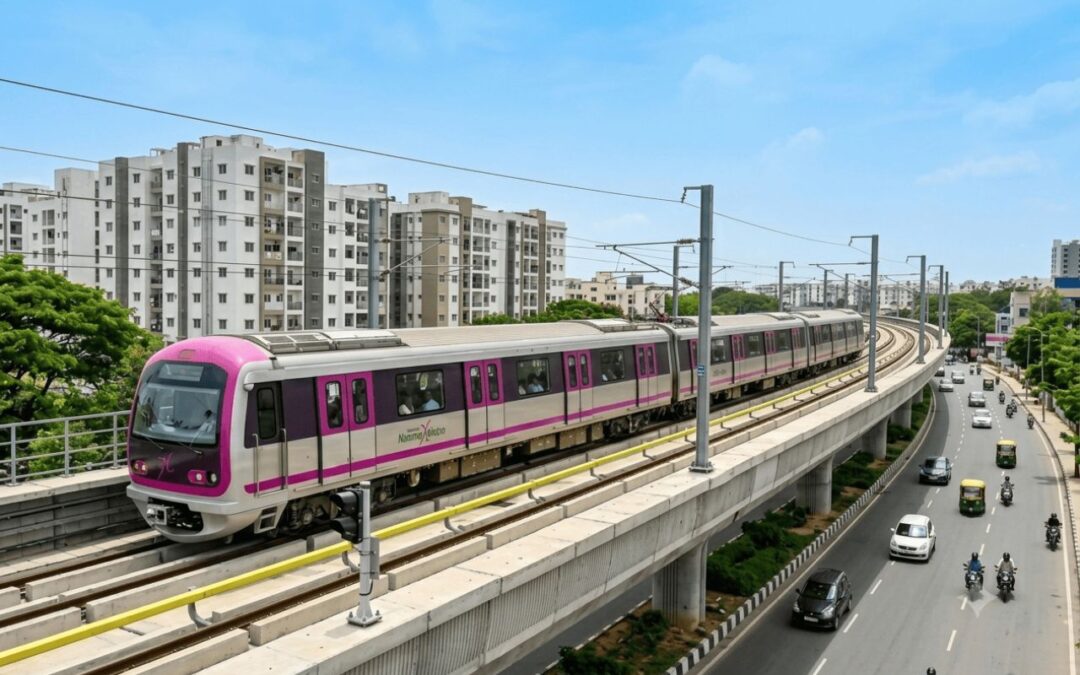
Synopsis: The Pink Line Metro in Bengaluru is scheduled to provide much needed connectivity to many IT corridors throughout the city. This article discusses the details of the pink line and the connecting IT corridors.
The eagerly awaited Pink Line Metro in Bengaluru is now steadily moving towards its opening, with the first elevated section slated for opening around August 15. The new Bannerghatta Road corridor will enhance urban mobility, as well as links to some of the city’s major employment centres. The construction of the project is well underway, and its completion will likely bring about a significant transformation in the city, affecting both residents and businesses.
Bengaluru Pink Line Metro – Route information
One of the most ambitious extensions to Bengaluru’s Namma Metro, the Pink Line covers around 21.4 km from Kalena Agrahara in the south to Nagawara in the north. The corridor will be elevated and underground, and will eventually include 18 stations.
The first phase, which will be operational from around August 15, will include the elevated section between Kalena Agrahara and Tavarekere and will have six stations in the high traffic corridor of Bannerghatta Road. The operational metro network in Bengaluru currently covers about 103.6 km, with the addition of the Pink Line, the city’s infrastructure will once again become the second largest metro network in India, beating Mumbai, which has a metro network of around 101.43 km in operation.
The Metro is expected to run on schedule, providing a quicker and more reliable transport option for commuters. The first stretch of the Pink Line is likely to be 7.5-km elevated from Kalena Agrahara to Tavarekere. The six planned stations to be operational are Kalena Agrahara, Hulimavu, IIMB, JP Nagar 4th Phase, Jayadeva and Tavarekere.
IT and Employment Hubs Expected to Benefit the Most
The Bannerghatta Road IT corridor is likely to be the largest beneficiary of the Pink Line as stations like Hulimavu, IIMB and Jayadeva are directly connected to the area. The corridor houses the headquarters of major corporations and technology companies such as Accenture, IBM, Oracle, Concentrix etc. and many companies from Kalyani Tech Park. This belt should see much easier commuting for workers as metro links are expected to improve.
BTM Layout Commercial Belt is situated near the Tavarekere and Jayadeva stations, and has a high density of startups, software companies, digital agencies and Coworking Spaces. The metro will make one of Bengaluru’s most vibrant business hubs, with thousands of professionals working in the tech and services industry, more accessible.
Koramangala Startup Ecosystem: It is one of the largest Startup Ecosystems in India which is accessible from the Jayadeva station. It has the presence of startups like PhonePe, Myntra, Razorpay, Meesho and hundreds of venture backed startups. The better metro connectivity will be expected to benefit employees and businesses that are part of this ecosystem.
Electronic City IT Hub: The commuters will enjoy direct metro connectivity to Electronic City through the Pink Line’s interchange with the Yellow Line at Jayadeva. The expectation would be this will help the employees of some of the biggest technology firms in India such as Infosys, Wipro, TCS, HCLTech, Tech Mahindra and many other IT companies operating within the technology hub.
JP Nagar Station 4th Phase: The station will connect to the burgeoning commercial and office areas of JP Nagar, which will benefit workers from the consulting, healthcare, education, retail and service sector businesses in South Bangalore.
Real Estate Impacts along the Metro Lines
Residential and commercial demand in and around metro corridors has always been determined by their improved metro connectivity, and the Pink Line is no exception. The improved connectivity may make certain areas like Kalena Agrahara, Hulimavu, JP Nagar, Bannerghatta Road more interesting in terms of home buyers and investors.
Enhanced access to key employment and education centres, hospitals and business districts are also said to boost the rental demand, especially for working professionals who want to be near the metro stations.
Conclusion
The Pink Line will transform the city of South Bengaluru as it will provide long missing connectivity to employment avenues in Bannerghatta Road and many more. The corridor promises to have a lasting impact on the city’s growth with improved connectivity, reduced commute times and improved real-estate opportunities.
Written by Boyapati Sai Jasmitha