
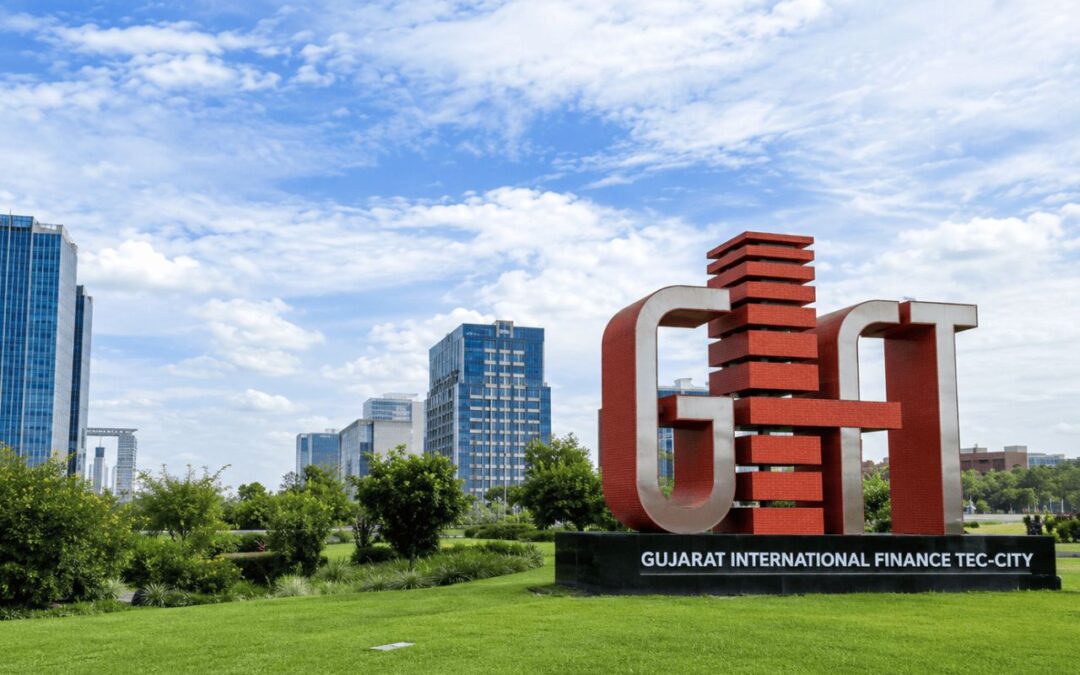
Synopsis: Mumbai is known to be the financial capital of India, and is home to the RBI, BSE, NSE, and hundreds of banks, while GIFT City is India’s foreign financial hub and a purpose-driven IFSC offering tax benefits. The real question for 2035 is will they co-exist or will any one of them dominate the country’s economy.
Experiencing the current economic scenario of India, there is a need for both a domestic powerhouse and a globally competitive offshore hub. Mumbai and GIFT City are not mirror images as they serve different things. Understanding their respective strengths and limitations is important for the investors, policymakers, and businesses planning the financial future of India.
Mumbai: The Incumbent Giant
This city is a financial giant driven by institutions, and a deeply regulatory framework.
- The central bank of the country, Reserve Bank of India (RBI) is headquartered in Mumbai.
- The two stock exchanges, Bombay Stock Exchange (BSE) with approximately 5,500 listed companies, and the National Stock Exchange (NSE) which is known for derivatives trading of the country and is headquartered in Mumbai.
- This city has over 1,200 fintech firms with all the major bank headquarters including SBI, ICICI Bank, HDFC Bank along with most mutual fund AMCs, insurance companies, and various wealth management firms.
The current challenges faced by Mumbai are infrastructure congestion, high real estate costs, and regulatory complexity that is making it less competitive for foreign financial hubs compared to other countries like Singapore or Dubai.
GIFT City: The Ambitious Challenger
- From 2024-25, the bank assets have grown to $88 Bn in the GIFT City, crossing ₹100 Bn in total.
- In global ranking the GIFT City rose to 43rd in October 2025 in Global Financial Centres Index from 92nd in 2021.
- GIFT City is evolving into a multi-asset financial centre and is expanding India’s share in global treasury, derivatives, and fund management activities.
- As of late 2025, GIFT City hosts 1,034 entities and 38 international banks.
Key Tax Advantages at GIFT City
- The GIFT City IFSC units can claim 100% exemption on business income for any 10 consecutive years out of the first 15 years of operation, under the Section 80LA of the Income Tax Act.
- Eligible non-residents and specified transactions on IFSC exchanges enjoy favourable capital gains treatment and several tax exemptions under the Income Tax Act.
- Investments at GIFT City are exempt from Securities Transaction Tax (STT), Commodity Transaction Tax, stamp duty, and GST which is opposite to Mumbai where equity trades attract STT of 0.1%.
- GIFT City is treated as a “foreign territory” under FEMA, unlocks the liberty for NRIs and foreign investors, including zero Indian capital gains tax through DTAA.
Also read: GIFT City Investments: How to Invest in Global Mutual Funds Through GIFT City
Head-to-Head Comparison
What 2035 Could Look Like
The trajectory suggests a complementary model with Mumbai and GIFT City together,
- Mumbai will retain its dominance as India’s domestic financial capital and is home to RBI, equity markets, retail banking, and insurance.
- GIFT City is slowly becoming India’s international financial gateway which is the preferred destination for cross-border capital, foreign fund management, NRI investments, and fintech innovation.
- With the GIFT City targeting aircraft and ship leasing alongside trade finance and ECBs, its global ambitions are well-funded and institutionally backed.
- India’s demographic advantage of a median age of 28, 43% urban population by 2035, and a consistent 6% to 7% GDP growth further creates the economic foundation for both hubs to scale simultaneously.
- The real risk for GIFT City remains the depth of ecosystem legal talent, ancillary service providers, and a live financial community that are still catching up to what Mumbai has built over a century.
Also Read: 8 Indian States with Highest Number of Registered Companies in 2026
Conclusion
By 2035, India is likely to operate a dual-hub model with Mumbai as the centre of domestic finance and GIFT City as the initiator of India’s global financial ambitions. The question for investors is not which city wins but which hub best serves their specific investments and regulatory needs.
Written by Jahnavi