
Synopsis: The article discusses the principal infrastructures that are changing the face of the development of Assam. It showcases the various initiatives under transportation, industrial development, renewable energy and the development of tourism infrastructure and their potential contribution to economic growth, connectivity, and development of Northeast India.
Assam is fast emerging as one of the hottest investment destinations in the country for infrastructure development with focus on connectivity, industry, energy and tourism sectors. The state is experiencing a surge in its economic development fueled by infrastructure projects that range from transformative transportation initiatives to massive industrial and renewable power installations, designed to boost the economy and regional connectivity in the Northeast.
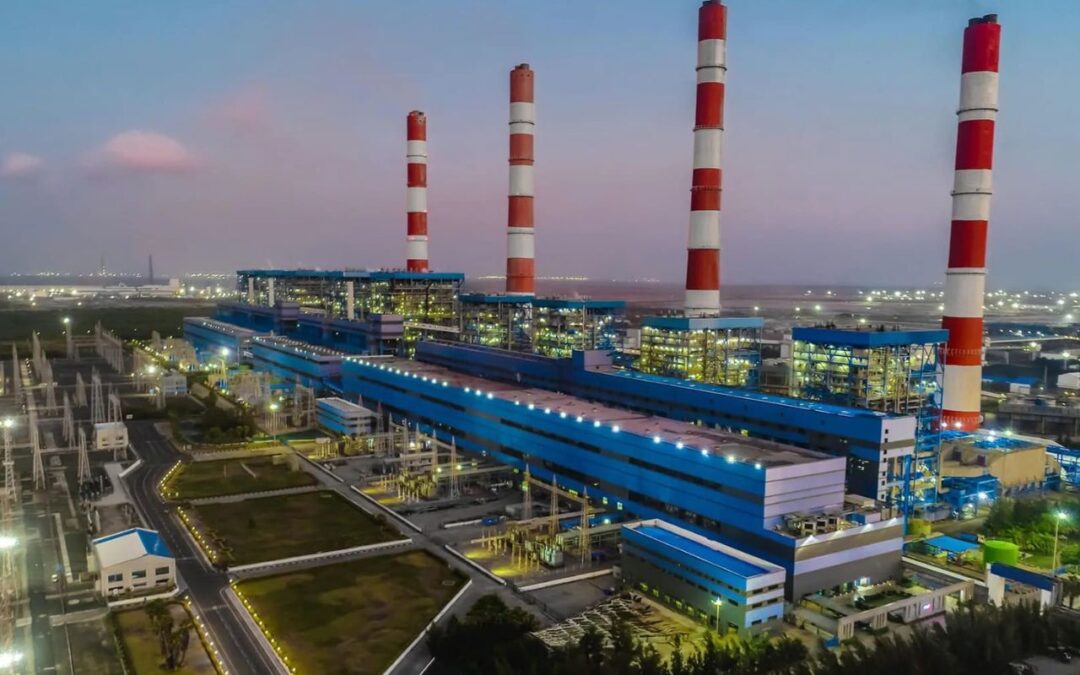
1. Adani Thermal Power Project, Assam
- The 3,200 MW Greenfield Ultra Super Critical Thermal Power Plant will be developed in Assam.
- Project Cost: ₹48,000 crore
- Capacity: Installed power generation capacity of 3,200 MW.
- Timeline: Expected to be commissioned in phases beginning December 2030.
- Purpose
- To meet Assam’s growing electricity demand and support long-term energy security.
- To provide reliable base-load power for industrial, commercial, and residential consumers.
- Employment Generation: 20,000–25,000 jobs during the construction phase, around 3,500 direct and sustained jobs
- Adani Pumped Storage Plant (PSP) Project, Assam (part of Thermal Power Project)
- Project Cost: ₹15,000 crore
- Capacity: Combined installed capacity of 2,700 MW across two pumped storage plants.
- Adani Green Energy has been awarded 500 MW of energy storage capacity from these facilities.
2. Maa Kamakhya Divya Pariyojana (Kamakhya Access Corridor Project)
- Location: Kamakhya Temple atop the Nilachal Hills in Guwahati, Assam.
- Project Cost: Total sanctioned cost: ₹498.37 crore.
- The project is being funded under the Prime Minister’s Development Initiative for North East Region (PM-DevINE) scheme.
- Purpose
- To improve accessibility and convenience for pilgrims visiting the Kamakhya Temple.
- Key Features
- Development of wider access roads and pedestrian pathways.
- Construction of improved stairways leading to the temple complex.
- Creation of larger public gathering spaces for pilgrims.
- Enhanced accessibility for elderly visitors and persons with disabilities.
3. Kamakhya Ropeway Project (Part of Maa Kamakhya Divya Pariyojana)
- Location: Kamakhya Railway Station directly with the Kamakhya Temple.
- Project Cost: ₹213 crore
- Total ropeway length: 1.43 kilometres
- Capacity: Designed to carry approximately 16,500 passengers per day.
- Purpose
- To provide a faster and more convenient travel option for pilgrims.
- To reduce road congestion around the temple area.
- To improve last-mile connectivity between the railway station and the shrine.
- To support the expected increase in tourist and pilgrim arrivals after the corridor redevelopment.
4. Namrup-IV Ammonia-Urea Fertilizer Project
- Location: Brahmaputra Valley Fertilizer Corporation Limited at Namrup in Dibrugarh District.
- Project Cost: ₹10,601.40 crore
- Executing Agency: Assam Valley Fertilizer and Chemical Company Limited (AVFCCL), a joint venture comprising: Government of Assam (40%), Oil India Limited (18%), National Fertilizers Limited (18%), Hindustan Urvarak & Rasayan Limited (13%), BVFCL (11%).
- Timeline
- An estimated execution period of 48 months
- Commercial operations are expected to commence around 2029–2030.
- Production Capacity
- Annual urea production capacity of 12.7 lakh metric tonnes (LMT).
- Daily production capacity includes:
- Approximately 2,200 metric tonnes of ammonia.
- Approximately 3,850 metric tonnes of urea.
- Purpose
- To significantly increase domestic fertilizer production capacity.
- To reduce India’s dependence on imported urea.
- To ensure a stable and uninterrupted fertilizer supply for farmers in Northeast India and eastern India.
- To support the government’s objective of achieving greater self-reliance in the fertilizer sector.
5. Brahmaputra Underwater Road-Cum-Rail Tunnel Project
- Location: Gohpur on NH-15 with Numaligarh on NH-715.
- Expected to improve connectivity across Assam, including Arunachal Pradesh and Nagaland.
- Project Cost: ₹18,662 crore
- Length
- Total Project Length: 33.7 kilometres.
- Underwater Tunnel Length: 15.79 kilometres.The project consists of a twin-tube tunnel running beneath the Brahmaputra riverbed as part of a four-lane access-controlled greenfield corridor.
- Travel Benefits
- Travel time between Gohpur and Numaligarh is expected to reduce from approximately six hours to just 20 minutes.
- The road distance between the two locations will be reduced from around 240 kilometres to 34 kilometres.
- Purpose
- To improve regional connectivity across Assam and the Northeast.
- To facilitate faster movement of passengers and freight.
- To support strategic and defence-related mobility in the region.
6. Guwahati Ring Road Project
- Location: Guwahati
- Designed to connect key regional corridors linking Siliguri, Silchar, Shillong, Jorhat, Tezpur, Jogighopa, and Barpeta.
- Project Cost
- Implementation cost under BOT (Toll) mode: ₹5,729 crore.
- Total gross project cost: approximately ₹7,000 crore.
- The Assam government will contribute around ₹1,270 crore through land acquisition support, GST exemptions, and royalty exemptions on construction materials.
- Length: 121 kilometres
- Project Components
- The ring road project comprises three major sections:
- Northern Guwahati Bypass: Construction of a 56-kilometre, four-lane access-controlled bypass north of Guwahati.
- NH-27 Expansion: Widening of an existing 8-kilometre stretch of NH-27 from four lanes to six lanes.
- NH-27 Corridor Improvement: Upgradation and improvement of an existing 58-kilometre bypass corridor along NH-27.
- Timeline
- The concession agreement was signed in April 2025.
- The project is being developed under a 30-year concession period, including a four-year construction phase.
- Completion is expected around 2029.
- Integration with the national highway network to improve interstate connectivity.
- Developer and Implementation Model
- The project is being implemented by the National Highways Authority of India.
- The concession agreement was awarded to Dineshchandra R Agrawal Infracon Pvt. Ltd..
- It is being developed under the Build-Operate-Transfer (BOT) Toll model with zero government grant support.
7. Shillong–Silchar (NH-06) Greenfield High-Speed Corridor
- Location: Mawlyngkhung near Shillong with Panchgram near Silchar.
- Project Cost
- Total capital cost: ₹22,864 crore.
- Civil construction cost: ₹12,087 crore.
- Land acquisition cost: ₹3,503 crore.
- Implementation Model
- The project is being developed under the Hybrid Annuity Mode (HAM).
- It is structured as a Public-Private Partnership (PPP) project.
- Length
- Total corridor length: 166.80 kilometres.
- Meghalaya section: 144.80 kilometres.
- Assam section: 22.00 kilometres.
- Timeline: Completion FY 2029–30
- Travel Benefits
- Current travel time between Shillong and Silchar is approximately 8–9 hours.
- The new corridor is expected to reduce travel time to 4–5 hours.
- This represents nearly a 50% reduction in journey time.
Conclusion
The investments focus on Assam’s infrastructure development, a strategy aimed at establishing the state as a major hub for trade and economic activity in Northeast India. The transportation, industrial, energy and touristic investments are projected to improve the regional development, draw more investments and offer long-term growth possibilities for the state.
Written by Boyapati Sai Jasmitha