
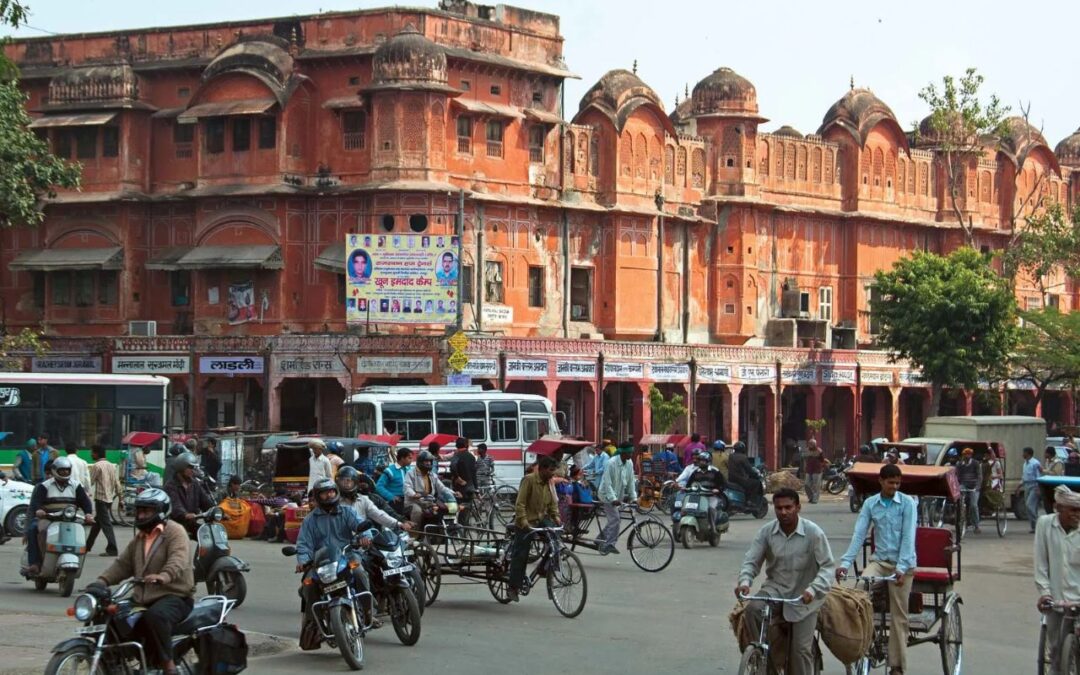
Synopsis: Union Budget 2026 focusses on development of tier-2, tier-3 cities, and temple towns through infrastructure development, connectivity and upgrade in basic amenities through allocation of ₹5000 crore for each City Economic Region (CER).
The real estate in India has long been based on its metros such as Mumbai and Delhi but the Budget 2026 changes it to the Tier-2/3 cities and temple towns through a Rs 5,000 crore per City Economic Region (CER) in five years.
Budget’s Core Proposal
Each CER has been allocated Rs 5,000 crore in the Budget and it is aimed to reach Tier-2 and Tier-3 cities and temple towns. Grants are provided under a system of fund release in the form of a challenge mode, whereby states and urban local governments are required to compete and fulfill stringent eligibility requirements in order to obtain it.
The main criteria and characteristics are
- Selection by challenge mode: Cities have to present detailed proposals on how they can economically prosper in such areas as manufacturing, logistics, tourism, or education; after evaluation only certain CERs can get funding.
- Reform-cum-results-based disbursements: The releases are in tranches that are linked to achievements, including 25 percent of infrastructure projects (roads, public transport, water, sanitation) to receive the next installment.
- Performance accountability: City authorities demonstrate governance reforms such as property tax collection quality or project implementation efficiency to unlock all Rs 5,000 crore in five years.
- Alignment with local growth drivers: CERs need to be aligned with the local growth drivers to promote job clusters and urban agglomerations.
Describing cities as engines of growth, Finance Minister Sitharaman explained that such criteria would make sure that funds spurred quantifiable development in the non-metro areas.
Spurring Real Estate Demand
Improved infrastructure will trigger demand in real estate development in these areas; housing, retail, hospitality, and commercial real estate. Enhanced accessibility through roads, rail and utility makes consumers escape the congestion and prohibitive prices in the metro.
Demand drivers by sector
- Housing: There will be an influx in the affordable homes and rentals around the industrial areas, premium residences in the temple towns such as Varanasi or Madurai will increase the number of families and professionals who will be attracted therein.
- Retail: The local consumption in the emerging urban pockets will increase, and this will be fueled by the presence of tourism and increased incomes in the city, thereby improving the malls and shopping centers.
- Hospitality: Hotels and guesthouses will increase to include pilgrims and business travelers and this will be enabled by the enhanced access routes.
- Commercial: There will be an increase in the number of office parks and warehouses along commercial logistic routes due to manufacturing and service sector expansion.
| Sector | Expected Boost | Key Infrastructure Enablers |
| Housing | Mid-segment and worker units | Roads, transit, utilities |
| Retail | High-street and malls | Connectivity, tourism influx |
| Hospitality | Budget to luxury stays | Airport/rail links |
| Commercial | Offices, logistics hubs | Industrial freight corridors |
According to Pradeep Aggarwal of Signature Global, this contributes to planned urbanisation whereas Gurpal Singh Chawla of TREVOC predicts slow but consistent demand upsurges.
Homebuyers and Developers Attraction
The tier-2/3 properties that are 30-50% cheaper than metros will attract buyers with high quality services such as clean water supply and green areas. The advantage of developers is the reduced cost of lands, guaranteed financing, and the possibilities of scales.
Attraction factors:
- To homebuyers: cheaper prices would be added to job closeness and short commute distance, attractive to millennials and remote workers.
- To the developers: Reform-linked funds reduce risks; integrated townships and mixed-use projects could be provided by the abundant amount of land.
- Professional recommendations Niranjan Hiranandani of Naredco is terming CERs unified ecosystems of transit-oriented growth; Manik Malik of BPTP pictures orderly urban growth.
The risks associated with execution such as delays remain, but milestone-based criteria will maintain momentum.
Conclusion
The Rs 5,000 crore CER strategy has the potential of reorganizing the real estate in India as it enables the Tier-2, Tier-3 cities and temple towns to become pulsars. It attracts home owners and property developers with better infrastructure that would relieve the congested metro networks and create prosperity inclusion. Provided that the states address challenge-mode requirements and reforms, this initiative could open billions of investments, transform urban India.
Written By Jayanth R Pai