
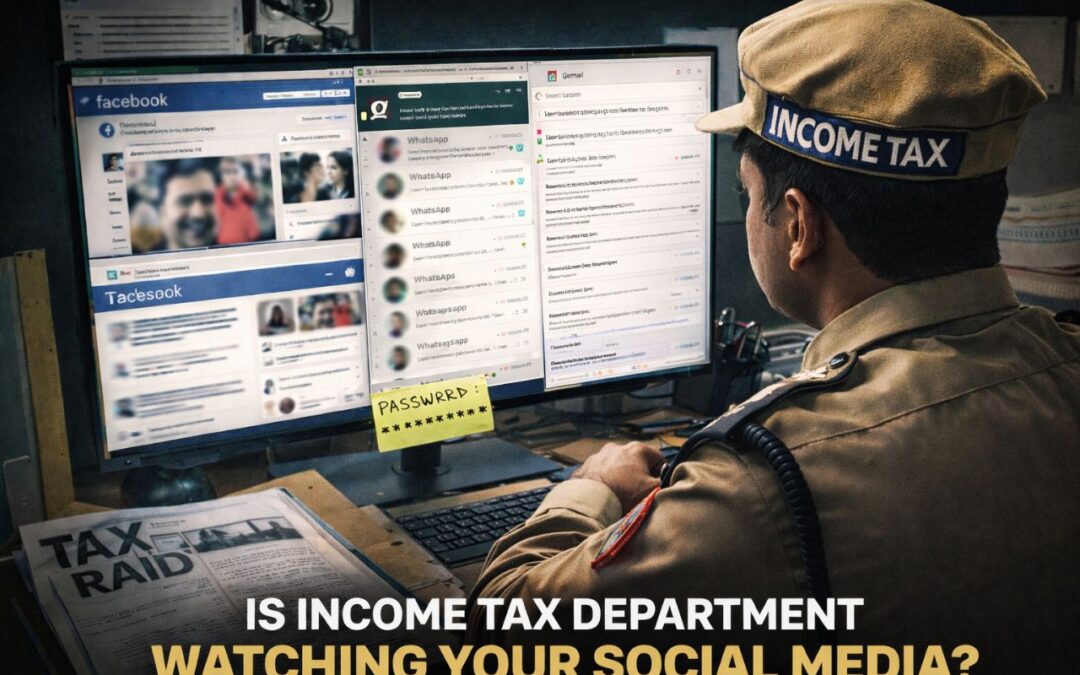
Synopsis: Will the Income Tax Department spy on your emails after April 1, 2026? A viral claim triggered mass concern, but PIB’s response clears the air. Here’s a simple breakdown of the new law, digital privacy, and what really changes.
The claim circulating on social media had sparked a huge privacy concern for the netizens. Recently, on the platform of Twitter a verified account handle called Indian Tech Guide had claimed that from 2026 Income Tax officials will be able to access private chats, social media accounts, and emails.
However, the Press Information Bureau (PIB) has made a thorough fact check and concluded that the claim is misleading and no such thing would take place. Read below for a detailed dive surrounding this claim and outcome.
What is the claim about the Tax Department being able to read emails?
A post from @IndianTechGuide attracted a lot of traction from people on X (Twitter) where they made a claim that from 1st of April 2026 the Income Tax Department of India will gain access to social media, emails and other digital spaces in lieu of curbing tax evasion. This initiated a huge discussion among the people regarding what changes they have to make and is the news really true.
The Counter Fact Check By PIB – Press Information Bureau
Over Twitter(X) the Press Information Bureau had finally released a detailed report of why the claim was untrue and misleading. The post tagged the official handle of the account who posted the claim along with the reasons as to why this claim was not true. The post also mentioned section 247 of the Income Tax Act 2025.
PIB also clarified that the powers cannot be utilised for routine information gathering or even cases under scrutiny assessment. This section is specifically made to target black money and large tax evasion and not for everyday citizens who abide by the law.
The power does allow seizure of documents and evidence during search and survey operations but PIB stated that it has already been existing since 1961 Act.
What Does Section 247 of the Income Tax Act 2025 Mean?
The provisions under section 247 of the Income Tax Act 2025 are strictly under rules that states that unless a person is convicted with evidence of significant tax evasion no other regular law abiding citizen will be under surveillance. This act is strictly for the search and survey operations not for accessing emails and personal digital space of a regular person.
Also read: Need Instant Cash? These Are 7 Best Instant Loan Apps That Offer Quick Cash in India (2026)
What Will Happen After April 1, 2026?
The Income Tax Act, 2025 will officially be effective from April 1, 2026 replacing the decades long 1961 Act. One of the most important highlights of the update is the explicit mention of virtual digital space.
The law now formally recognizes that financial evidence is no longer just paper in a locker, it exists in emails and social media DMs. Now, the officers can legally ask for or bypass passwords to access these digital spaces if they have evidence of tax evasion hidden there.
What About Regular Citizen Digital Privacy?
The PIB has been very clear that nothing changes for the average taxpayer. Officers cannot browse your emails during a standard Scrutiny Assessment or when you file your returns.
These powers are triggered only during a formal Search and Seizure operation also known as a raid. This move also requires high authorization and credible evidence of significant black money.
Should You Be Worried?
No. If you are a salaried employee or a business owner filing honest returns, the tax department has no more access to your private life than they did under the 1961 Act. The 2025 Act gives them the modern tools needed to catch high level evaders who use encrypted digital platforms to hide assets.
Written by Kenbi Riba