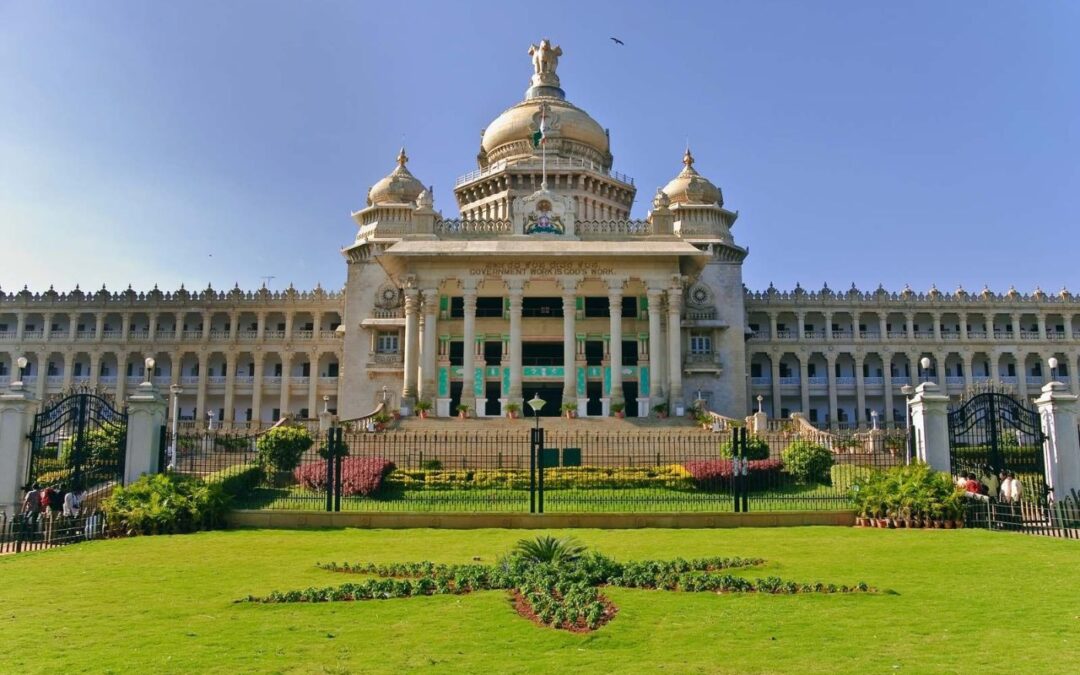
Synopsis: India is working towards reaching $10 trillion GDP by 2032. Karnataka is an economic powerhouse and is the third largest state economy in the country. Karnataka’s per-capita GSDP is the highest among the top 5 states and, indeed, one of the highest in the country. Karnataka can speed up its GDP growth to USD 500 billion by 2026 and GDP of USD 1 trillion by 2032.
The largest GDP engines in Karnataka includes 5 districts that collectively drive the state towards an estimated GSDP of Rs.30.70 trillion (US $359.45 billion) by FY26 with a CAGR 11.38 since FY16. These districts take the lead in IT innovation, trade based on ports, manufacturing clusters, logistics hubs and tourism with a disproportionate share in the state exports of Rs. 2,31,888 crore (US$ 27.15 billion) in future FY25. Bangalore Urban is the sole state contributing to the state GDP by itself at 9.98 lakh crore (US111 billion), or about 37.8-40%.
Bengaluru Urban
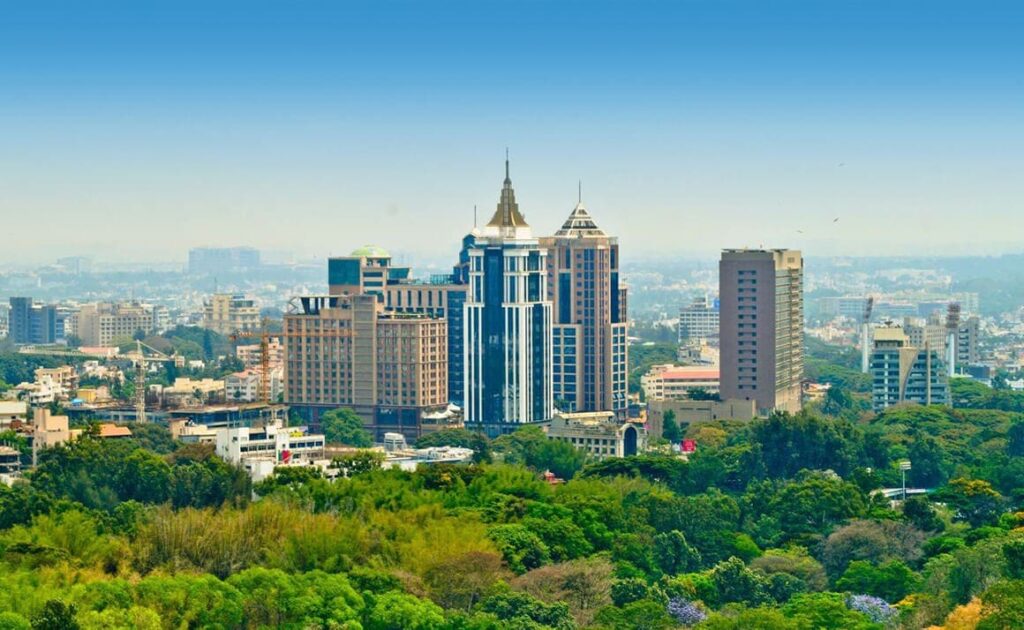
Bangalore Urban is the king of the Silicon Valley of India, with software exports worth more than a third of Karnataka GDP of US$ 130.3 billion as of FY23. Infosys, TCS, Wipro, and 350 other IT companies are tech giants with huge job creation and foreign direct investment of Rs. 4,27,130 crore (US$ 55.52 billion) between October 2019 and December 2024 (2nd country). Outside the IT sector, aerospace through Hindustan Aeronautics Limited (HAL), biotech parks and electric vehicle policies accelerate the growth level, where metro-area GDP (PPP) is near US$ 360 billion; although infrastructure pressures such as traffic congestion drive investments of Rs. 48,686 crore (US$ 5.84 billion) in roads and the Peripheral Ring Road.
Mangaluru
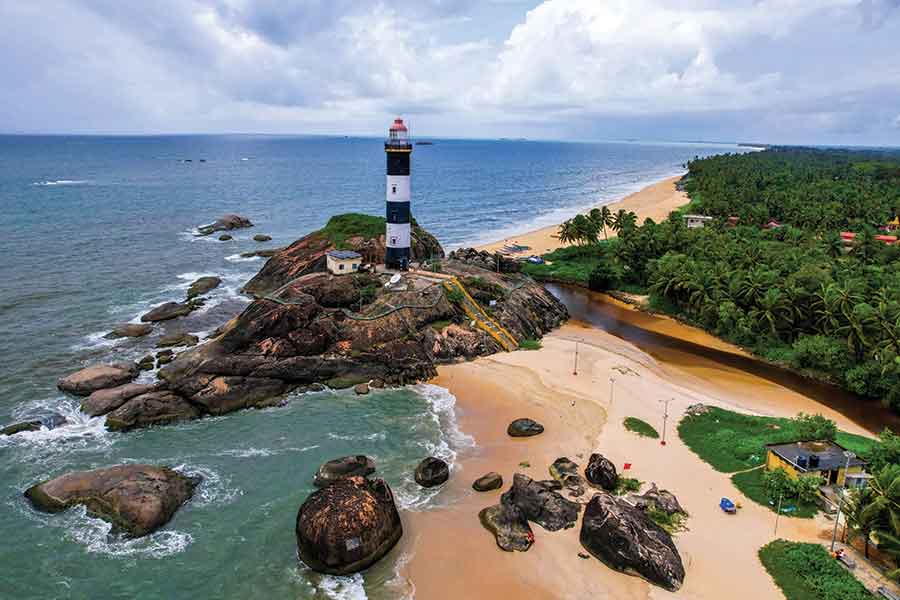
Mangaluru (Dakshina Kannada) with 1.37 lakh crore (US$ 15.25 billion) GDP, able to use Mangaluru Port as a source of 25.3% state engineering exports and 23.7% electronics, comes in second. Banks, Mangalore Refinery and Petrochemicals Limited (MRPL), fisheries, and remittances of Gulf returnees enhance resilience, which makes it one of the Beyond Bengaluru growth nodes. New MoUs and SEZs improve the chemical industries and contribute to the manufacturing boom in Karnataka of 7.2 percent in 2023 and a 9.6 composite economic index that reflects equal per-capita power.
Belagavi

Belagavi comes in the third position with engineering, textiles, automobiles and mining taking the lead with companies such as Toyota Kirloskar motor and Raymond with the support of the Rs. 3,300 crore expansions and NH-748A 4-laning of Rs. 2,675 crore. Its 22.6 economic rank shows nearness to Maharashtra, iron ore deposits and cluster development with approximately 22600 jobs attracting 42,915 crore MoUs. Strong handicrafts and heavy engineering are compatible with the policies of the state, such as Karnataka Industrial Policy 2020-25, which spurs equal development outside the urban hubs.
Also read: India’s 9 Lesser-Known Cities with the Fastest-Growing Job Markets in 2026
Tumkuru
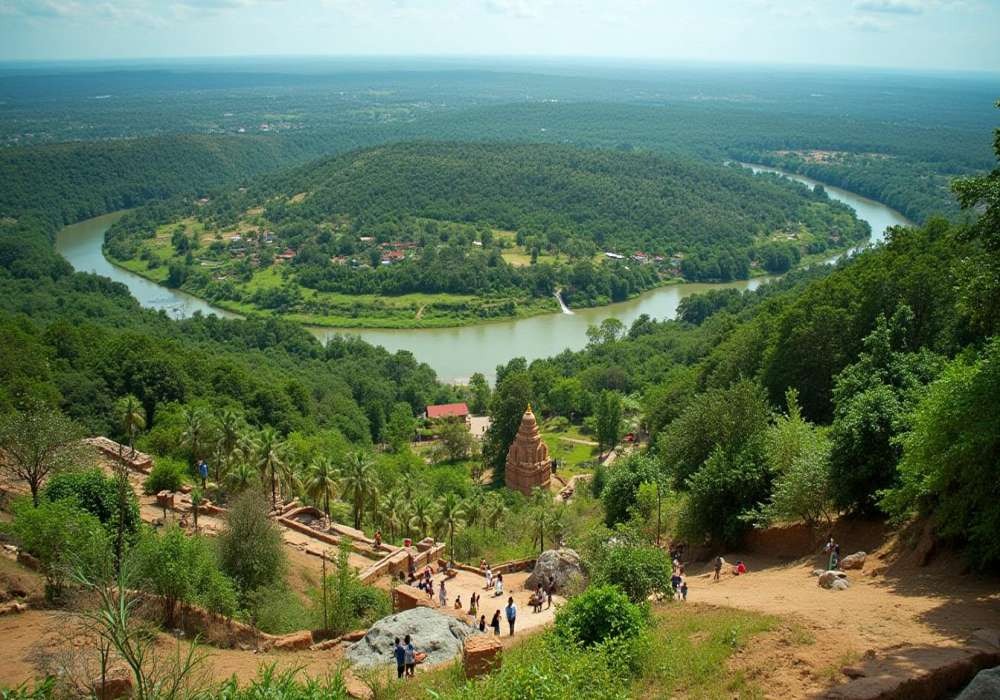
The 99,000 crore (US 10.97 billion) is the production of Tumkuru due to the NH-48 location and encouragement of SEZs in the auto sector, pharma sector, and food processing as a decongested Bengaluru. Investments such as Rs. 8,000 crore in infrastructure and irrigation in FY 26, and Economic Growth Clusters, drive agri-value chains and manufacturing. It ranks at 19.6 which is a typical tier-2 momentum, creating employment through 31 approved projects amounting to Rs. 3,830 crore and endorsing the state’s visions of balanced growth.
Mysuru
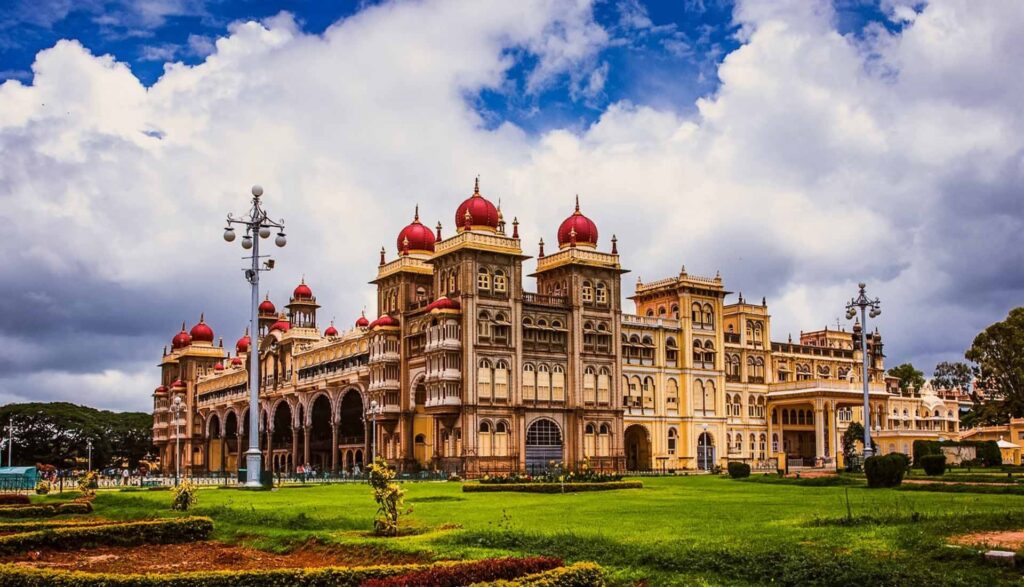
Mysuru comes fifth in the list combining 28.45 crore tourists arrivals in 2023 with silk, IT parks and third plant by Toyota with an investment of Rs. 3,300 crore. Heritage attractions, such as Mysore Palace, Bandipur wildlife, and Vande Bharat connectivity fuel services, and biotech and education-tech hubs are in line with the Beyond Bengaluru objectives; its 20.2 rating highlights the GDP multiplier of tourism. Such policies as subsidies on EVs and investments of 50,000 crores make them more sustainable. Mysore combines tourism (28.45 crore visitors in 2023), silk and IT and a new plant by Toyota, which has since been enhanced by Bruhat Mysuru Mahanagara Palike (BMMP), which has expanded its area to 341.44 sq km to receive metropolitan status by April 2026.
Conclusion
Not only do these giants control the 8.2 percent share of the Karnataka state in GDP of India but also lead the renewables (23,017 MW capacity) and FDI such as Rs. 54,427 crore in 2023-24. The Karnataka Startup Policy 2025-2030 will spend Rs. 518 crore on 25,000 startups, with 10,000 of them outside Bengaluru through grants up to ₹7 lakhs, incubators, and “Beyond Bengaluru” deeptech clusters such as AI and quantum computing. Urban-Rural disparities are still a challenge, but schemes like Rs. 16,021 crore farm subsidies are indicative of a universal move and Karnataka is placed to achieve a US 3.7 trillion roadmap.
Written By Jayanth R Pai