
Synopsis: Karnataka has presented its ₹4.48 lakh crore budget 2026 unveiling some of the large-scale infrastructure initiatives that may transform the growth frontiers in the state. With the gigantic grid of tunnels in Bengaluru to the new IT centres in places such as Mangaluru and Mysuru, this development may be the future investment hot spots.
The Karnataka Budget 2026 with its total outlay being ₹4.48 lakh crore has various significant infrastructure projects to enhance the connectivity, planning and economic growth of the state. Major developments are the 40,000 crore tunnel road network in Bengaluru, road upgrades, flood control projects with the help of the World Bank and a new IT park in Mangaluru. It is possible that since infrastructure development can be one of the main drivers of the development of real estate and business growth, a classification of such projects by city will make these investors and businesses more aware of where future growth and opportunity can arise in the entire state of Karnataka.
Bengaluru Infrastructure Projects
1. ₹40,000 Crore Tunnel Road Network
The Karnataka government has revealed a ₹40000 crore underground tunnel road construction project to fix the extreme congestion in Bengaluru. This project suggests a 40 km network of undergrounds that will lead to important places of the city.
Major Corridors are the Hebbal -Silk Board (North-South corridor) and the KR Puram to Mysuru road (Eastwest road). It is supposed to be constructed under a Build-Own-Operate-Transfer (BOOT) model to decongest major surface roads and also shorten the time spent in traveling in Bengaluru. It is among the largest city urban tunnel road projects that have been offered in India and is meant to substantially decongest the city. In addition, the Bangalore Development Authority (BDA) will construct a tunnel road and elevated road from Hebbal Junction to Mekhri Circle at a cost of ₹2,250 crore.
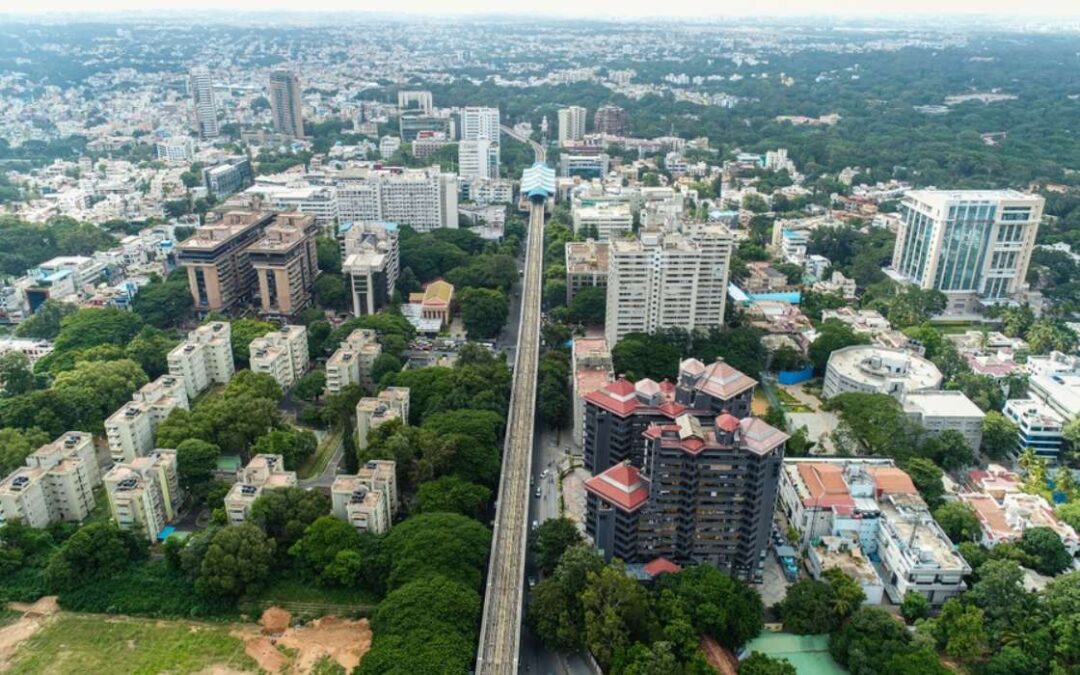
2. Namma Metro Expansion (41 km)
The Karnataka Budget as well focuses on the expansion of Namma Metro, which is the main mass transport in Bengaluru. It is projected that approximately 41 km more lines of the metro will be opened, which will enhance the connection of the city greatly. Key details are:
- Growth of Metro Phase 2 and Phase 2A.
- Approximately 41 km of new lines to be built/operating in 2026-27.
- The number of commuters projected to be served is about 15 lakh in a day.
- Major Areas Benefiting are Whitefield and Outer Ring Road IT corridor. This also involves connecting with people in the central part of the city of Bengaluru. The Metro development is vital in alleviating the road network and sustaining the increasing population in Bengaluru.
3. Outer Ring Road (ORR) IT Corridor Improvement
The government has invested ₹450 crore to revamp the Outer Ring Road (ORR) which is among the busiest technology corridors the KR Puram stretch of the Outer Ring Road to Silk Board, in Bengaluru. Main purpose is to improve road capacity and road flow and promote the large IT centres in Bengaluru. Along with better interconnection with the metro and public transport and better connectivity with metro and public transport. Key Areas Covered are Bellandur, Marathahalli, Kadubeesanahalli and IT parks and corporate campuses between ORR.The corridor is also a major one, as it links the largest tech job hub in Bengaluru, where thousands of workers commute on a daily basis.
Mysuru- Karnataka’s Second IT Hub
The Karnataka government has indicated that it intends to make Mysuru the second big IT location in the state to take off the overload on Bengaluru and spread technology development throughout the state. Key details include
- Value proposition: Develop a significant technology ecosystem beyond Bengaluru. The target markets are IT parks, Global Capability Centres (GCCs), and tech companies.
- Other Supporting initiatives are Mysuru Airport aerospace park, Silk Park in Tandavapura, Upgrade of film city project and tourism infrastructure. It will increase real estate demand, employment, and the startup in Mysuru and likely become one of the hottest investments.
Mangaluru – New IT Park
Budget also announced the construction of new IT park in Mangaluru, which would serve as an extension of the technology industry of Karnataka, besides Bengaluru. Their main goal is to lure IT companies, startups and technology firms and development of the coastal Karnataka as a technology and business hub. Mangaluru already possesses advantages such as Mangaluru international Airport, Major port infrastructure, Good educational organizations. The new IT park will provide jobs and bring about technology investments to the coastal area.
North Karnataka Infrastructure Development and Tourism
The budget also allocates funds in the development of tourism infrastructure in various districts, which will help in the enhancement of the economic performance of the region. The development of Anjanadri hill as an international tourist attraction site with a projected cost of ₹100 crore. Focus areas are the tourism infrastructure, visitor facilities and heritage conservation. The objective of this project is to enhance religious tourism, business opportunities locally and development of the region.
Flood Management & Water Security Programme
Urban flooding has emerged as a growing menace in fast expanding cities of Karnataka especially Bengaluru. To solve this problem, the government has declared a major flood management and water security programme which is estimated to cost about ₹5,000 crore in the period of five years funded by World Bank.
The programme is going to enhance the storm water drainage systems, lake management, and disaster preparedness infrastructure in the cities. It will also enhance weather surveillance system and early warning system to be in a better position to deal with extreme rainfall. Through enhancement of water management infrastructure, the project will minimize urban flooding, safeguard property and infrastructure, and enhance the resilience of the state of urban areas in the long run.
Conclusion
The Budget 2026 of Karnataka is an indication of a strong infrastructure-based drive in the development of the state with the large-scale investments in urban mobility, technology centers, and regional development. To investors, these projects can serve as an early warning about the economic activity in the future, the increase in real estate demand, as well as business expansion prospects. The upgrades to mass transit in Bengaluru, the advent of new technology, and the new infrastructure in such cities as Mysuru and Mangaluru are just some of the examples that point to the possible growth frontier that investors ought to look at in the future.
Written By Boyapati Sai Jasmitha