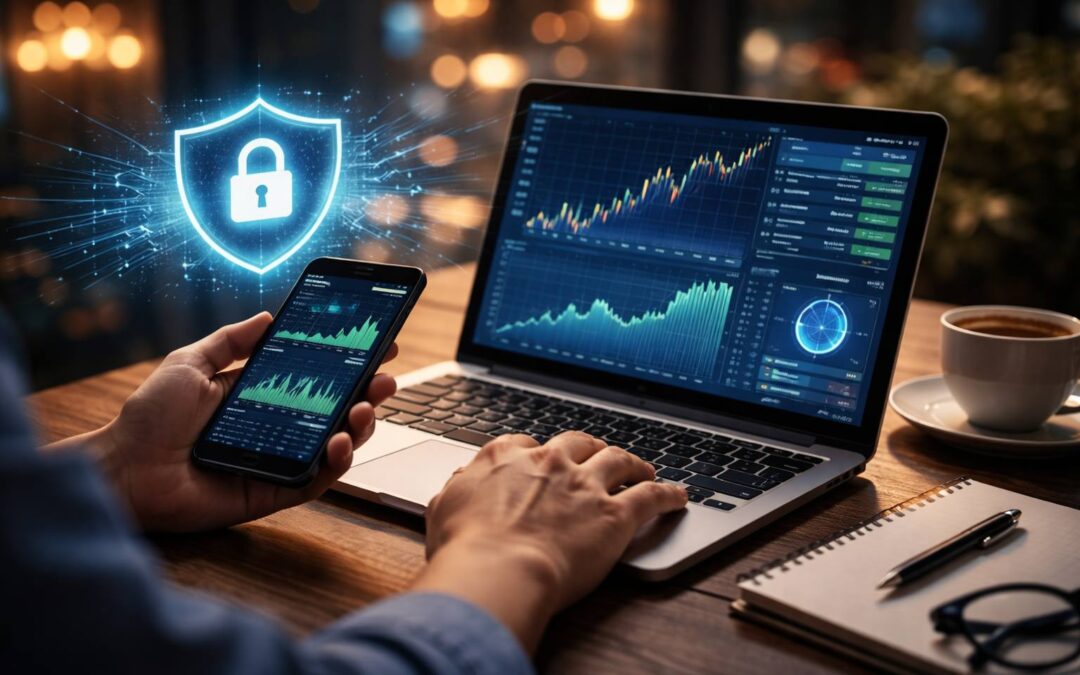
Online investing has made financial markets accessible to anyone with an internet connection.
Investors can conduct fundamental analysis, track global markets, and execute trades from laptops or mobile devices within seconds.
However, this convenience also introduces security concerns. Many investors now access trading platforms while travelling, working remotely, or using public networks.
Protecting financial information in these situations has become an important part of responsible investment management. This article examines how remote connectivity is reshaping portfolio management, expanding market access, and raising new challenges around investor data security.
Remote Access Allows Investors to Monitor and Trade From Anywhere
Investors monitor markets from far more places than a traditional office desk. Portfolio checks happen in airports, cafés, shared workspaces, and hotel rooms, often on public networks that were never designed to handle sensitive financial activity.
Travel periods can increase this risk, particularly during busy times of year when more people rely on public Wi-Fi while moving between destinations. Guidance on using a VPN for the holiday season explains how encrypted connections can help protect online activity when travelling.
Remote access makes trading flexible, but it also increases the risk of exposing login credentials, portfolio data, or transaction history. To reduce that risk, some traders use services like a free VPN. These tools encrypt internet traffic so financial data remains protected while travelling across public or unfamiliar networks.
For investors who manage portfolios from multiple locations, secure connections help ensure that remote access does not compromise account security.
Strong Cybersecurity Protects Investors Accessing Financial Platforms Remotely
Financial platforms handle highly sensitive information, including personal details, transaction histories, and portfolio data. Even small vulnerabilities can create opportunities for data theft or fraud, allowing attackers to intercept credentials, access accounts, manipulate transactions, or monitor investor activity.
Even small vulnerabilities can create opportunities for data theft or fraud, allowing attackers to intercept credentials, access accounts, manipulate transactions, or monitor investor activity. Secure connections are recommended even for online activities that involve far less sensitive information.
For example, using a VPN for blogging can help protect publishing accounts when writers log in to content systems on public or shared networks. Financial platforms handle far more sensitive data, which makes strong security practices even more important for investors accessing accounts remotely.
Organisations such as the Federal Trade Commission regularly advise investors to use strong security practices when accessing financial services online. These include using secure connections, enabling two-factor authentication, and avoiding untrusted networks.
For remote investors, secure connection tools can complement these practices by protecting data in transit across networks.
Remote Access Expands Opportunities for Global Market Participation
Remote connectivity has also widened access to international markets. Investors are no longer limited by location when tracking economic developments or reacting to global events. Someone travelling abroad can still monitor U.S. stock markets, analyse Asian trading sessions, or review European financial news in real time.
This flexibility allows investors to stay informed and respond quickly to market changes. Instead of waiting to reach an office computer, traders can check positions and adjust strategies from almost anywhere with an internet connection.
As financial platforms continue to improve mobile and remote functionality, global investing becomes more practical for individual traders who want to follow markets throughout the day.
Mobile Technology Is Making Remote Portfolio Management Routine
Trading platforms now offer mobile dashboards, price alerts, portfolio analytics, and tools that show how a Demat account stores and manages investments, allowing investors to stay connected to markets without being tied to a desk.
Mobile access also helps investors react quickly to price movements or breaking financial news. A sudden shift in commodity prices, a corporate earnings announcement, or geopolitical developments can influence markets within minutes.
Remote access means investors can respond immediately rather than waiting to log in later. As financial technology evolves, the ability to manage investments from multiple locations will likely remain a defining feature of modern investing.
Secure Remote Access Is Becoming Part of Responsible Investing
As remote investing becomes more common, security practices must evolve alongside convenience. Protecting financial accounts, login credentials, and transaction activity is now part of responsible portfolio management.
Investors increasingly combine several security measures when accessing financial platforms remotely. Strong passwords, multi-factor authentication, and encrypted internet connections all contribute to safer online trading environments.
Greater connectivity has changed how investors manage their finances by making markets more accessible and responsive.
When paired with strong security habits, it allows traders to benefit from flexibility while still protecting the sensitive financial information that supports their investment decisions.
Protecting Investor Data Now Matters as Much as Making Smart Trades
Investing no longer happens in one place. People check portfolios on phones, place trades while travelling, and monitor markets from cafés, airports, and shared workspaces.
That freedom creates real risk. Every time an investor logs in from a public or unfamiliar network, personal data and account credentials travel across systems they do not control.
Secure connections help protect that information through encryption, strong authentication, and careful account monitoring, allowing investors to manage portfolios from anywhere while keeping financial data protected.