
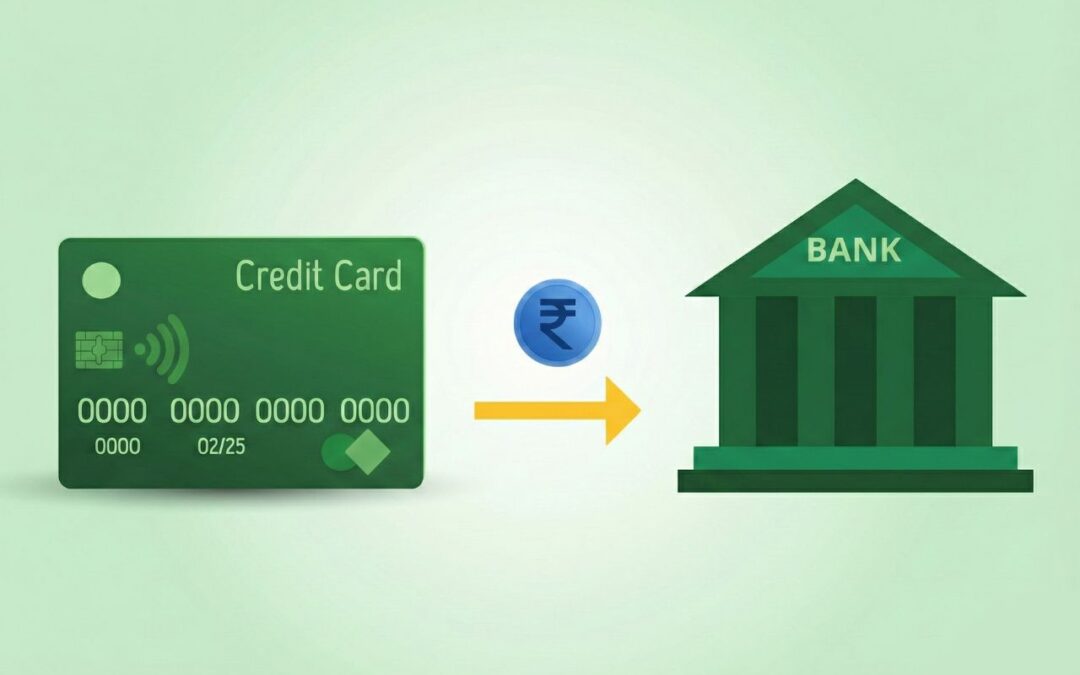
Synopsis: This article breaks down whether we can transfer credit card amount to our bank account, what are the fees and charges involved and when should we do it.
A transfer from a credit card to a bank account is when you move money from your credit card limit into your own bank account. Basically, you are borrowing money from your credit card instead of using it to pay for shopping or bills.
Once the money reaches your bank account, you can use it like normal cash to pay rent, bills, or other expenses that don’t accept credit cards.
In simple terms, the bank is lending you money from your credit card limit which you can use as cash in your bank account. But like any loan, you will have to pay it back with fees and interest. There are a few ways this transfer can happen You can opt for what your bank allows.
Cash Advance Method(ATM Withdrawal)
A cash advance is the most common and easiest way to move credit card money into your bank account. You can withdraw cash from an ATM using your credit card and then deposit that cash into your bank account.
This method works everywhere, but it is also the costliest option. You are allowed for 5 free ATM transactions per month as a credit card holder as per your location. Besides this the banks charge a cash advance fee known as ATM maintenance or interchange fee and interest starts from the same day without any grace period.
Charges: Earlier the interchange fee was ₹15 per withdrawal but from 1st August 2025, RBI has raised the amount to ₹17 per cash withdrawal. Cash advance fee up to 2%-4% of the amount.
For example, if you are withdrawing Rs 10,000 via credit card cash advance, You should pay 2.5% of the withdrawn amount or ₹500 minimum, whichever is higher + 3.5% monthly interest. In just one month the interest alone could be ₹350, so total cost will go up to ₹850 (8.5% of the amount).
But there are some advantages to using this method. For example, with HDFC credit cards you can get some advantages like low interest rate on late fee payment, receive cashbacks and reward points depending on your HDFC credit card.
Because the cost increases quickly with no grace period, this method should be used only for urgent needs when you do not have any other source of money.
Transfer Through Wallet Apps
Some people try to “convert” credit card limits to bank balance by: loading a digital wallet using their credit card, then transferring wallet funds to their bank account.
This feels convenient because you do not need to visit an ATM or use any paperwork. However, most apps charge a fee for wallet-to-bank transfers, and some apps do not allow credit card top-ups at all because of misuse.
According to a recent report , a PhonePe wallet to bank account may cost between Rs 0-3% depending on the method. It is important to check the fees before using this option.
Suppose you load ₹20,000 from your credit card to a wallet, then transfer to your bank. Then the wallet load fee for example is 2% then the amount will be ₹400. Some additional wallet-to-bank transfer fee varies sometimes like ₹100 or ₹200. In that case, the total cost might be ₹500–₹600 or 2.5%- 3% extra.
Using Credit Card Convenience Cheques
Most of the banks issue convenience cheques to their credit card customers. These cheques work like normal cheques, but the amount gets added to your credit card bill. You can write the cheque in your name and deposit it in your bank account. It’s safer than carrying cash and more straightforward than wallet transfers.
This method feels simple and secure, but it is not free. Banks usually charge a processing fee, and interest may start immediately. Also, not every bank offers this option, so you’ll need to check with yours.
Online or Bank-Assisted Transfer
Some banks allow you to request a transfer from your credit card to your bank account through net banking or by calling customer support. This is like taking a mini-loan from your card.
The bank may charge a fee and interest, but it’s a simple option if you don’t want to deal with cash or cheques. This option is available or not highly depends on your card and bank. Banks like SBI, HDFC, ICICI etc. are known for offering Balance Transfer on EMI.
For example: Let’s assume that your salary is delayed and your credit card bill is due tomorrow. Instead of missing the payment, you can use SBI’s BT EMI facility. After that you move your outstanding balance to a 3-month EMI plan. In this way your interest becomes predictable, and your credit score remains safe.
Risks You Should Know
Before transferring money from a credit card to a bank account, it is very important to understand the risks. These transactions usually cost more than normal credit card purchases because they come with higher interest rates and extra fees. Also, they do not offer reward points or cashback. Your credit card limit gets used up, which increases your credit consumption. If you use a large amount and delay payments, it can reduce your credit score very quickly.
When This Method Can Be Helpful
These transfers can be helpful during real emergencies when you need immediate cash and have no other option. They can also be used for payments that do not accept cards, but only if you know you can repay the amount soon. Using it as a regular habit can become very expensive, so it should always be the last option you choose.
Smarter Alternatives To Consider
Before transferring money from your credit card, it is always better to check safer alternatives. Personal loans often come with lower interest. Some payments accept UPI on a RuPay credit card. Converting large purchases into EMI can also be cheaper than a cash advance. Even borrowing a small amount from a friend or family member might save your time and some money. Always check your options before paying high fees for a quick transfer.
Also Read: 7 Best UPI Credit Cards Offering Maximum Rewards & Cashback (2026)
To Sum Up
Yes, you can transfer money from your credit card to your bank account, but it should be your last option. Use it only when necessary, and make sure you can repay quickly. If you plan carefully and explore other options first, you can cover urgent needs without hurting your wallet or your credit score.
FAQs
1. Can you transfer money from your credit card to your bank account?
No. You cannot directly transfer money from credit card to your bank account. Some banks may offer it as a special loan or cheque facility, but it’s rare. You can only withdraw cash from an ATM or use EMI/balance-transfer options.
2. Which method is the safest for you?
Balance Transfer on EMI or EMI conversion is safer because charges are lower and interest is predictable. Cash advance is the costliest option.
3. Will your credit score drop if you use these methods?
No. Your score won’t drop if you just use transfer or EMI options. It will only drop if you miss payments or use a high percentage of your credit limit.
4. Which banks offer EMI or balance-transfer options?
Banks like HDFC, SBI, ICICI, Kotak, and HSBC commonly offer BT/EMI plans.
Written by Supriya