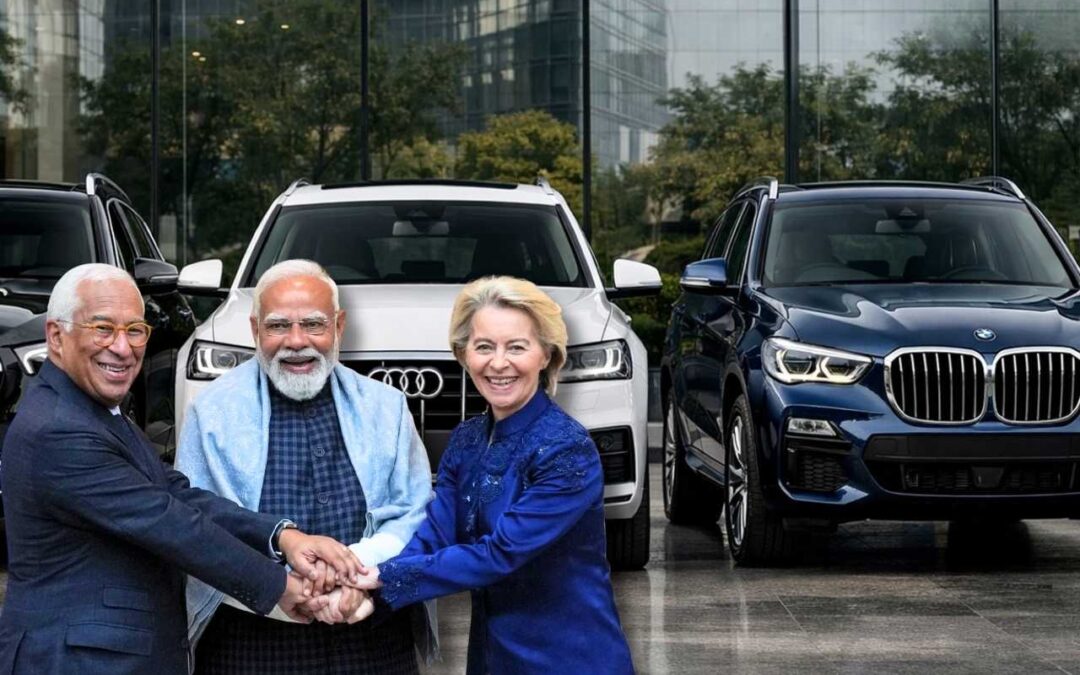
Synopsis: This article dives into the highlights of the recent Free-Trade Agreement between India and the European Union, with a focus on how the agreement is going to impact the import of European automobiles.
After years of negotiations, India and the European Union have finally sealed the Free Trade Agreement (FTA), a move expected to reshape trade between the two regions. Among the many sectors poised for change, the automotive industry, especially the imported European luxury cars, has grabbed the spotlight.
What Is the India‑EU Free Trade Agreement?
The India- European Union Free Trade Agreement (FTA) was announced on January 27, 2026. It marks the climax of a two decade long negotiations between India and the EU. This agreement aims to strengthen economic integration between the two parties by reducing trade barriers and expanding flows. Officials as well as industry leaders call this pact the “mother of all deals” due to its potential impact.
FTA is expected to create opportunities for Indian exporters in the European market while reducing the import tariffs on imports such as automobiles, wines, spirits, and medicines. The agreement will be implemented in phases spanning over several years. Therefore, tariff reductions on automobiles will take some time to come into effect.
Key Points:
- Tariffs on fully built European imports that are eligible will be reduced from 110% to 10% in phases.
- Vehicles that are locally assembled (CKD) won’t see significant tariff cuts.
- Duty concessions are quota‑based, and the limit is set by the government. It’s expected to be around 2.5 lakh vehicles a year.
- Reductions are phased over multiple years; immediate price drops in showrooms depend on how quickly manufacturers pass savings to buyers.
Current Import Duties vs. New FTA Structure
Which Cars Will Become Cheaper?
Conclusion
The India-EU Free Trade Agreement is an important moment for India’s premium automobile market, but its impact will be specific rather than widespread. While headlines imply that the European cars will become much cheaper, the truth is more complex.
Significant price cuts will mainly apply to fully imported luxury and performance vehicles. These will be introduced gradually and will be subject to annual quotas and price limits. For wealthy buyers who are patient enough to wait for a few years, the future may bring more accessible European cars.
Written by Nila Maria Jacob