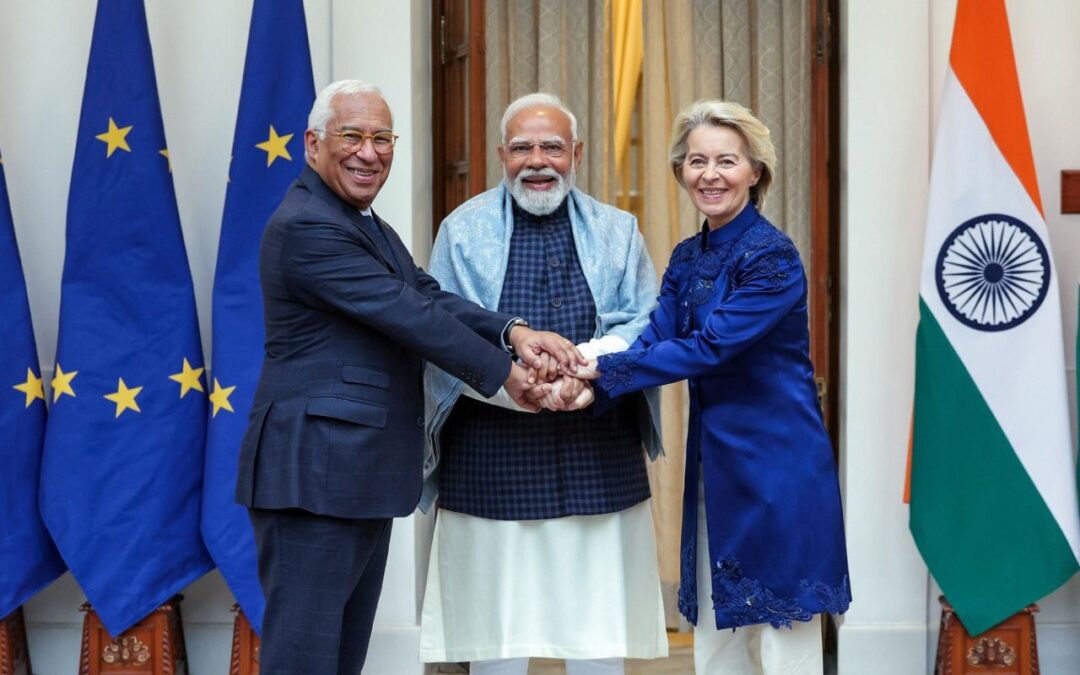
Synopsis: The India-EU FTA is a revolutionary economic agreement that will reduce the level of duty imposed on luxury goods and vehicles imported into India and will provide the Indian sectors that are labour-intensive with an unprecedented duty-free entry to the European market.
The end of the India-EU FTA is a watershed point in the Indian economy after 20 years of intermittent diplomacy between India and the EU. Through the incorporation of a market of close to 2 billion individuals, the deal will aim at increasing bilateral trade by 2032.
On the personal finance front, it is not just a macroeconomic occurrence but it will be a triggering event that will transform the way millions of Indians will spend, invest and even move their professions.
The Consumer Windfall: Luxury Redefined.
The direct effect on individual finance will be experienced at the cashier desk most. India has accepted to give the EU concessions on tariffs that nobody could imagine before, especially on high-value sectors.
1. Automobile: The price wall of European cars is breaking. The 110 percent import charge on high-end cars of such brands as Mercedes-Benz, BMW and Audi will be reduced to 40 percent right away, and to 10 percent within the five-year term. In the case of a car whose landed value is ₹1 crore, this would translate later to almost ₹1.5 crore in retail prices.
2. The Gourmet Basket: When you purchase European imports in your lifestyle, the cost of living will reduce. Olive oil, chocolates, pasta and confectionery tariffs are being abolished. Moreover, the taxes imposed on European wines and spirits, 150 percent, will be reduced to 20-40 percent and quality world brands will more affordably reach the middle-income Indians.
3. Employment and Mobility: The Passport to Europe. To the professionals and students, FTA represents a reset of migration path. The agreement also comprises of a “Mobility and Migration Partnership which facilitates the visa procedure of skilled workers
4. Student Access: Indian students who achieve degrees in the EU can now access the three-year or so post-study work permits without the numerical restrictions which frequently curse US or UK visa quota.
5. Professional Services: 144 sub-sectors of services are made available to the EU. This implies that Indian IT consultants, engineers and health care professionals may now undertake European projects on a simplified visa processing system that is in the framework of contractual service provider as typically guaranteed within 30 days.
Also Read: From ₹1 Lakh to ₹2.8 Lakh: Why Budget 2026 May Boost India’s Gold Reserve Fund
Investment Strategy: Choosing the FTA Winners.
The transaction forms distinct sunrise areas to retail investors. With the EU removing tariffs on 99.5 percent of Indian exports, some sectors are on the verge of rocketing growth.
- Textiles and Leather: The largest sector is a winner. Indian manufacturers are also able to compete on a level playing field with other countries such as Bangladesh and Vietnam since they could now access a 263 billion-dollar European textile market tariff-free.
- Green Energy and Tech: EU has committed €500m to assist India in green transition. Indian firms that specialise in green hydrogen, EV parts, and sustainable manufacturing should also be looked into by investors, as it will enable the firms to have an advantage when it comes to European capital and technology.
Final thoughts: Surviving the Transition
The India-EU FTA is such a unique win-win because it has balanced the ability of India to grow as an industrial nation with the want of the EU to get a large-scale and reliable trading partner.
To the individual, the plan is to expect a reduced luxury price, look abroad to Europe to get an education and boost career, realign investment portfolio to export-oriented labor-intensive goods.
Although a domestic rivalry in theAutomobile industry and the dairy industry might continue to intensify, the general growth of the economic pie implies that the so-called Mother of All Deals will be an ultimate source of Indian success decades ahead.
Written By Jayanth R Pai