
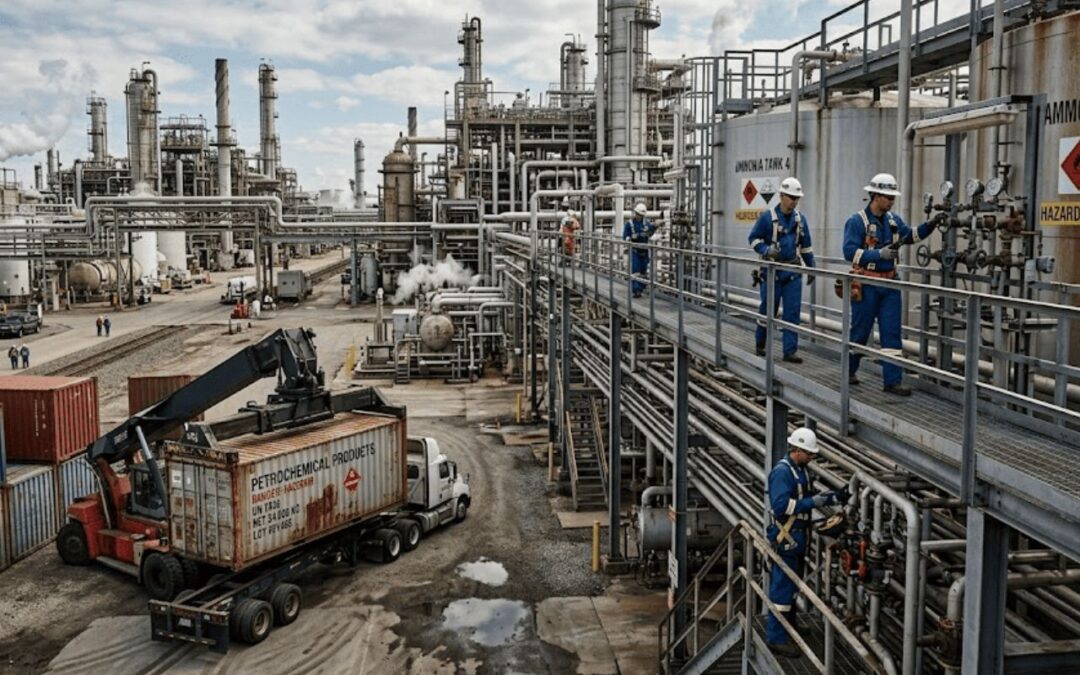
Synopsis: Government of India has announced on 2nd April, 2026 that it will provide customs duty exemptions on critical Petrochemical products until 30th June 2026. It was done in view of the ongoing West Asia Conflict, which has caused a huge disruption in the supply chain throughout the world. This article discusses the sectors that are going to benefit from this decision.
The West Asia conflict has not only disrupted the global market, but it has also led to domestic petrochemical manufacturers diverting their output to LPG production. It has pushed up the input costs throughout the manufacturing sector. This exemption to the import tax on petrochemicals will help reduce the input costs, which will benefit many sectors.
The exemption covers a wide array of materials, which are known as petrochemical feedstock, such as Methanol, PVC, Polyethene, polycarbonates, and PET chips, among others. This move will benefit sectors that are dependent on petrochemicals for feedstock and intermediaries, and it will cost the government ₹1,800 crores for exempting these customs.
The Director General of CII (Confederation of Indian Industry), Chandrajit Banerjee, stated that the Central Government’s decision to grant full customs duty exemption is a pragmatic response to the West Asia Conflict, and it will provide immediate relief to sectors that rely heavily on these products, such as Pharmaceuticals, Textiles and packaging, among others. These measures were implemented to help moderate cost pressures and ease the inflationary trends.
Piyush Goyal, the Commerce and Industry minister, said that the government is also considering other decisions as well, which will help different industries. These decisions are being discussed with different ministries at different levels, hinting at the fact that the government may provide more exemptions in the upcoming days. The government also announced that oil refiners will divert certain quantities of their C3 and C4 streams from LPG production to critical sectors that are hit by disruptions, such as the Chemical, Pharmaceutical and Textile industries.
Major Industries Set to Benefit from This Decision
- Pharmaceutical: It will help mitigate the cost increase, which will benefit manufacturers, consumers and solvent suppliers. It will also ensure affordable medicines are available across India.
- Textile: It is heavily dependent on petrochemical-derived fibres, which are also facing mounting pressure from the rising prices of crude oil. This reduction will severely benefit the textile industry as it will immensely reduce its cost. Exemptions will support the downstream segments of the industry, such as SMEs, to ensure continued supply in the Textile Industry.
- Automotive Industry: It will help the industry by stabilising the supply chain rather than reducing the costs. The automotive industry relies on many petrochemical inputs, such as plastics and polymers. This exemption will ensure there are no disruption risks and reduce cost pressures.
- Packaging: Packaging uses petrochemicals as a feedstock to produce plastics, adhesives, coatings and resins. These exemptions will reduce the costs of sourcing these primary materials, which will benefit the packaging industry a lot.
- Cement Industry: Petrochemicals are used as fuel and packaging material while manufacturing cement. Exemption severely reduces the sourcing cost of the cement industry, ensuring reduced cost and operational efficiency.
- FMCG: FMCG uses petrochemicals to package food, use it to make food preservatives, and exemption reduces costs for these processes. These exemptions will ensure FMCG companies will continue to operate without any disruption and additional costs.
- Chemical: The chemical industry uses petrochemicals as feedstock to manufacture thousands of items across various sectors of the industry. It is an essential part of the production, and exemption will ensure the costs are reduced and are operating at a normal rate without any disruptions.
Also read: 6 Global Currencies Hit by the US-Iran War – Only 1 Survived the Crash
Conclusion
These exemptions were brought in by the Indian Government as a pragmatic response to the West Asia Conflict. Although these exemptions are good for the industries, these exemptions are only temporary and will last till June 30th. The government set the deadline, assuming that the conflict might be resolved by then, but Iran has recently refused to negotiate with the United States over a ceasefire. This conflict will continue to take place in the coming months as both countries refuse to back down.
This short-term strategy won’t last long, and the government should come up with other strategies to overcome the petrochemical issue, either by making these exemptions permanent, which won’t be viable, or they have to come up with a different supply chain to ensure these industries are provided with petrochemicals.
Written by Sagar V M