
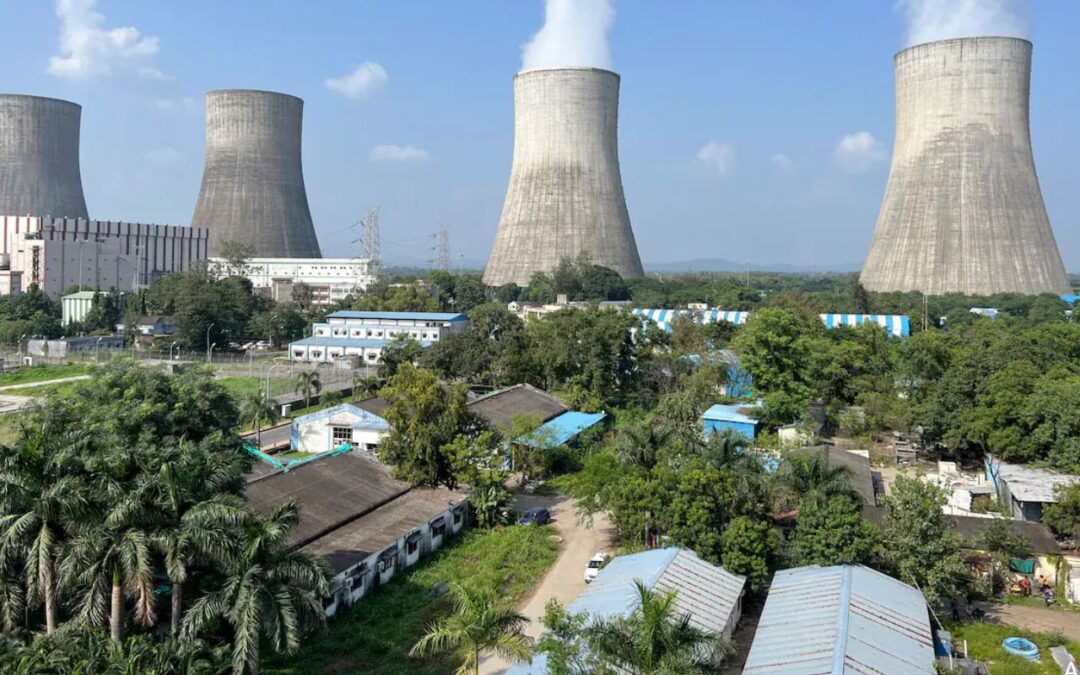
Synopsis: The Indian Nuclear power plants will produce 3x in the next 5 years, with the present installed nuclear power capacity set to increase from 8180 MW to 22480 MW by 2031-32.
India ranks as the 3rd largest producer and consumer of electricity in the world and has an installed power capacity of 476 GW. The rise in the industrial sector is the main reason for the increase in electricity demand.
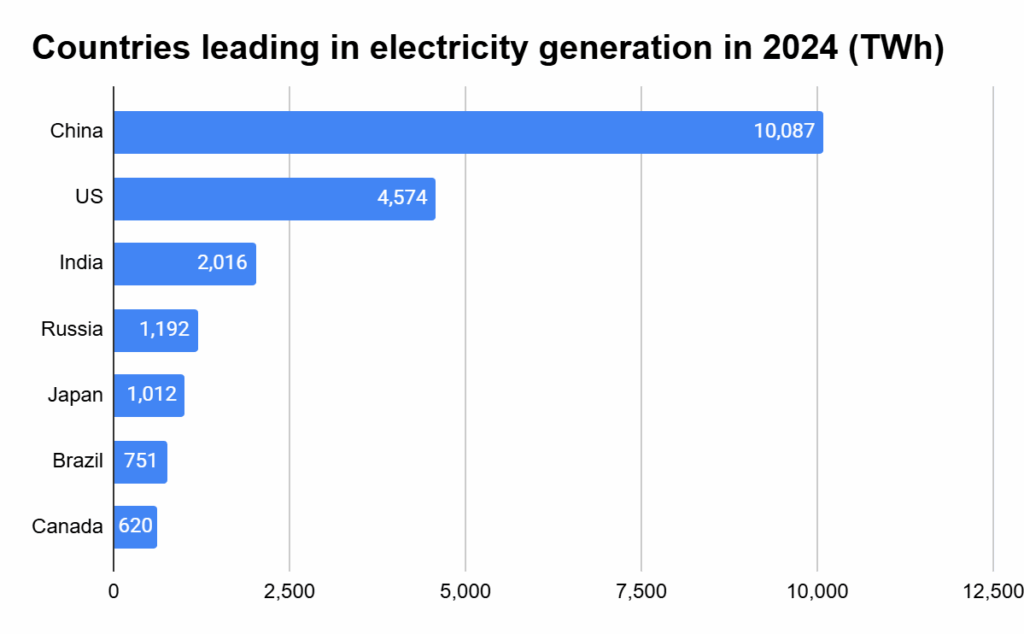
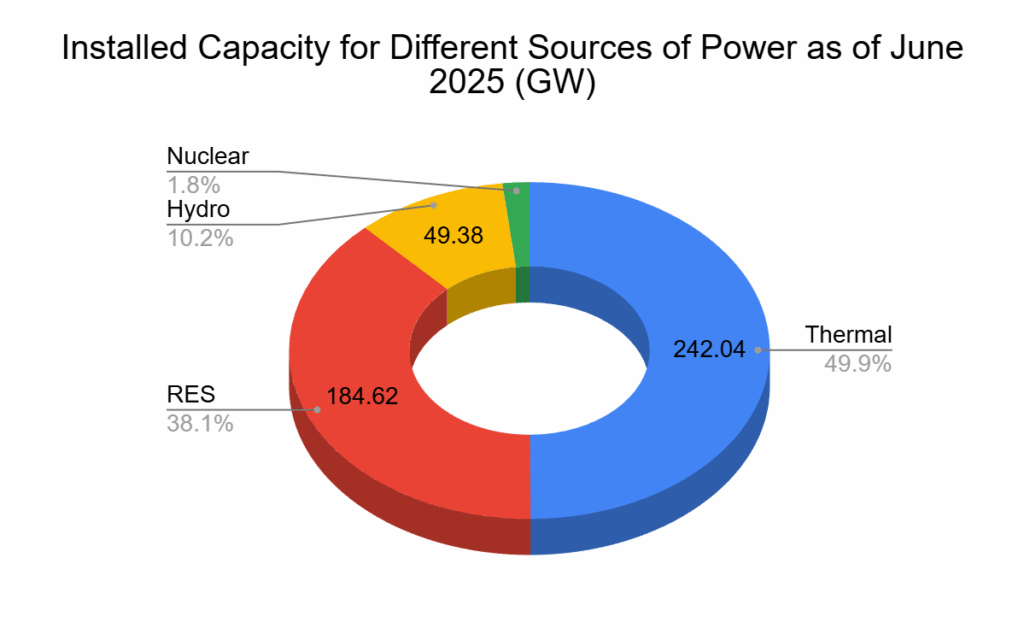
By June 2025, the nuclear capacity that India had installed reached 8.8 GW, capacity has grown by 71% in the past decade. Being one of the countries with the largest Thorium reserves, India can produce nuclear energy on a large scale. In FY25, the consumption of electricity in India was 1,694 billion units, which was 33% more than that of FY21 and corresponded to a 5-year CAGR of 7.4%
Future Growth and Government Support
- The Union Budget 2025-26 is the beginning of a Nuclear Energy Mission that is dedicated to the R&D of Small Modular Reactors (SMRs). A ₹20,000 crore has been allocated by the government for this project.
- An oriented approach for the Bharat Small Reactors (BSRs) development, which is characterized by minimizing the land demands and aiding the industries to decarbonize. This is the scenario where the private sector will be contributing land, water for cooling, and money, while the Nuclear Power Corporation of India Limited (NPCIL) will take care of the reactor’s design, quality assurance, power supply, and maintenance.
- The installation of current nuclear power capacity will go up from 7,480 MW to 22,800 MW by the year 2031.
- The Nuclear Power Corporation of India Limited (NPCIL) is going to build 5 nuclear power plants with a total capacity of 10,000 MW.
- India will have a total of 21 new nuclear power reactors with 15,700 MW installed capacity by the end of 2031.
Also read: 6 Emerging Tier-2 Cities in India Offering Early-Stage Investment Opportunities in 2026
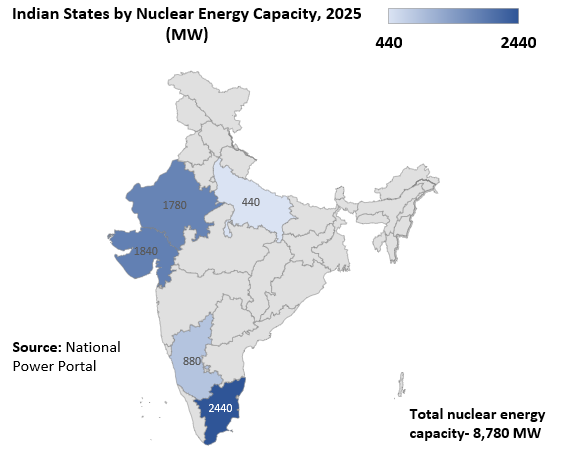
Tamil Nadu
Chennai’s nuclear landscape is mostly dominated by a capacity of 2,440 MW, 27.5% of the total. That has been chiefly through the two 1,000 MW units of the Kudankulam Nuclear Power Plant, a collaboration between India and Russia, and India’s flagship partnership with the latter. The Kalpakkam facility adds the Prototype Fast Breeder Reactor (PFBR) and 230 MW units, thereby securing the three-stage nuclear program of India.
Gujarat
Gujarat has a total of 1,840 MW generated in Kakrapar, significantly pointing out the commissioning of the domestic 700 MW PHWRs, KAPP-3 in June 2023, and KAPP-4 in March 2024, both attaining full power by August 2024.
Rajasthan
Rajasthan has 1,780 MW of nuclear power coming from the Rawatbhata facility. The state was successful in connecting Rajasthan-7, a capacity of 630 MW, while Rajasthan-8 is expected to be ready by late 2025 or early 2026.
Maharashtra
Maharashtra’s Tarapur facility, India’s first nuclear power plant in 1969, continues to produce 1,400 MW from four units. This aging fleet flies in the face of the envisioned Jaitapur project, which is already slated at 10,380 MW and would be the largest in the world in terms of capacity if built.
Karnataka and Uttar Pradesh
Kaiga in Karnataka, with a capacity of 880 MW, and Narora in Uttar Pradesh, with that of 440 MW, complete the operating portfolio. A noteworthy point is that a total of 30 out of India’s 36 states and union territories do not possess any nuclear capacity, which highlights the very stringent Atomic Energy Regulatory Board (AERB).
Upcoming Projects
| Project | State | Capacity (MW) | Expected Timeline |
| Gorakhpur | Haryana | 1,400 | 2025 |
| Jaitapur | Maharashtra | 10,380 | 2027 |
| Kovvada | Andhra Pradesh | 6,600 | 2030s |
| Mahi Banswar | Rajasthan | 2,800 | 2031-32 |
| Chutka | Madhya Pradesh | 1,400 | 2031-32 |
| Fleet Mode (10 units) | KA, HR, MP, RJ | 7,000 | 2031-32 |
Ultimately, the realization of the dream of 100 GW by 2047 will be dependent on prompt execution, the acceptance of the community in places like Chutka and Mahi Banswara, as well as the integration of SMRs and private investment into India’s nuclear ecosystem, which would be quite successful.
Conclusion
The Indian state of nuclear energy is about to change dramatically as the current capacity of 8,880 MW will be increased to more than 22 GW by the year 2031-32 through local PHWRs, Fast Breeder Reactors, and huge projects such as Jaitapur and Kovvada. Coastal and riverine location for cooling, which also matches the three-stage program goal of thorium utilization, is the reason southern and western provinces are at the forefront.
Written by Yatheedra N