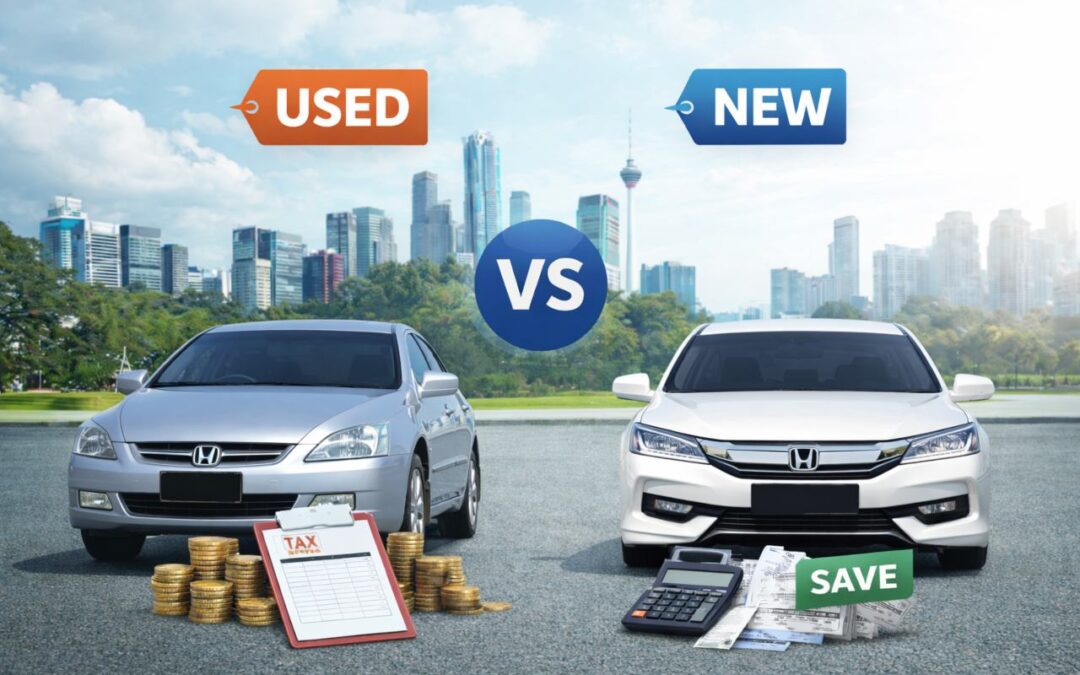
Synopsis: Purchasing a vehicle is a large financial decision – however, which decision would save you more money than the other when considering the taxes: a flashy new or a well kept used vehicle?
Purchasing a vehicle is not merely about the cost. It is regarding the overall price – on-road price, taxes, maintenance, insurance and resale value. Today, many Indians are at a crossroads on whether to invest in a new car or buy a used one that will be economical in the short run.
Purchase Price and Taxes
There is an increased ex-showroom price of new cars and therefore increased GST (28% on most new cars) and road tax (Ranges between 10%–18% in Karnataka, depending on vehicle value). The resale value of used cars is taxed at the margin at which it was sold.
- For small cars, its 12% GST on the margin
- For large cars/SUV its 18% GST on the margin
- Pro tip: if you buy a used car from an individual (C2C), there is 0% gst.
E.g. a brand new compact SUV at a price of ₹12 lakh (on-road ₹14 lakh including taxes) could be bought used at ₹8-9 lakh with taxes already paid by the first owner.
Depreciation: The Cost of Nothingness
- A car that is of a new model loses 10-15 per cent of its value upon exiting the showroom and 30–40% in 3 years, depending on brand and model.
- The blow has already been taken by a used car, so the hit on your resale is considerably reduced.
This is because this will make used cars smart to individuals who upgrade after 3-4 years.
New GST rates on cars in India
Also read: Top 8 Fast-Growing Areas in Bangalore Benefiting from Metro Expansion in 2026
Maintenance and Warranty
New vehicles are sold with warranties (normally 3-5 years) and a few repairs in the initial stages. After 40,000-50,000 km, used cars can require an increased amount of maintenance, but certified used cars sold at brand dealerships come with extended warranties and service issues today, thereby being more dependable. At a budget of ₹10,000-₹15,000 a year on maintenance, even a used automobile is frequently cheaper in the long run than a new one.
Loan and Insurance Expenses
Banks tend to provide lower interest rates on new car loans (in the range of 8%-9%) as compared to used loans (in the range of 10%-12%). Used car loans typically cost 2–4% higher than new car loans. However, as the loan transaction with used cars is lower, the overall interest paid can be lower as well.
It is also less expensive to insure, as the premiums on a similar model can be reduced by 30%-50% percent of a used vehicle since the insured declared value (IDV) is smaller this way.
Deductions on Income Tax or Business.
When you are a self-employed person or have a business, the tax deductions are better when you purchase a new car in the name of the firm under depreciation and business expense claims.
In the case of salaried, a certain benefit applies only to the case where it is a vehicle provided by an employer; in such instances, an old automobile will still prove more cost-effective for personal finances.
Which Saves You Money?
Once taxes, depreciation, and running costs are considered, used cars tend to cost less by 20-35 per cent on the whole than new cars do. Nevertheless, a new car may offset the price with peace of mind when you want warranty protection, latest features, or intend to own it over a long term (7 years or above).
Conclusion
A used car is a winner for pure value investors who desire to reduce taxes and depreciation losses. A new vehicle would be appropriate for those who are looking at long-term reliability and tax incentives for business. The smartest move? Negotiate the ownership cost overall, not only the sticker price, when you are signing that cheque.
Written By Jayanth R Pai