
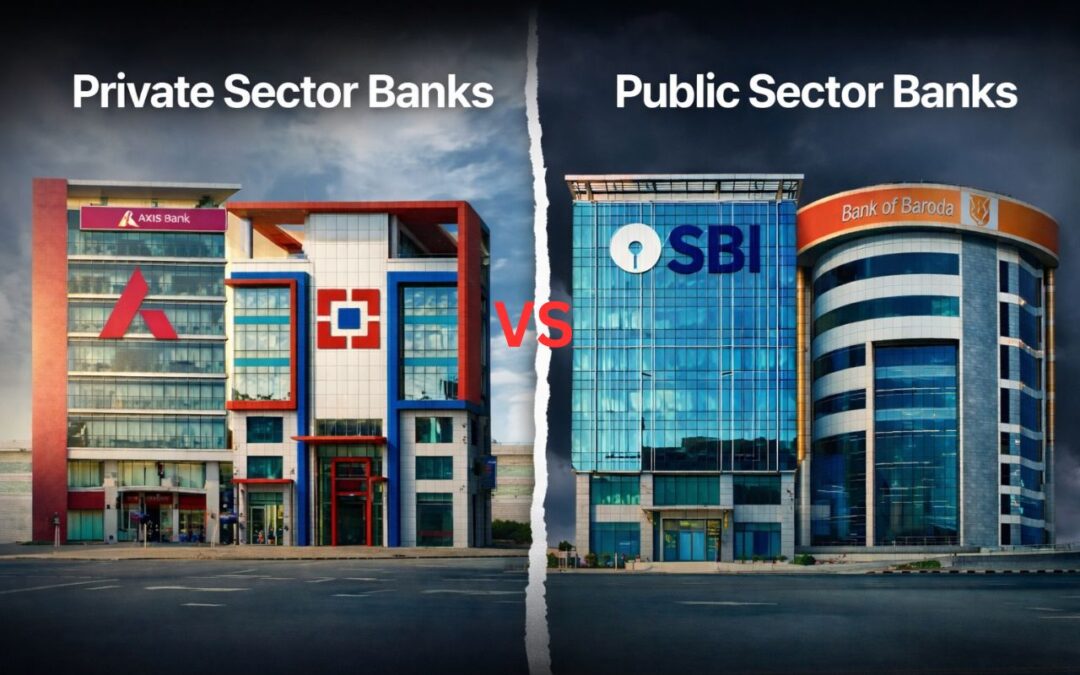
Synopsis: Both public and private sector banks are going after the same customers. But both have different costs and balance sheet strengths. This article states out reasons why public sector banks are rapidly gaining market share in India’s housing finance market while private banks are losing ground.
India’s housing finance market has been a long-term in retail banking growth. By leveraging fast approvals, better customer experience and pricing, private sector banks were gaining ground. However, in the recent data this trend has been reversed. Private sector banks appear to be losing market share while, public sector banks are dominating home loan space.
PSBs increased their share of outstanding individual home loans to 44.11% by March 2025, up from 42.77% a year earlier. The private sector banks saw their decline from 37.51% to 35.97% during the same period. By late 2025, other industry estimates showed PSBs accounting for 50% of total home loan originations by value, overtaking private banks in new lending as well.
Reasons Why Public Sector Banks are Gaining Market Share
- Lower Interest Rate: PSBs have lower Cost of funds compared to Private Sector Banks. They can launch loan products without compromising on their margins and attract cost-sensitive customers. This can allow them to offer competitive loan rates without hurting margins too much.
- PSBs are going for PrSBs customer segments: They are targeting the premium customers. They are approaching the high ticket size customers to improve their asset quality significantly which leads to reduction of bad loans. The asset quality of PrSB is good. So PSB are targeting them to increase their good loans.
Let’s see if private banks are really losing or have shifted to a different game?
1. Higher average ticket sizes: Private sector banks command higher average home loan ticket sizes, indicating their strength in housing and urban borrowers. They prioritize speed and service quality over low interest rate. Private Banks maybe generating fewer loans but they still maintain relevance in higher-value transactions.
2. Higher-margin products: Private Banks are not dependent on housing loans for growth. This is because many have shifted focus towards higher-margin retail products. Home loans are low-margin products, private banks appear to sacrifice market share to protect overall return on assets.
3. Customer experience and digital strength: Private Banks lead in digital onboarding, processing speed and customer experience. For borrowers who are salaried, private lenders remain attractive despite rates being higher.
Also read: Why Global Investors Are Placing $15 Billion Long-Term Bet on India’s Banking Sector
Borrowers POV
- Cost focused borrowers are increasingly choosing PSBs for low interest rates and long-term affordability.
- Convenience focused borrowers prefer private banks for fast approvals and better digital journeys.
- Loan balance transfers have become common as borrowers often start with private banks and refinance later with PSBs to reduce EMIs.
Reasons Why PSBs are Surging Ahead
- Pricing advantage and low interest rates
- Wider reach beyond metros
- Government-linked housing schemes
- Strategic focus on secured lending
The Role of HFCs and NBFCs
- HFCs and NBFCs hold a share of the market, particularly in the sub-INR 30 lakh loan segment and self-employed borrower categories. This adds for more on private banks.
In conclusion, India’s housing finance market is set to grow at a healthy pace over the next decade. In the near term PSBs are likely to retain leadership in volume and market share while, private banks are expected to focus more on profitability, premium segments and cross selling. Yes, overall Indian private sector banks are losing market share in housing finance as public sector banks have surged ahead in both outstanding loans disbursements.
Written by Vijai Krishna