
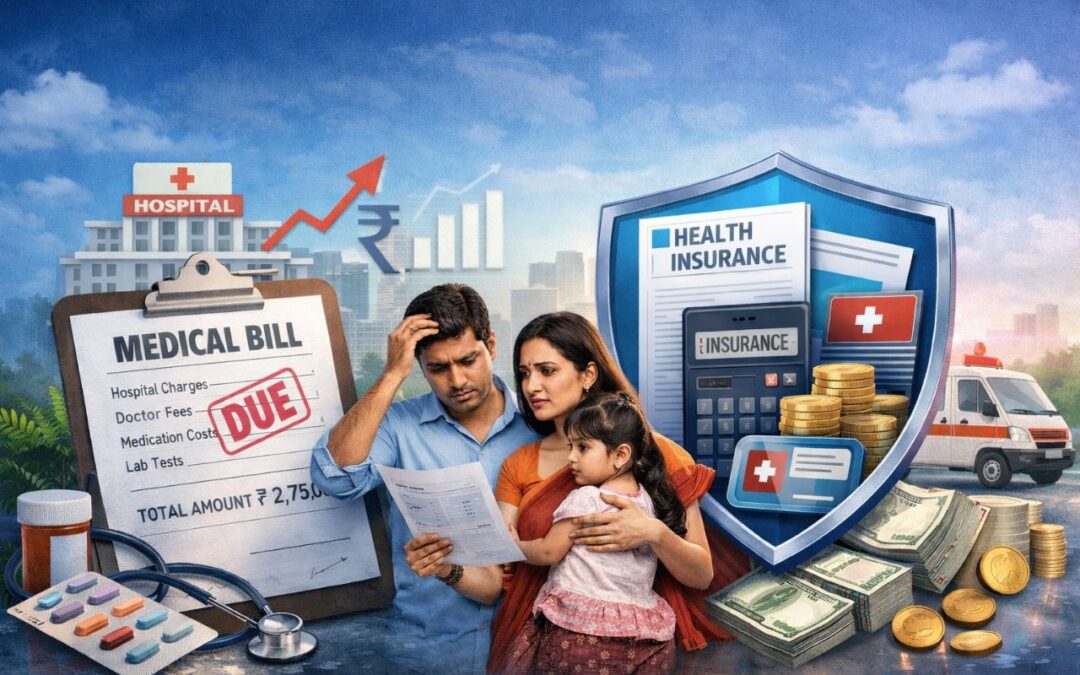
Synopsis: With Indian medical inflation rising by 12–15% annually, health insurance has transitioned from a luxury to a critical financial pillar for protecting household wealth against skyrocketing treatment costs.
Indian healthcare is experiencing a twofold change on the one hand- tremendous medical progress and on the other hand, a high rate of cost inflammation. No matter if it is a mere hospitalization, or a complicated operation, the cost of healthcare has gone up exponentially within the last ten years. This has seen health insurance not only being a luxury form of insurance but a very important financial planning tool on the part of every household.
Inflation of Healthcare Pressure Growing
Medical inflation rate of India is between 12-15 percent per year and is one of the highest in Asia. The factors that have led to this consistent increase are complex:
- Improved medical technology: Premium treatment procedures such as robotic surgeries and imported medical equipment make treatment very expensive.
- High cost drugs: Special medicine particularly cancer, diabetes and heart related problems are now hard to afford without insurance cover.
- Domination of private hospitals: These hospitals are so expensive as they cost between ten times and more than the government hospitals and some middle-income families even find themselves in debt.
- Lifestyle diseases: Chronic diseases have become a daily affair, raising the rate of medical dependency over a long period of time.
Even the financial stability can be ruined with a single medical emergency with average hospitalization costs currently going over ₹50,000 in the minor and ₹2 lakh in the major treatments.
The Reason why Health Insurance has become a Necessity
Health coverage has become the initial line of defense to unexpected medical catastrophes. Policyholders are given the extensive cover in terms of hospitalization, surgeries, diagnostics, and even after-treatment treatment by paying an annual premium. In addition, cashless services are offered by most of the major insurers in over 10,000 empaneled hospitals in the country.
In addition to paying the bills, the health insurance will provide accessibility to superior medical centers without any economical reservations. It also promotes proactive health checkups and offers tax benefits in the form of deductions under Section 80D of the income tax act and would allow deduction of ₹25,000 annually.
Reliability: Claim Settlement Ratio (CSR) Measures
Claim settlement reliability is among the most important factors of the choice of an insurer. The Claim Settlement Ratio (CSR) is the result that tells the percentage of total claims a company settles. A CSR of over 95 is an indication of reliability and effectiveness in the operations. The highest performing insurers always have a ratio of 93-99% so that the claims are handled fast and fairly.
Top 5 Health Insurance Companies in India (2025)
| Company | Notable Plans | CSR (2024–25) | Key Highlights |
| Niva Bupa Health Insurance | ReAssure 2.0 Platinum+, Health Premia | 90–92% | Unlimited restoration, global cover, maternity benefits, ₹5 crore coverage, 10,000+ hospitals. |
| HDFC ERGO Health Insurance | Optima Secure, Optima Restore | 96–98% | Boosted sum insured 5x from Day 1, AYUSH coverage, 13,000+ hospitals. |
| Care Health Insurance | Care Supreme, Care Advantage, Care Ultimate | 87–93% | 600% no-claim bonus, recharge options, pre-existing coverage flexibility. |
| Aditya Birla Health Insurance | Activ One Max, Activ One NXT | 93–96% | Wellness-linked rewards, global emergency care up to ₹6 crore. |
| Star Health & Allied Insurance | Family Health Optima, Super Star | 81–99% | Wide hospital network, 14,000+ tie-ups, quick settlement processes. |
The combination of these insurers controls the market in Indian health insurance due to their good performance on their services, excellent digital platforms and fast reimbursement processes.
Also read: How Tier-2 and Tier-3 Cities Are Driving India’s Insurance Market Growth: What Reports Say
Coverage of Benefits
Although the primary benefits are the monetary security, the contemporary policies have multiple added up nowadays:
- Prevention wellness: Annual health visits, exercise, and tele visits promote healthy lifestyles.
- Hospitalization without cash: In big hospitals, it is no longer necessary to make advance payments to get treated.
- No-claim and loyalty bonuses: Policyholders will be encouraged to increase sum insured up to 300-500 per cent in case of good health.
- Tax deductions: The payment of premiums can be considered as a reduction of the overall taxable income, which gives an indirect financial benefit.
- The benefits of family floater: It is one plan that can cover the whole family including parents, spouse and children under one umbrella.
Choosing the Right Policy
When choosing a health insurance policy, there are several parameters that are of primary importance:
- Upon Enrollment: The younger the better, since young people have lower premiums and more choices to get covered.
- Know your requirements: Customize the coverage according to family and pre-existing conditions, and future health risks.
- Check exclusions: Waiting periods and restrict caps (particularly room rent and maternity).
- Compare online: Compare and contrast premium prices with value through reliable comparison websites.
- Review CSR and reputation: Shop with insurers that have a good reputation of high settlement efficiency.
The Government Initiatives Role
The Ayushman Bharat – Pradhan Mantri Jan Arogya Yojana (PMJAY) scheme is a public scheme extended to cover up to ₹5 lakh per family to the low-income groups. Most states have come up with complementary programs to match with this move. These plans are however limited to basic treatments necessitating the need of the middle and upper-income families to afford specialized care or private attention through the use of private health insurance.
Prospectus: Insurance in Health as Investment
The healthcare ecosystem of India is at a crossroad. There is a growing awareness regarding preventive care and finances. Claim processes have also been made easier using digital platforms and approvals within hours, as opposed to weeks. As medical costs are anticipated to go up further the prudent financial decision in the present day is early and proper insurance cover.
Essentially, health insurance is not a contingency plan anymore, it is an economic pillar that protects health and also wealth. By investing in it today, one is guaranteed a sense of peace tomorrow as medical emergencies are seen not as a crisis anymore, but as an event to handle.
Written by Jayanth R Pai