
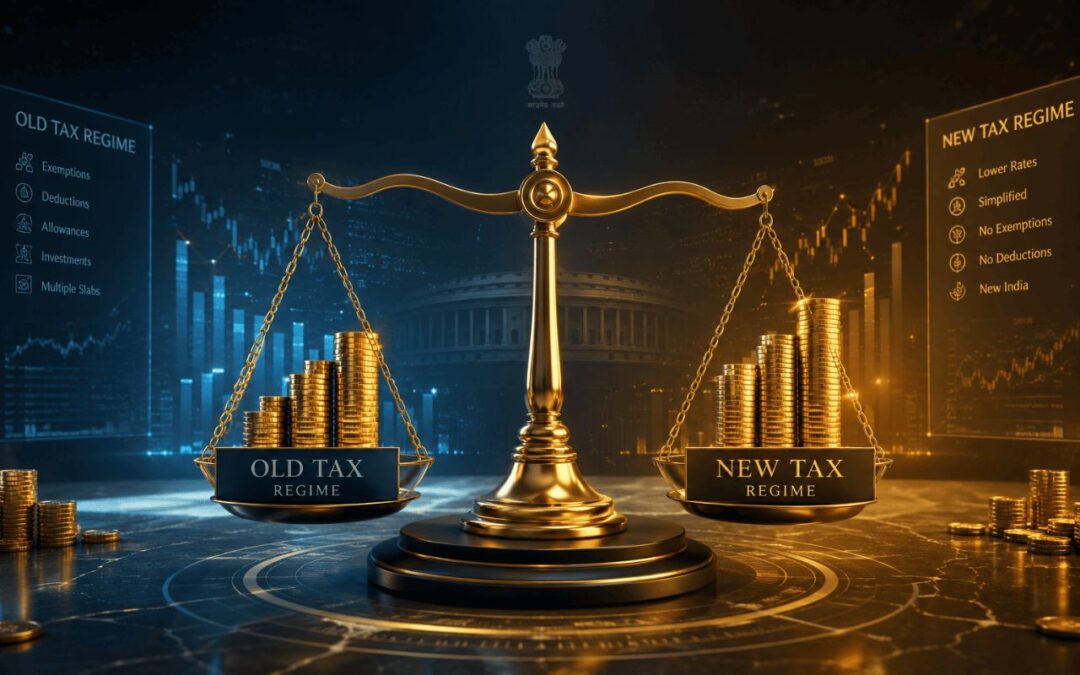
Synopsis: A salary of ₹1 crore requires careful tax planning, and with both the regimes present in the country, the choice depends on which one will provide better tax benefits. This article compares both regimes for a ₹1 crore salary with a practical example.
India has been following the dual tax structure since FY 2020-21, but to make the new tax regime. The government is making the new tax regime more approachable by lowering the tax rates, and enhancing rates. However, for individuals earning ₹1 crore the right choice depends entirely on the disciplined financial planning and investment habits.
Few Features of Old Tax Regime
- Allows a range of deductions like, HRA deduction, home loan interest deduction up to ₹2 lakh under Section 24(b), and investments under Section 80C up to ₹1.5 lakh
- Permits Leave Travel Allowance (LTA), interest on education loans under Section 80E, and deductions from Section 80C through 80U
- Standard deduction of ₹50,000 for salaried individuals
- Surcharge can go as high as 37% for income above ₹5 crore, making it a little expensive for high earners
Few Features of New Tax Regime
- Tax slabs restructured with a basic exemption limit of ₹4 lakh and income up to ₹12 lakh is effectively tax-free due to the Section 87A rebate.
- Higher standard deduction of ₹75,000 for salaried individuals compared to the old regime.
- Maximum surcharge is capped at 25%, significantly lower than the 37% ceiling under the old regime.
- Employer’s NPS contribution is deductible up to 14% of basic salary, which is an advantage retained under this regime.
- Deductions such as HRA, 80C investments, and home loan interest on self-occupied property are not permitted.
Also read: FD Rate Update: Banks That Have Revised Their Fixed Deposit Interest Rates in 2026
Which Tax Regime to Consider Old or New for a Salary of ₹1 Crore
Considering an example for a salary of ₹1 crore which regime will prove to be better,
- Gross Salary: ₹1,00,00,000 p.a.
- HRA exemption (metro city): ₹4,00,000
- Section 80C (PPF, ELSS, LIC): ₹1,50,000
- Section 80D (Health Insurance): ₹50,000
- Home Loan Interest (under Section 24(b)): ₹2,00,000
- NPS (under Section 80CCD(1B)): ₹50,000
- Standard Deduction: Under Old regime ₹50,000 and under New regime ₹75,000
So, under Old Tax Regime the total deductions = ₹9,00,000 and Under New Tax Regime the total deductions = ₹75,000
Old Regime- Slab-wise Tax Breakdown
Taxable Income = ₹1,00,00,000 – ₹9,00,000 = ₹91,00,000
New Regime- Slab-wise Tax breakdown
Taxable Income = ₹1,00,00,000 – ₹75,000 = ₹99,25,000
From the above example tax savings in the Old Regime is marginally better as it saves ~₹17,160 annually. For those with no investments or no HRA or home loan benefits, and with deductions below ₹4 lakh to ₹5 lakh, the new regime becomes equally competitive due to its simpler structure and broader slab thresholds.
All in all
At the ₹1 crore salary level, the Old regime holds an advantage when the tax payer is interested in tax-saving financial instruments and more beneficial when they exceed ₹8 lakhs – ₹9 lakhs, whereas tax-payers who prefer fewer financial commitments New tax regime is more suitable.
Disclaimer: The information provided in this article is for educational and informational purposes only and should not be construed as financial advice. Readers are advised to consult a qualified financial advisor before making any investment decisions.
Written by Jahnavi