
Synopsis: Real estate growth is taking off around airport corridors as India is rapidly expanding its aviation network. Property prices near operational and upcoming airports are rising up to 70-120% in the past 5 years.
Real estate growth in last one year has clearly shifted towards areas near airports. Once airport projects were announced, demand for locations near airport increased much faster than any older parts of the cities. These airports were more attractive due to the construction of highways, metro connections, business parks and job opportunities which then led to sharp price hikes in several airport corridors. The areas which were considered far off outskirts are now turning into busy residential and commercial hubs.
These rapid growth and shifts show why airport-centric development is expected to drive real estate expansion. As the connectivity increases people prefer to live closer to travel, workspaces which makes the airport region the growth centre of the future.
Why Airports Create Real Estate Growth
Real estate growth is not just people moving into airport linked regions, it’s the significant increase in the property values which clearly show the fast-growing areas in economic terms. Several airports linked markets across India have seen property values rise sharply between FY2021 and FY2025.
- Increased apartment prices up to 74% over four years and 93% rise in residential plots in Panvel near Navi Mumbai International Airport, which are higher than the rest of Navi Mumbai which grew 45% for apartments and 58% for plots during the same period.
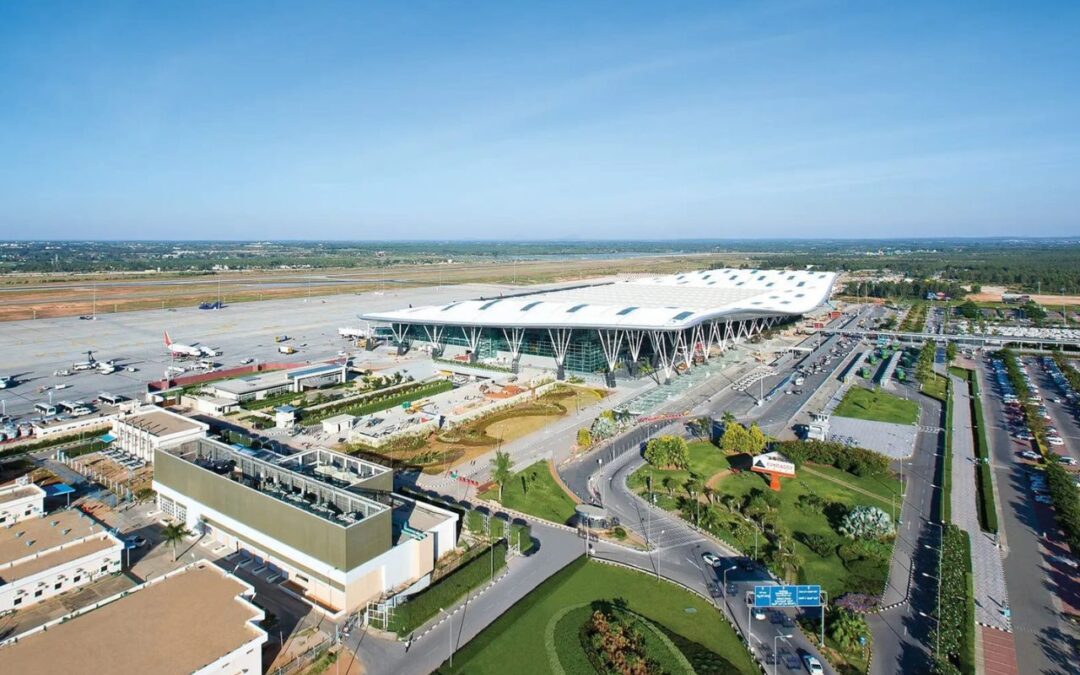
- North Bengaluru near Kempegowda International Airport has prices which roughly grew by 69% and plots by 118% which is well above many city areas. Apartments in Devanahalli near Kempegowda airport range from ₹7,800 to ₹9,300 per sq.ft while plots were around ₹5,400 to ₹6,900 per sq ft, which reflects a strong ongoing demand.
- Residential property values rose between 69% and 90% and plot values between 84% to 118% over four years in airport linked markets including Yamuna Expressway near Noida International Airport, Pavel, North Bengaluru and South Hyderabad.
- Airport regions have much stronger average growth between 70% and 120% than other urban areas. These numbers show that investors and homebuyers near airports got both fast returns and tangible value compared to most regions in the cities. Rising property prices than a city average show that the prices are increasing not just due to speculations, and show a strong demand from not just investors but also homebuyers and residents.
Noida, Mumbai and Bengaluru have the strongest momentum which recorded price appreciations far above their respective city averages which are supported by new infrastructure, commercial development, and rising buyer interest.
Also read: Bengaluru Real Estate Market 2030: Will Property Prices Boom or Slow Down?
Growing Properties
- In Noida and Greater Noida (Yamuna Expressway), apartments rose 90% (Rs 7,000-9,000 per sq ft). Plots jumped 94% to Rs 65,000-70,000 per sq yd.
- In Navi Mumbai (Panvel region), apartments climbed 74% (Rs 10,000-12,000/sq ft), while plots surged 93% (Rs 80,000-85,000/sq yd).
- In North Bengaluru (near Kempegowda Airport), apartments grew by 69%, prices hit Rs 11,000-13,000/sq ft. Plots soared 118% to Rs 68,000-72,000/sq yd.
- In South Hyderabad (around Rajiv Gandhi Airport), apartments rose 74% (Rs 6,000-8,000/sq ft), while plot growth reached 84% (Rs 55,000-60,000/sq yd).
- City-wide averages were much lower: apartments grew 45-79%, plots rose 45-93%.
- Commercial Spaces: Retail outlets, development hubs, offices near airports are expanding as brand and companies are setting up for better connectivity, travel and business flow.
- Warehouses: Industrial and logistic plots around Noida International Airport are seeing higher allocations and construction activity which shows a high demand for storage and cargo units near air hubs.
Infrastructure catalysts behind rising prices
Improved access to the main cities through the expressways and highways. Metro and rail connectivity that makes traveling to the workplace quicker and easier. Creation of jobs owing to the development of IT parks, business hubs and logistic centres. Construction of schools, hospitals, hotels and malls to accommodate the new residents. Government investment in planned infrastructure. These are the factors that are luring more investors, homebuyers and residents towards the areas in the airports.
Why This Trend Will Continue in the Future
- A new airport is commissioned every 50 days across India which will open new growth corridors around upcoming aviation hubs.
- Demand for air travel is increasing which makes it more important to live and do business near airports.
- Focus on integrated infrastructure development which includes roads, metro networks and industrial clusters by the government.
- Higher commercial demand as companies prefer airport locations for global connectivity and faster movement of people and goods.
- These areas are expected to develop into full urban centres attracting long term residents rather than only investors.
Even with strong growth potential in airport corridors, some uncertainties such as project delays, slower infrastructure execution, changes in government policies can affect the timelines and returns.
Conclusion
The development of the cities in India is being redefined around the airports. With the improved connectivity, jobs creation, and sustained infrastructure development, the surrounding areas of airports are experiencing greater value growth than most of the conventional places. Though the risks are still present, the future trend is that airport corridors are bound to become some of the most significant engines of real estate development in the country.
Written by Boyapati Sai Jasmitha