
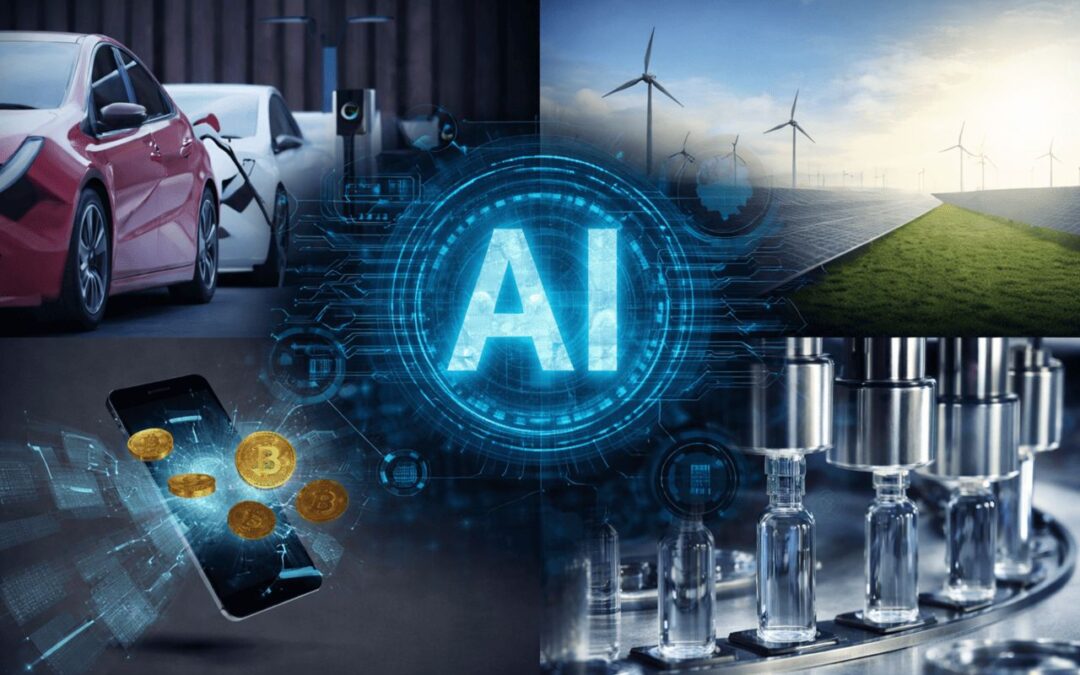
Synopsis: The future development of India is already in the works: AI, clean energy, EVs, pharma, and fintech. This article covers the most important industries, huge markets and huge opportunities coming in the next five years.
India is leading a revolution in the economy, which is technologically, sustainable and innovative. With the influx of investments and the target of government, major industries are becoming the engine of tomorrow. These sectors will characterize the next stage of growth in India.
AI (Artificial Intelligence) and Automation

The AI and Automation market in India is growing exponentially with good data infrastructure and increasing rates of enterprise adoption. The market will achieve a 35-40 CAGR projected to be at $130 billion by 2032. The implications of AI on the economy are also evident, with the study estimating that AI will add approximately $1.5-1.7 trillion to the GDP of India by 2035.
Ai and automation are one of the growth drivers of the digital ecosystem in India, where there are now 700+ million internet users and enormous amounts of data production via schemes such as UPI and Aadhaar. The companies are quickly automating with AI and research shows that more than 90% of Indian companies predict a positive ROI on AI in 2-3 years.
The government has introduced the IndiaAI Mission which has got a budget of ₹10,000+ crore, with the emphasis being on the build of compute capacity and datasets. Furthermore, AI implementation in 50+ government ministries, AI-powered highway surveillance and the development of native AI models are all currently underway.
Pharmaceutical Sector

The pharmaceutical industry in India is an important contributor to the economic growth as well as the healthcare sector globally, with an estimated value of about $55-58 billion and expected to grow to about 120-130 billion by 2030. The growth of the industry is also projected to be steady at a CAGR of 9-12% and is underpinned by domestic and export growth.
India supplies almost a fifth of the world’s generic drugs and is a major world vaccine manufacturer. Export pharmaceuticals have hit over $30 billion in a single year, with the key markets being the US, Europe and the emerging economies.
The wider biotech sector is expanding at an impressive pace and India aims to become a bioeconomy worth 300 billion dollars by 2030, introducing robust synergies between pharma and innovatively-driven healthcare. Investment flows continue to be strong and more global pharma companies, private equity and FIIs are investing in India due to the cost advantage, scale of India and its export potential. Few government initiatives are PLI Scheme to increase domestic production and increase of Jan Aushadhi Yojana.
Renewable and Clean Energy
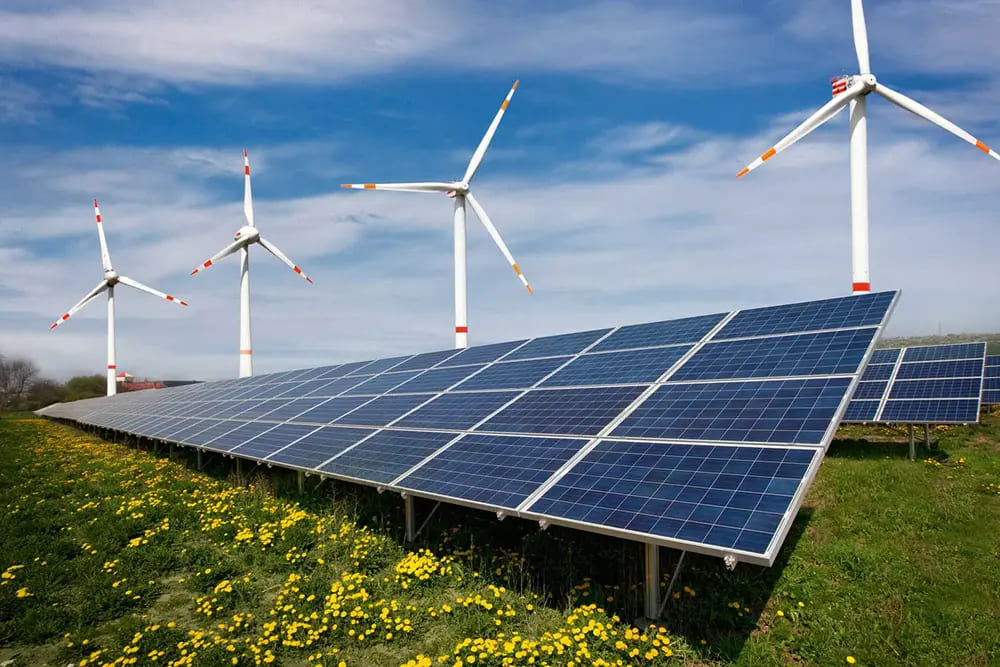
The renewable energy sector in India is in a high growth phase supported by ambitious capacity targets and massive infrastructure development. India has a goal of reaching 500 GW renewable capacity by the year 2030. It is projected that a further scale-up to approximately 900 GW by 2035-36 will be possible, with huge investments in generation and transmission facilities. To facilitate this, the government has scheduled major grid expansion initiatives such as thousands of circuit km of transmission lines to tie together renewable energy in different areas.
India continues to experience massive developments on the project side. This involves ultra-mega solar parks (250 kilobases or more), and the swift development of wind energy corridors, as well as the growing investment in battery energy storage systems (BESS) to deal with intermittency. Moreover, the green hydrogen industry is on the rise and it is expected to reach 5 million tonnes per year by 2030 which will demand renewable energy.
Also read: 9 Best Credit Cards Offering Complimentary Lounge Access with No Minimum Spend Requirement
Electric Vehicles (EV)
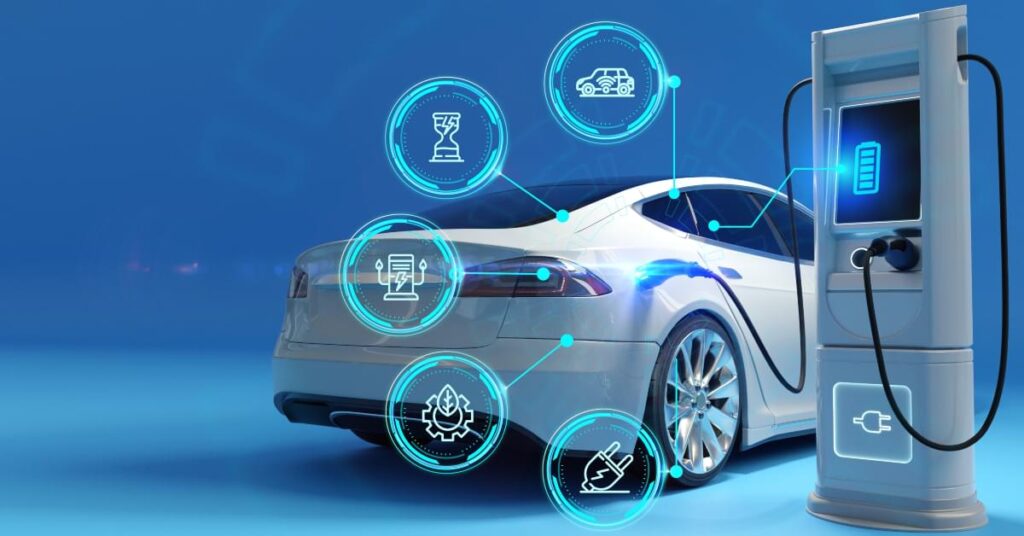
The growth of EV is expected to be rapid, with penetration of approximately 2.3 million units in 2025 (and this represents 8 percent of the total vehicle registrations). This is a huge increase over a short period of time as compared to only about 50,000 units in 2016 indicating high adoption rates.Two-wheelers and three-wheelers (90% or more of EV sales) are the primary drivers of growth, and passenger EVs are growing rapidly as well. India has aimed at 30% EV penetration by 2030, which will necessitate both massive vehicle production and infrastructure.
On the infrastructure front, the number of charging stations has grown to 25,000+ and is expected to reach around 375,000 charging stations by 2030. Investments are also booming in the sector, with annual inflows of $1B investments, as well as significant battery manufacturing, EV production centers, and new models.
Fintech Sector

In India, the finance technology industry is rising at a high pace with the market size of about $140+ billion and an estimated opportunity of 500-600+ billion in the next few years. The total addressable market is estimated to be around $790 billion, which is projected to reach 2 trillion by 2030, making it huge in scale.
UPI is the largest source of growth, and will increase by 20+ billion transactions per month in 2026. This has established India as a leading country in real time payment on a digital basis. It is estimated that there are 9,000+ fintech startups in the ecosystem, which has broadened to include digital lending, insurtech, and wealthtech. Few government Initiatives are Jan Dhan Yojana of financial inclusion, Account Aggregator (AA) Framework.
Conclusion
As India enters its next phase of growth, the five sectors stand as the core of transformation, supported by robust policy support, increased investments and demand worldwide. The coming five years offer an opportunity to India that is both clear to business and investors to exploit the growing and changing economic environment in India.
Written by Boyapati Sai Jasmitha